• Home
  • About Us
  • Events
  • Submissions
  • Advertise
  • Contact Us
  • NewsVoir
  • Newswire
  • Nasheman Urdu ePaper

Nasheman

India's largest selling Urdu weekly, now also in English

  • News & Politics
    • India
    • Indian Muslims
    • Muslim World
  • Culture & Society
  • Opinion
  • In Focus
  • Human Rights
  • Photo Essays
  • Multimedia
    • Infographics
    • Podcasts
You are here: Home / Archives for Nasheman

Much is being read into statements of Modi and Gowda

May 3, 2018 by Nasheman


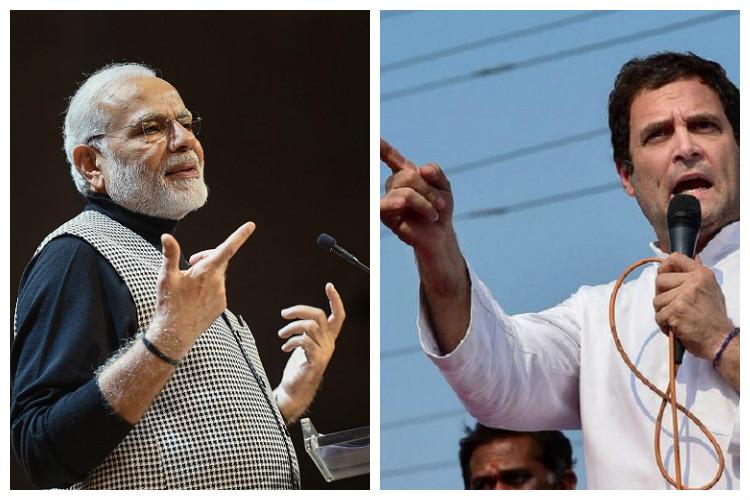
Political and non-political circles here are making much of the remark of Prime Minister Narendra Modi that Congress president Rahul Gandhi has “insulted” former Prime Minister and Janata Dal (Secular) founder, H D Deve Gowda, by calling his party “B team” of the Bharatiya Janata Party.

These circles are trying to read much in between the lines as Modi, generally, does not make a statement like this on such occasions without pre-meditation. He must have weighed it properly before making it public.

Much significance is also being attached because it was not a one-liner. He said a few things more and described the way he used to receive him and see off.

The matter was not given a burial because the very next day Deve Gowda reacted positively to most part of his story. The former PM did say that Modi was a “clever” politician and that he had not done much for Karnataka but this part of his statement was rather ignored.

Most of the local newspapers, too, have highlighted his positive reaction. Deve Gowda also paid a “compliment” to the Prime Minister, said one. They have also covered in detail his prediction about the BJP before the Lok Sabha elections and Modi’s meeting with him to persuade him not to resign.

All this is being seen in the light of Modi’s first meeting in the last leg of campaigning in Chamarajanagar district in South Karnataka where Congress had won many seats. Old Mysuru area is a part of the southern region and JDS was a runner-up in the belt.

The JDS, according to a party leader, had won 24 seats in the region out of the total 40 in state Assembly in 2013. If it improves its tally in the region, much damage may be caused to the ruling party. The BJP was no major force in the belt.

Some political pundits believe that one way of keeping the Congress away from winning a majority is to encourage the JDS in the areas where the party is strong. There is no evidence, but there are people who also talked of a tacit understanding between the JDS and the BJP.

Modi’s praise of Deve Gowda and his “return gift” is largely behind speculations of this kind. Some BJP men, however, have nothing against this kind of strategy. “In an election, winning matters and nothing else. Any understanding with any other party to defeat the main rival is fair in electoral politics”, said one of them.

Modi’s and Deve Gowda’s comments are being seen in another prospective. In case of a hung Assembly, such elements see a possibility of the two coming together. “The JDS does not like Siddaramaiah because he had left the party and joined Congress bandwagon. So, it is unlikely to go with him”. Some body other than him may be liked by the party but he has to face the ire of Siddaramaiah who has a majority support.

The BJP is not well placed in this Vokkaligas -dominated region. To make a major inroad into this belt will not be easy for the party. The inchage of four districts in the region, C R Patil, however, hopes to move into double digit from zero.

Patil, an MP from Gujarat, has been asked to look after Hassan, Chamarajanagar, Mysuru and Mandya districts, where the party was relatively weaker. He is a close confidante of party president Amit Shah and Modi.

It is not yet clear what his hope is based on. But it has provided grist to the rumour mill.

Hindusthan Samachar/ R. Narayan/ Shri Ram Shaw

Filed Under: Campaign

Why is India so bad for women?

May 3, 2018 by Nasheman

India has been labelled the worst place to be a woman. But how is this possible in a country that prides itself on being the world’s largest democracy?

In an ashram perched high on a hill above the noisy city of Guwahati in north-east India is a small exhibit commemorating the life of India’s most famous son. Alongside an uncomfortable-looking divan where Mahatma Gandhi once slept is a display reminding visitors of something the man himself said in 1921: “Of all the evils for which man has made himself responsible, none is so degrading, so shocking or so brutal as his abuse of the better half of humanity; the female sex (not the weaker sex).”

One evening two weeks ago, just a few miles downhill, a young student left a bar and was set upon by a gang of at least 18 men. They dragged her into the road by her hair, tried to rip off her clothes and smiled at the cameras that filmed it all. It was around 9.30pm on one of Guwahati’s busiest streets – a chaotic three-lane thoroughfare soundtracked by constantly beeping horns and chugging tuk-tuks. But for at least 20 minutes, no one called the police. They easily could have. Many of those present had phones: they were using them to film the scene as the men yanked up the girl’s vest and tugged at her bra and groped her breasts as she begged for help from passing cars. We know this because a cameraman from the local TV channel was there too, capturing the attack for his viewers’ enjoyment. The woman was abused for 45 minutes before the police arrived.

Within half an hour, clips were broadcast on Assam’s NewsLive channel. Watching across town, Sheetal Sharma and Bitopi Dutta were horrified. “I was fuming like anything. There was this horrible, brutal assault being shown on screen – and the most disturbing thing was, the blame was being put on the woman, who, the report emphasised, was drunk,” says Sharma, a 29-year-old feminist activist from the North-East Network, a women’s rights organisation in Guwahati. “The way it was filmed, the camera was panning up and down her body, focusing on her breasts, her thighs,” says Dutta, her 22-year-old colleague.

When the police eventually turned up, they took away the woman, who is 20 or 21 (oddly, Guwahati police claimed not to know exactly). While NewsLive re-played pixellated footage of her attack throughout the night, she was questioned and given a medical examination. No attempt was made to arrest the men whose faces could clearly be seen laughing and jeering on camera. Soon afterwards, the editor-in-chief of NewsLive (who has since resigned) remarked on Twitter that “prostitutes form a major chunk of girls who visit bars and night clubs”.

It was only a few days later, when the clip had gone viral and had been picked up by the national channels in Delhi, that the police were shamed into action. By then, Guwahati residents had taken matters into their own hands, producing an enormous banner that they strung up alongside one of the city’s arterial roads featuring screen grabs of the main suspects. Six days after the attack, the chief minister of Assam, the state where Guwahati is located, ordered the police to arrest a dozen key suspects. He met the victim and promised her 50,000 rupees (£580) compensation.

The damage was already irreversible. Most Indians know full well how tough life as a woman can be in the world’s biggest democracy, even 46 years after Indira Gandhi made history as the country’s first female prime minister in 1966. But here, caught on camera, was proof. And in Assam – a state long romanticised as the most female-friendly corner of the country, largely thanks to the matrilineal Khasi tribe in Meghalaya. The nation was outraged.

“We have a woman president, we’ve had a woman prime minister. Yet in 2012, one of the greatest tragedies in our country is that women are on their own when it comes to their own safety,” said a female newsreader on NDTV. She went on to outline another incident in India last week: a group of village elders in Baghpat, Uttar Pradesh, central India, who banned women from carrying mobile phones, choosing their own husbands or leaving the house unaccompanied or with their heads uncovered. “The story is the same,” said the news anchor. “No respect for women. No respect for our culture. And as far as the law is concerned: who cares?”

There is currently no special law in India against sexual assault or harassment, and only vaginal penetration by a penis counts as rape. Those who molested the woman in Guwahati would be booked for “insulting or outraging the modesty of a woman” or “intruding upon her privacy”. The maximum punishment is a year’s imprisonment, or a fine, or both.

As a columnist in the national Hindustan Times said of the attack: “This is a story of a dangerous decline in Indians and India itself, of not just failing morality but disintegrating public governance when it comes to women.” Samar Halarnkar added: “Men abuse women in every society, but few males do it with as much impunity, violence and regularity as the Indian male.”

Halarnkar then offered as proof a survey that caused indignation in India last month: a poll of 370 gender specialists around the world that voted India the worst place to be a woman out of all the G20 countries. It stung – especially as Saudi Arabia was at the second-worst. But the experts were resolute in their choice. “In India, women and girls continue to be sold as chattels, married off as young as 10, burned alive as a result of dowry-related disputes and young girls exploited and abused as domestic slave labour,” said Gulshun Rehman, health programme development adviser at Save the Children UK, who was one of those polled.

Look at some statistics and suddenly the survey isn’t so surprising. Sure, India might not be the worst place to be a woman on the planet – its rape record isn’t nearly as bad as the Democratic Republic of the Congo, for instance, where more than 400,000 women are raped each year, and female genital mutilation is not widespread, as it is in Somalia. But 45% of Indian girls are married before the age of 18, according to the International Centre for Research on Women (2010); 56,000 maternal deaths were recorded in 2010 (UN Population Fund) and research from Unicef in 2012 found that 52% of adolescent girls (and 57% of adolescent boys) think it is justifiable for a man to beat his wife. Plus crimes against women are on the increase: according to the National Crime Records Bureau in India, there was a 7.1% hike in recorded crimes against women between 2010 and 2011 (when there were 228,650 in total). The biggest leap was in cases under the “dowry prohibition act” (up 27.7%), of kidnapping and abduction (up 19.4% year on year) and rape (up 9.2%).

A preference for sons and fear of having to pay a dowry has resulted in 12 million girls being aborted over the past three decades,

A glance at the Indian media reveals the range of abuse suffered by the nation’s women on a daily basis. Today it was reported that a woman had been stripped and had her head shaved by villagers near Udaipur as punishment for an extramarital affair. Villagers stoned the police when they came to the rescue. In Uttar Pradesh, a woman alleged she was gang raped at a police station – she claimed she was set on by officers after being lured to the Kushinagar station with the promise of a job.

Last Wednesday, a man in Indore was arrested for keeping his wife’s genitals locked. Sohanlal Chouhan, 38, “drilled holes” on her body and, before he went to work each day, would insert a small lock, tucking the keys under his socks. Earlier this month, children were discovered near Bhopal playing with a female foetus they had mistaken for a doll in a bin. In the southern state of Karnataka, a dentist was arrested after his wife accused him of forcing her to drink his urine because she refused to meet dowry demands.

In June, a father beheaded his 20-year-old daughter with a sword in a village in Rajasthan, western India, parading her bleeding head around as a warning to other young women who might fall in love with a lower-caste boy.

This July, the state government in Delhi was summoned to the national high court after failing to amend an outdated law that exempts women (and turban-wearing Sikh men) from wearing helmets on motorcycles – an exemption campaigners argue is indicative of the lack of respect for female life.

But the story that outraged most women in India last week was an interview given to the Indian Express by Mamta Sharma, chairwoman of the National Commission of Women (NCW), a government body tasked with protecting and promoting the interests of Indian women. Asked by the reporter if there should be a dress code for women “to ensure their safety”, Sharma allegedly replied: “After 64 years of freedom, it is not right to give blanket directions … and say don’t wear this or don’t wear that. Be comfortable, but at the same time, be careful about how you dress … Aping the west blindly is eroding our culture and causing such crimes to happen.”

She added: “Westernisation has afflicted our cities the worst. There are no values left. In places like Delhi there is no culture of giving up seats for women. It is unfortunate that while the west is learning from our culture, we are giving ourselves up completely to western ways.”

Her remarks caused a storm. As Sagarika Ghose put it in the online magazine First Post: “It’s not just about blindly aping the west, Ms Sharma. It’s also about the vacuum in the law, lack of security at leisure spots, lack of gender justice, lack of fear of the law, police and judicial apathy and the complete lack of awareness that men and women have the right to enjoy exactly the same kind of leisure activities.”

The Guardian asked Sharma for an interview to clarify her remarks but our requests were ignored.

Maini Mahanta, the editor of the Assamese women’s magazine Nandini (“Daughter”), believes the NCW chair’s remarks are indicative of what she calls the “Taliban-plus” mentality that is creeping into Indian society. “In this part of the world, it’s worse than the Taliban,” she insists in her Guwahati office. “At least the Taliban are open about what they like and dislike. Here, society is so hypocritical. We worship female goddesses and yet fail to protect women from these crimes and then blame them too.”

Women in Bawana, Delhi
Indian women, such as these three in Bawana, on the outskirts of Delhi, frequently come under pressure to abort female foetuses. Photograph: Gethin Chamberlain
Mahanta explains how traditions still cast women as helpless victims rather than free-thinking individuals in control of their own destiny. Girls still tie Raksha bandhan or “safety ties” around their brothers’ wrists as a symbol of their duty to protect them, she says. She complains, too, about the Manu Sanghita, an ancient Indian book that she claims preaches: “When a girl is young, she is guided by her father; when she is older, she is guided by her husband; when she is very old, she is guided by her son.” She despairs of the cult of the “good girl, who is taught to walk slowly ‘like an elephant’ and not laugh too loud”.

Even in Mumbai, India’s most cosmopolitan city, women have been arrested and accused of being prostitutes when drinking in the city’s bars.

Sheetal Sharma and Bitopi Dutta, the young feminists from the North East Network, complain that modern women are divided into “bad” and “good” according to what they wear, whether they go out after dark and whether they drink alcohol. “We are seeing a rise of moral policing, which blames those women who are not seen as being ‘good’,” says Sharma. “So if they are abused in a pub, for example, it’s OK – they have to learn their lesson,” adds Dutta, 22, who grumbles that young women such as herself cannot now hold hands with a boyfriend in a Guwahati park, let alone kiss, without getting into trouble with the moral police, if not the real police.

Many women agree the response from the Guwahati authorities shows they are blind to the root cause: a society that does not truly respect women. Instead, a knee-jerk reaction was taken to force all bars and off-licences to shut by 9.30pm. Club Mint, the bar outside which the young woman was molested, had its licence revoked. Parents were urged to keep a close eye on their daughters.

Zabeen Ahmed, the 50-year-old librarian at Cotton College in Guwahati, tells how she was out for an evening walk not long ago when she was stopped by the police. “They asked me what I was doing out at that at that time – it was 10.30pm or so – and they asked me where my husband was.”

The fact that India has a female president – Pratibha Patil – and Sonia Gandhi in control of the ruling Congress party means very little, insists Monisha Behal, “chairperson” of the North East Network. “In the UK, you have had Margaret Thatcher – if you are being harassed by a hoodlum in the street there, do ask: ‘How can this be when we have had a woman prime minister?'” she says.

Every Indian woman the Guardian spoke to for this article agreed that harassment was part of their everyday lives. Mahanta revealed that she always carries chilli powder in her handbag if she ever has to take public transport and needed to throw it in the face of anyone with wandering hands. Deepika Patar, 24, a journalist at the Seven Sisters newspaper in Assam, says city buses were notorious for gropers. “If women are standing up because there are no seats, men often press up against them, or touch their breasts or bottom,” she explains.

In June, an anonymous Delhi woman wrote a powerful blog post detailing what happened when she dared not to travel in the “ladies carriage” of Delhi’s modern metro. After asking a man not to stand too close to her, things turned nasty. Another man intervened and told the first to back off, but soon the two were having a bloody fight in the train carriage. Rather than break up the brawl, the other passengers turned on the woman, shouting: “This is all your fault. You started this fight. This is all because you came into this coach!” and “You women always do this. You started this fight!” and “Why are you even here? Go to the women’s coach.”

Speaking under condition of anonymity, the 35-year-old blogger says she had experienced sexual harassment “tonnes of times”. “I hate to use the word, but I’m afraid it has become ‘normal’,” she says. “Like if you’re in a lift, men will press up against you or grab you or make a comment about your appearance. It’s because of this that I stopped travelling by buses and started travelling by auto rickshaws, and eventually got a car myself – to avoid this ordeal. When the metro was launched I loved it – it’s an improvement in public transport, very well maintained, you feel safe. Then this happened and I was blamed.”

By Thursday last week, the Guwahati molestation case had become even murkier. Police had arrested and charged 12 men with “outraging the public decency of a woman”, and on Friday they charged journalist Gaurav Jyoti Neog of NewsLive with instigating the attack he filmed. Neog denies orchestrating the attack or taking any part in it, apart from filming it “so that the perpetrators can be nabbed”. But police have forced him to give a voice sample, which has been sent to a forensic laboratory for analysis, to compare with the footage. The verdict is out on that case, but one thing is clear: 91 years after Gandhi urged Indian men to treat their women with respect, the lesson has yet to be learned.

Filed Under: Women

Around 7 million people die every year from air pollution: WHO

May 3, 2018 by Nasheman


Air pollution levels remain dangerously high in many parts of the world. New data from World Health Organisation (WHO) shows that 9 out of 10 people breathe air containing high levels of pollutants. Updated estimations reveal an alarming death toll of 7 million people every year caused by ambient (outdoor) and household air pollution.

“Air pollution threatens us all, but the poorest and most marginalized people bear the brunt of the burden,” says Dr Tedros Adhanom Ghebreyesus, Director-General of WHO. “It is unacceptable that over 3 billion people – most of them women and children – are still breathing deadly smoke every day from using polluting stoves and fuels in their homes. If we don’t take urgent action on air pollution, we will never come close to achieving sustainable development.”

WHO estimates that around 7 million people die every year from exposure to fine particles in polluted air that penetrate deep into the lungs and cardiovascular system, causing diseases including stroke, heart disease, lung cancer, chronic obstructive pulmonary diseases and respiratory infections, including pneumonia.

Ambient air pollution alone caused some 4.2 million deaths in 2016, while household air pollution from cooking with polluting fuels and technologies caused an estimated 3.8 million deaths in the same period.

More than 90% of air pollution-related deaths occur in low- and middle-income countries, mainly in Asia and Africa, followed by low- and middle-income countries of the Eastern Mediterranean region, Europe and the Americas.

Around 3 billion people – more than 40% of the world’s population – still do not have access to clean cooking fuels and technologies in their homes, the main source of household air pollution. WHO has been monitoring household air pollution for more than a decade and,while the rate of access to clean fuels and technologies is increasing everywhere, improvements are not even keeping pace with population growth in many parts of the world, particularly in sub-Saharan Africa.

WHO recognizes that air pollution is a critical risk factor for noncommunicable diseases (NCDs), causing an estimated one-quarter (24%) of all adult deaths from heart disease, 25% from stroke, 43% from chronic obstructive pulmonary disease and 29% from lung cancer.

More than 4300 cities in 108 countries are now included in WHO’s ambient air quality database, making this the world’s most comprehensive database on ambient air pollution. Since 2016, more than 1000 additional cities have been added to WHO’s database which shows that more countries are measuring and taking action to reduce air pollution than ever before.

The database collects annual mean concentrations of fine particulate matter (PM10 and PM2.5). PM2.5 includes pollutants, such as sulfate, nitrates and black carbon, which pose the greatest risks to human health. WHO air quality recommendations call for countries to reduce their air pollution to annual mean values of 20 μg/m3 (for PM10) and 10 μg/m3 (for PM25).

“Many of the world’s megacities exceed WHO’s guideline levels for air quality by more than 5 times, representing a major risk to people’s health,” says Dr Maria Neira, Director of the Department of Public Health, Social and Environmental Determinants of Health, at WHO.

“We are seeing an acceleration of political interest in this global public health challenge. The increase in cities recording air pollution data reflects a commitment to air quality assessment and monitoring. Most of this increase has occurred in high-income countries, but we hope to see a similar scale-up of monitoring efforts worldwide.”

While the latest data show ambient air pollution levels are still dangerously high in most parts of the world, they also show some positive progress. Countries are taking measures to tackle and reduce air pollution from particulate matter.

Narendra Modi’s Ujjwala Yojana only silver lining: WHO

For example, in just two years, India’s Pradhan Mantri Ujjwala Yojana Scheme has provided some 37 million women living below the poverty line with free LPG connections to support them to switch to clean household energy use. Mexico City has committed to cleaner vehicle standards, including a move to soot-free buses and a ban on private diesel cars by 2025.

Major sources of air pollution from particulate matter include the inefficient use of energy by households, industry, the agriculture and transport sectors, and coal-fired power plants. In some regions, sand and desert dust, waste burning and deforestation are additional sources of air pollution. Air quality can also be influenced by natural elements such as geographic, meteorological and seasonal factors.

Air pollution does not recognize borders. Improving air quality demands sustained and coordinated government action at all levels. Countries need to work together on solutions for sustainable transport, more efficient and renewable energy production and use and waste management. WHO works with many sectors including transport and energy, urban planning and rural development to support countries to tackle this problem.

Hindusthan Samachar/Lalit/Shri Ram Shaw

Filed Under: HEALTH

PM’s words must have truth, weight: Rahul

May 3, 2018 by Nasheman


Prime Minister and BJP leader Narendra Modi and Karnataka’s party chief B S Yeddyurappa during a party rally ahead of Karnataka assembly polls in Chamarajanagar, on May 1, 2018.

Prime Minister and BJP leader Narendra Modi and Karnataka’s party chief B S Yeddyurappa during a party rally ahead of Karnataka assembly polls in Chamarajanagar, on May 1, 2018. “There should be truth in the words that come out of the Prime Minister’s mouth. There should be some weight in his words,” Gandhi said while addressing a rally at Aurad.

“He said he would deposit Rs 15 lakh each in poor citizens’ bank accounts. Did he do it? He promised two crore jobs to the youth every year. Did he do it? He said he would give higher minimum support price to farmer. But he did none of this,” Gandhi added.

“Then what does he actually do? He helps only 15 persons. He helps the Reddy brothers (Janardhana, Karunakara and Somashekara Reddy) and wants to field them in the elections,” he said.

Gandhi said that Modi had little to speak about Karnataka, its farmers and youths, and therefore the Prime Minister was resorting to personal attacks on him (Rahul Gandhi).

“Modiji has very little to speak in this elections. He cannot speak about farners because he neither waived off their loans nor provided suitable MSP. He cannot speak of education, healthcare or developemntal issues because the state’s Congress government has performed excellently on all fronts. So he is resorting to personal attacks on me. But this does not behove of a Prime Minister of India,” Gandhi said.

He asked Modi as to why he was silent when diamantaire Nirav Modi fled the country after the PNB scam involving thousands of crores of public money and on BJP chief Amit Shah’s son Jay Shah’s firm allegedly registering windfall profits after the BJP took power at the Centre in 2014.

“Small businesses are closing down due to Gabbar Singh Tax (GST) and demonetisation. But Amit Shah’s son’s business registered windfall profits. Why is Modiji silent on this? He has made fun of me but has not answered my questions,” the Congress President said.

Filed Under: Campaign

CBI books company, journalist for getting sensitive information

May 3, 2018 by Nasheman


The CBI has filed a case against Air One Aviation Pvt Ltd, its Chief Security Officer Prasun Roy and journalist Upendra Rai for obtaining access to highly sensitive areas of national importance, an official said on Thursday.

The agency on Thursday also searched eight places in Delhi, Noida, Lucknow and Mumbai in connection with the case.

The Central Bureau of Investigation (CBI) also named some unidentified public servants and others in its FIR.

Prasun Roy and Upendra Rai, owner of Printlines Media Group and formerly employed with Tehelka, along with some public servants and other private persons were being questioned by the CBI at its headquarters here, the official said.

The CBI is also probing allegations of “dubious financial transactions” against them.

Filed Under: News & Politics

Cochlear Implant Awareness Programme to be organised on May 6

May 3, 2018 by Nasheman


Department of Empowerment of Persons with Disabilities (Divyangjan), Ministry of Social Justice and Empowerment will organize a ‘Cochlear Implant Awareness Programme’on Sunday ( May 06) at Huda Convention Centre, Sector-12, Faridabad (Haryana).

Krishan Pal Gurjar, Minister of State for Social Justice and Empowerment shall be the Chief Guest in the programme. Smt. Shakuntala Doley Gamlin, Secretary (DEPwD) and other Officers of the Department shall also participate in the programme.

The function is of great importance for creating awareness among the public about the Cochlear Implant Programme under ADIP Scheme of the Department.

Under ADIP Scheme of the Department of Empowerment of Persons with Disabilities (Divyangjan), there is provision for Cochlear Implant surgeries of Hearing Impaired children’s up to the age of 5 years at the cost of Rs.6.00 Lakhs per unit.

After Successful Cochlear Implant Surgeries, the child is able to hear and speak like normal Children.Government has empanelled 172 Hospitals (both Government and Private) throughout the country for the surgeries.

Ali Yavar Jung National Institute for Speech and Hearing Disabilities (AYNISHD), Mumbai is the Nodal Agency for Cochlear Implant Surgeries. During the last 4 years (2014-15 to 2017-18) 1149 Cochlear Implant Surgeries have been conducted successfully.

Hindusthan Samachar/Shri Ram Shaw

Filed Under: Uncategorized

Modi plays nationalism card, rakes up surgical strike in Karnataka

May 3, 2018 by Nasheman


Playing the nationalism card, Prime Minister Narendra Modi on Thursday accused the Congress of “insulting national heroes” and the Indian Army by “questioning” the veracity of the cross-border surgical strikes.

He also said that Congress president Rahul Gandhi “disrespected” the national song ‘vande mataram’.

“Forgetting the national heroes, patriots and history is the nature of a family in the Congress. (Jawaharlal) Nehru and V K Krishna Menon insulted General (KS) Thimayya, who had to resign. They neglected General (K M) Cariappa,” Modi told an election rally in Kalaburagi in Karnataka, as he sought to connect with the voters of the home state of the two legends of the Army.

Invoking Sardar Vallabhbhai Patel, the prime minister said independent India’s first home minister, was instrumental in forcing the Nizam of Hyderabad, who controlled the region where Kalaburagi is located, to accede to the country.

“But one family in the Congress loses its sleep whenever Sardar Patel’s name crops up,” he said.

Seeking to appeal to patriotic sentiments of voters, the prime minister raked up the issue of cross-LoC surgical strikes, claiming the Congress questioned the genuineness of the assault by the Indian Army.

“They (Congress) sought proof about the genuineness of the surgical strike. Bodies of Pakistani soldiers were carried on trucks, a newspaper said that…and they need proof. Should our soldiers go on such operations with a camera or a gun?” he said.

The prime minister said a Congress leader even called the Army chief a “goonda” (gangster) after the surgical strike.

The prime minister reached out to farmers of Karnataka, saying his government would take up farming of pulses in a big way.

Rejecting the Congress claim that it was a champion of Dalit causes, Modi referred to “atrocity” on a Dalit girl in Karnataka’s Bidar. “But the state’s ruling party did not speak about it. they had no candlelight protests,” he said.

“This party (Congress) only knows how to prostrate before the members of one family. But we have decided to construct memorials to the tribals who fought against the British since 1857 to 1947 when India became independent,” he said.

Filed Under: Campaign

Sex scandal jeopardizes Nobel Prize for Literature

May 3, 2018 by Nasheman


The Nobel Prize for Literature, one of the oldest and most prestigious cultural awards, could be cancelled in 2018 as the institution that awards it is mired in a sex and financial scandal.

The Swedish Academy is under fire for how it dealt with alleged sexual misconduct by French photographer Jean-Claude Arnault, who is married to a former member of the centuries-old institution, the BBC reported on Thursday.

The Academy was scheduled to decide whether this year’s prize will go ahead, with some members reportedly concerned it was in no state to make such an award.

In November, inspired by the #MeToo campaign, 18 women made allegations of sexual assault and harassment against Arnault. Several of the alleged incidents reportedly happened in properties belonging to the Academy. Arnault has denied all the allegations.

The organisation then voted against removing his wife, the poet and writer Katarina Frostenson from its 18-person committee.

The following day, the Academy’s Permanent Secretary Sara Danius said the institution had cut all ties with Arnault in light of the reported allegations and additional claims that some Academy staff and members’ relatives had experienced “unwanted intimacy” at the his hands.

Till now, six members of the Swedish Academy have stepped down, including Danius.

The academy is also under fire for contravening its own conflict of interest regulations by providing funding to the Kulturplats Forum, a cultural centre run by Arnault and Frostenson.

An independent investigation by a Swedish law firm revealed that “unacceptable behaviour by (Arnault) in the form of unwanted intimacy had indeed taken place, but the knowledge was not widely spread in the Academy”.

But the team of lawyers also discovered that the Academy had received a letter in 1996 outlining alleged sexual assault at Arnault’s cultural forum, indicating that November was not the first time that some members were made aware that the photographer’s name had been connected with misconduct.

In its statement, the organization said it “deeply regrets that the letter was shelved and no measures taken to investigate the charges”.

Ebba Witt-Brattstroem, the former wife of Horace Engdahl, Academy’s Permanent Secretary from 1999 to 2009 and currently a member of the Nobel Committee for Literature, had also cast doubt on the claim that its members were largely unaware of Arnault’s alleged misconduct.

The flurry of withdrawals is potentially catastrophic for the 230-year-old academy, whose members, elected by secret ballot, must be approved by the King and traditionally hold their positions for life.

In 1943 — the last time the literature prize was postponed — was the height of World War II and the Nazis ruled much of the European continent.

Filed Under: Books

When Congress wins, only few families shine: Modi

May 3, 2018 by Nasheman


Prime Minister Narendra Modi on Thursday took a swipe at the Congress, saying the party misleads people by making “false promises” before elections and when it manages to come to power, only a few families prosper.

“The Congress, in this election, is seeking votes of Dalits. Khargeji (Mallikarjun Kharge) is a big leader of the Congress. In the last election, the Congress promised they will make Khargeji the Chief Minister.

“But he was sidelined and a Chief Minister was chosen by secret voting. See, how they misled the Dalits,” Modi told an election rally here.

The Prime Minister also hit out at Kharge, the Congress leader in the Lok Sabha, and took a dig at what he said was “family rule” in the party.

“They (Congress) talk about Dalits but the Bharatiya Janata Party wins confidence of the people. When the BJP is elected the lotus blooms and people prosper but when the Congress wins only a few families shine.

“By the way, does anybody know about the assets of Khargeji’s family? Did Dalits prosper?” he asked.

Modi said his government had taken numerous steps to further the welfare of the Dalit and tribal communities.

Referring to the rape and murder case of a 19-year-old woman in Bidar, Modi said: “Where are those who held candle marches in Delhi? Why did they not organise a candle march in support of the victim of Bidar?”

During his half hour speech, the Prime Minister said his government had taken several steps for the welfare of Dalits and tribals.

(IANS)

Filed Under: Campaign

Nat’l Conference of 244 new districts under BBBP to be held on May 4

May 3, 2018 by Nasheman


The Ministry of Women and Child Development will hold National Conferenceof 244 Districts under Beti Bachao Beti Padhao (BBBP) in New Delhi on Friday (May 04).

The Nodal Officers of 244 Districts, State Nodal Officers and Senior officers will be present in the day-long Conference. The Union Minister for Women and Child Development, Smt Maneka Sanjay Gandhi would be the Chief Guest and the Minister of State for Women and Child Development, Dr.Virendra Kumar would be the Guest of Honour.

WCD Secretary Rakesh Srivastava will share the journey so far under BBBP. The Ministry of Health and Family Welfare and Ministry of Human Resource Development will share experiences from their sectoral interventions on improving the Sex Ratio at Birth and initiatives to encourage girl child education.

In an interactive session, theDistrict Collectors of select BBBP districts from different parts of the country would share the innovative interventions undertaken in the past three years. Haryana will share State Level experience. Representative civil society partners would also participate in the Conference.

The Conference will provide an opportunity for experience sharing and will motivate the new districts to plan and execute the programme successfully. The participants in the Conference will include Principal Secretaries, Departments of WCD/Social Welfare, Education and Health from various states/UTs, and Deputy Commissioners/Collectors and District Magistrates from 244 districts.

The Prime Minister Narendra Modi announced the All India expansion of BBBP scheme in 640 districts across thecountry (as per Census 2011) on 8th March, 2018 at Jhunjhunu, Rajasthan. The new 244 Districts from across the country will be covered under Multi-Sectoral Intervention. This is in addition to the already covered 161 Districts. Remaining 235 Districts will be covered through Media campaign and advocacy outreach.

Hindusthan Samachar/Shri Ram Shaw

Filed Under: News & Politics

  • « Previous Page
  • 1
  • …
  • 1820
  • 1821
  • 1822
  • 1823
  • 1824
  • …
  • 2641
  • Next Page »

Follow Us

  • Facebook
  • Twitter
  • YouTube

KNOW US

  • About Us
  • Corporate News
  • FAQs
  • NewsVoir
  • Newswire
  • Realtor arrested for NRI businessman’s murder in Andhra Pradesh

GET INVOLVED

  • Corporate News
  • Letters to Editor
  • NewsVoir
  • Newswire
  • Realtor arrested for NRI businessman’s murder in Andhra Pradesh
  • Submissions

PROMOTE

  • Advertise
  • Corporate News
  • Events
  • NewsVoir
  • Newswire
  • Realtor arrested for NRI businessman’s murder in Andhra Pradesh

Archives

  • February 2026 (6)
  • January 2026 (12)
  • December 2025 (6)
  • November 2025 (8)
  • October 2025 (12)
  • September 2025 (25)
  • August 2025 (46)
  • July 2025 (110)
  • June 2025 (28)
  • May 2025 (14)
  • April 2025 (50)
  • March 2025 (35)
  • February 2025 (34)
  • January 2025 (43)
  • December 2024 (83)
  • November 2024 (82)
  • October 2024 (156)
  • September 2024 (202)
  • August 2024 (165)
  • July 2024 (169)
  • June 2024 (161)
  • May 2024 (107)
  • April 2024 (104)
  • March 2024 (222)
  • February 2024 (229)
  • January 2024 (102)
  • December 2023 (142)
  • November 2023 (69)
  • October 2023 (74)
  • September 2023 (93)
  • August 2023 (118)
  • July 2023 (139)
  • June 2023 (52)
  • May 2023 (38)
  • April 2023 (48)
  • March 2023 (166)
  • February 2023 (207)
  • January 2023 (183)
  • December 2022 (165)
  • November 2022 (229)
  • October 2022 (224)
  • September 2022 (177)
  • August 2022 (155)
  • July 2022 (123)
  • June 2022 (190)
  • May 2022 (204)
  • April 2022 (310)
  • March 2022 (273)
  • February 2022 (311)
  • January 2022 (329)
  • December 2021 (296)
  • November 2021 (277)
  • October 2021 (237)
  • September 2021 (234)
  • August 2021 (221)
  • July 2021 (237)
  • June 2021 (364)
  • May 2021 (282)
  • April 2021 (278)
  • March 2021 (293)
  • February 2021 (192)
  • January 2021 (222)
  • December 2020 (170)
  • November 2020 (172)
  • October 2020 (187)
  • September 2020 (194)
  • August 2020 (61)
  • July 2020 (58)
  • June 2020 (56)
  • May 2020 (36)
  • March 2020 (48)
  • February 2020 (109)
  • January 2020 (162)
  • December 2019 (174)
  • November 2019 (120)
  • October 2019 (104)
  • September 2019 (88)
  • August 2019 (159)
  • July 2019 (122)
  • June 2019 (66)
  • May 2019 (276)
  • April 2019 (393)
  • March 2019 (477)
  • February 2019 (448)
  • January 2019 (693)
  • December 2018 (736)
  • November 2018 (570)
  • October 2018 (611)
  • September 2018 (692)
  • August 2018 (666)
  • July 2018 (468)
  • June 2018 (440)
  • May 2018 (616)
  • April 2018 (772)
  • March 2018 (338)
  • February 2018 (157)
  • January 2018 (188)
  • December 2017 (142)
  • November 2017 (122)
  • October 2017 (146)
  • September 2017 (176)
  • August 2017 (201)
  • July 2017 (222)
  • June 2017 (155)
  • May 2017 (205)
  • April 2017 (156)
  • March 2017 (178)
  • February 2017 (195)
  • January 2017 (149)
  • December 2016 (143)
  • November 2016 (169)
  • October 2016 (165)
  • September 2016 (137)
  • August 2016 (115)
  • July 2016 (116)
  • June 2016 (124)
  • May 2016 (170)
  • April 2016 (150)
  • March 2016 (199)
  • February 2016 (201)
  • January 2016 (216)
  • December 2015 (210)
  • November 2015 (174)
  • October 2015 (281)
  • September 2015 (241)
  • August 2015 (250)
  • July 2015 (188)
  • June 2015 (216)
  • May 2015 (281)
  • April 2015 (306)
  • March 2015 (296)
  • February 2015 (280)
  • January 2015 (245)
  • December 2014 (286)
  • November 2014 (254)
  • October 2014 (185)
  • September 2014 (98)
  • August 2014 (7)

Copyright © 2026 · News Pro Theme on Genesis Framework · WordPress · Log in