• Home
  • About Us
  • Events
  • Submissions
  • Advertise
  • Contact Us
  • NewsVoir
  • Newswire
  • Nasheman Urdu ePaper

Nasheman

India's largest selling Urdu weekly, now also in English

  • News & Politics
    • India
    • Indian Muslims
    • Muslim World
  • Culture & Society
  • Opinion
  • In Focus
  • Human Rights
  • Photo Essays
  • Multimedia
    • Infographics
    • Podcasts
You are here: Home / Archives for News & Politics

5.5-magnitude quake hits Assam

October 17, 2018 by Nasheman

Guwahati An earthquake measuring 5.5 on the Richter scale shook Guwahati and its adjoining areas on Wednesday, the Met said. No damage was reported.

The quake occurred at a depth of 13 km around 10.20 a.m. with its epicentre in Kokrajhar district, the India Meteorological Department said.

An Assam State Disaster Management Authority official said there was no report of any major damage from anywhere in the state so far.

(IANS)

Filed Under: India

Shaikh Akleem is ‘Sita’, Afzal Ansari is ‘Lord Shiva’ in this Bihar Ramlila By Imran Khan

October 17, 2018 by Nasheman

Sato Awanti (Bihar), Oct 17 For nearly four decades, Muslims in this Bihar village have been helping Hindus celebrate Dussehra and playing mythical characters in the Ramlila — a dramatic representation of the life of Lord Rama. The village is an example of India’s composite culture and the communal harmony lived through Dussehra.

For 10 days, Shaikh Akleem is Goddess Sita, Guddu Tiwari is Lord Rama while Afzal Ansari is Lord Shiva and Amit Singh becomes Hanuman, enthralling people from far and near with their get-up and performances in Sato Awanti, a village in Kaimur district, about 200 km off Patna.

Shaikh Akleem (19) is thrilled playing the role of Sita, with Tiwari as “Maryada Purushottam Ram”.

“I am lucky to play Sita, loved and respected by all. It is a matter of pride for me,” Akleem said.

Guddu Tiwari, playing the role of Rama, said that Ramlila here was unique because it was played and organised with the help of Muslims. “Both Muslims and Hindus treat Ramlila as their own, it is special for us.”

This is a part of decades-old tradition started by a group of Muslims with the support of Hindus in Sato Awanti. Both the communities enthusiastically participate in Ramlila in the village.

“It all started 36 years ago, in 1982, when a few Muslims, including Jamaluddin Ansari and Nurul Ansari, decided to organise Ramlila. Over the years, this village has become popular for it,” said Shaikh Mumtaz Ali, the Director of Ramlila in the village.

In the first Ramlila organised in the village, Khurshid Alam played the role of Lord Rama and Jamaluddin Ansari acted out Kumbhakaran, the younger brother of Ravana. Sharfuddin Ansari, a martial expert, has been helping the troupe depict war scenes.

Shaikh Mumtaz Ali, the father of Akleem, said that “we have successfully managed the Ramlila show for the last six days, and hope to do so for the remaining three days”.

The response of the people has been overwhelming, Shaikh Mumtaz Ali said.

During the evening show, loud chants of “Siyavar Ram Chandra Ki Jai” by the audience that has several Muslims can be heard.

“Not just Hindus, but several Muslims from the neighbouring villages and some from far-off villages come to watch our rare show,” said Shaikh Mumtaz Ali.

According to Suresh Singh, the patron of Ramlila in the village, both Muslims and Hindus donate money and work together to ensure the success of the show.

“In our village, more than religious, it is a social event with participation from all. It’s a positive sign,” Suresh Singh said.

This year, Tauqeer Ansari is playing the role of Kumbhakaran. Dozens of children, both Hindu and Muslim, form the “Vanar Sena” of Lord Rama, he said.

The spirit of conviviality can be gauged from the fact that Hindus help Muslims take out the Muharram procession in the village.

“We are proud that Muslims help us, support us to celebrate Durga Puja. They have set an example of harmony. This is unheard of anywhere else,” Guddu Tiwari said.

Mahesh Prasad, a villager, said: “We can’t think of celebrating the festival in such a big way without the support of Muslims.”

(IANS)

Filed Under: India

Sabarimala protesters force Andhra woman to back down

October 17, 2018 by Nasheman

Sabarimala (Kerala) Strong protests by Sabarimala traditionalists on Wednesday forced a 40-year-old Andhra woman and her family to abandon their trip to the Lord Ayyappa temple.

Madhavi accompanied by her parents and children began their Pamba climb on the Swami Ayyapan road leading to the hilltop temple hours ahead of its opening for the monthly puja rituals.

Ten minutes into their trek, accompanied by a strong police force, the family had to abandon their plans of praying to the Lord Ayyappa inside the temple premises accompanied by Madhavi, who is in the prohibited age group of 10-50.

The protesters had put every impediment on her way, but Madhavi was able to break the barriers at Nilackal and Pamba accompanied by police as she trekked higher.

Police officers climbing along assured her that they would be with her if she wished to proceed and she could go forward.

However, angry protesters were unrelenting. They went after her. Unable to bear the anger Madhavi decided to return.

Wednesday, is crucial for the Kerala government as it pitches to implement the September 28 Supreme Court verdict allowing all women irrespective of their ages to pray at Sabarimala.

The doors of the temple that would be opened at 5 p.m. would remain open till October 22. This is the first time that the temple would be opening after the apex court’s verdict.

Barring the ruling Left government-led by Pinarayi Vijayan, the Congress, BJP and numerous Hindu organisations are on a war path warning of strong consequences if any temple traditions were broken.

The hardcore devotees of the temple are observing their protests at a few places at Nilackal and are engaged in chanting songs and prayers and it includes representatives from the Pandalam royal family members and also the temple tantri families.

In a related development, a young woman Liby bound to pray at the temple clad in jeans was stopped at the Pathanamthitta bus stand by angry devotees.

“Is this the way a lady should go to the temple. She claims to have observed the penance but if you look at the beads of the customary Sabarimala necklace, it’s very clear that she has worn it today or yesterday. This is not acceptable to us and she won’t be allowed to go,” said angry a group of angry women protesters.

Liby hailing from Alappuzha is being protected by a group of police officials.

“We will not allow the bus that she boards to go to Sabarimala to move from here. We will burn the bus and are ready to face any consequences,” said a young man at the bus stand.

Following the protest, the police took her to the nearby police station.

(IANS)

Filed Under: India

Micro-homes set to redefine Indian housing (Realty Trends) By Ankit Kansal

October 17, 2018 by Nasheman

Globally, there is increasing demand for micro-living. A micro-home or a micro-apartment is a self-contained, single-bedroom unit, mostly meant for single occupancy.

These units are largely found in urban catchments and are sized anywhere between 50 and 350 sq. ft. These compact-sized swanky apartments are well established across America, Europe and Southeast Asian countries, where students and young professionals seek affordable housing close to their university/workplace as well in proximity to the cultural and entertainment hubs of the city.

As a concept, micro-apartments in India are set to redefine studio and one-bedroom units. For years, studio apartments and one-bedroom units have been an economical residential option for singles and young couples who are willing to compromise on space to own a house in a convenient location, rather than pay high rentals or take out huge loans to afford bigger houses.

However, micro-homes are not just about affordability. What sets micro-homes apart is their design, and the fact that they are equipped with all the modern comforts and amenities and are at a prime location. These units, designed to offer privacy with a separate bedroom and kitchen, make it popular with small families too.

Mumbai has been the frontrunner when it comes to the concept of micro-apartments and has seen offerings as small as 189 sq ft., going up to 320 sq ft. Amidst soaring realty prices in the space-constrained metro, these micro-units give young working professionals their best shot at owning an apartment in a central locality, without compromising on their lifestyle.

The micro-housing market is also seeing a spurt in demand in cities such as Bengaluru, Gurugram and Noida that have a large migrant population of working professionals with an annual income of more than Rs 8 lakh. The fact that in some of the recent launches, total inventories have been sold off within 72 to 96 hours, further testifies to the pressing demand.

Popular mainly among the younger generation, which prioritises location and lifestyle over space, micro-homes have huge potential in India, given the fact the country is the abode of around 440 millennials, the largest in the world.

The millennial population is not just expanding in size, but is also multiplying its economic footprint. As per a Morgan Stanley’ market research in 2017, India’s millennial population is expected to spend over $330 billion annually by 2020. Research has also indicated that around one out of every 10 millennial in India plans to purchase a home before a car. Additionally, over 35 per cent of millennials are expected to spend on housing in the next five years.

Many Grade-A developers are coming up with housing concepts that are custom-made for Indian millennials, specifically singles, young couples and students. These offer all the modern amenities and facilities that large-scale luxury residential projects offer, including a club house, community sports facilities, 24/7 security systems and retail outlets, et al. Many of them also have value-added services such as concierge and room services that can be availed on payment.

Apart from end-users, micro-apartments are also attracting the investor community in big numbers. Globally, data has suggested that rental returns in micro-units are generally 50 to 100 basis points higher than regular apartments. The higher returns stem from robust demand and better utilisation of the available resources. Likewise, the rates of appreciation are also expected to outperform larger-sized units. As it is a light investment, the entry barriers are limited and it can also be liquidated easily.

[IANS]

Filed Under: India

Violence against artistes: A condition of Indian democracy? By Saket Suman

October 17, 2018 by Nasheman

New Delhi, Oct 17 Attacks against artistes are happening not just because of “the rise of any particular ideology over the last two-three decades”, nor is it a result of “one or two political parties exploiting communalism or religiosity”. Instead, according to Malvika Maheshwari, whose upcoming book “Art Attacks: Violence and Offence-Taking in India” presents a dismal picture of the turmoil that artistes are facing in the country, it is because of the complicated nature of democracy — where votes ratify power.

“To win and maintain this otherwise unattainable power, political parties over time began to exploit entire energies of their cadres and constituencies, first by persuasion, and, if not, by coercion. This capacity of democracy to both birth and nurture violence as a norm rather than as an exception not just placed severe limits on the imagination of the Constitution’s liberal project but its perversion provided for an entire infrastructure for ‘self-appointed gate-keepers of culture’ that helped them convince themselves and their publics of the value of these attacks,” Maheshwari, an Assistant Professor of political science at Ashoka University, told IANS in an interview.

Her book tells the story of violence against artistes in India, marked by the intensifying sense of insecurity, fear, frustration and anger within the art world. As opposed to simply adding to the prevalent commentaries on violent regulation of free speech in India, “Art Attacks: Violence and Offence-Taking in India” focuses on the dynamics of violence in that regulation.

Maheshwari, who was previously a research associate at the Centre for Policy Research here, said that such attacks are not just a phenomenon of the rise of “anti-liberal” sentiments as much as they are a phenomenon of the perversion of the liberal language.

“A lot of the attacks are justified and ‘performed’ by using statements of righteousness, not simply in the religious sense, even if they act in religion’s name, but rather through a morally-charged language of rights, respect, and justice, a language through which they hope to legitimise this violence. The attacks show how much this language has travelled, been copied and manipulated, for instance, through the tussle inherent in the arrangement and prioritisation of free speech over equal respect or dignity,” she added.

She stressed that there are individuals at the forefront of these attacks, those who “physically assault and vandalise”. She said that they come from “a particular social and economic class” and these attacks become a way for them “to resolve anxieties around status, recognition and respect”.

“It enables them to separate themselves from those of their own social group, but also distinguish themselves from their colleagues in their organisations, of which they are part themselves. Most importantly, these men are deeply informed by the glory and success that violent actions in the past may have brought to their leaders.

“So we need to understand that this form of collective violence is dependent on democracy’s rhetoric and processes, and even while being ‘anti-democratic’, they cannot be regarded simply as a deterrent to its routines. It needs also to be contextualised: Given that generally the outbursts of violence — public and private — in its many avatars have not so much been aberrations of India’s democracy as much as its very condition,” Maheshwari contended.

She added that in the last few decades, since these attacks have been on the rise, the context and the pattern of these attacks have undergone many changes. The violence of “offence-taking”, she said, is much more normalised today than it used to be.

Asked of her findings on the “rising culture of offence-taking in India”, Maheshwari shared four core aspects. She maintained that we have “a political culture that is deeply and seemingly irreversibly rooted in criminality, communalism and populism”.

She said that the phenomenon of “recurring attacks could not have found its ground without the expansion of electronic media, and its enhancement through private capital”. Maheshwari contended that it is “absolutely critical to focus on the micro politics of offence-taking and violence” — to understand how it becomes attractive for ordinary citizens, what for them are the motivations and risks involved.

“…very importantly, I do not see these attacks, vandalism and destruction of artworks necessarily as iconoclasm, underlined by its straightforward intention to forcefully and completely erase or annihilate. Most artworks and artists, after the attacks, acquire far greater visibility than before, often at the behest of the attackers themselves.

“What comes across very clearly in my interactions with them is that they see these attacks on art as investment, which inevitably leads to a generation of many more and new images and responses, offering many more opportunities of the kind and keeps the cycle going. As I mention in the book, censorship here is at the most a gratifying by-product, not a goal accomplished. Their interest lies not in what the artwork is about, but what the attacks can make happen,” she said.

To be published by Oxford University Press India in November, “Art Attacks: Violence and Offence-Taking in India” is a result of eight years of exhaustive research and writing

(IANS)

Filed Under: India

None will be stopped from going to Sabarimala: Police chief

October 17, 2018 by Nasheman

Nilackal (Kerala) Oct 17 Kerala Police chief Loknath Behra on Wednesday said no one will be stopped from going to Sabarimala as the chief priest of the Lord Ayyappa temple announced that women from the royal and tantri families will take part in the prayers.

“There is a very strong police presence in and around Sabarimala,” Behra told the media here as a police force of over 1,000 personnel took position in Nilackal and Pamba — the foothills of the famed Lord Ayyappa temple.

“None would be stopped nor would anyone be allowed to take law into their hands. Sabarimala is safe and anyone can come and pray,” the police chief added.

Activist and tantri family member Rahul Eashwar, who is leading the protest, was called up by Additional Director General of Police Anil Kanth earlier in the day.

Kanth told Eashwar that they should see to it that laws were not broken.

“We told the officer that we are not here to create any issues. All that we are doing is sit and pray. Senior members, including women from the royal and tantri families will be taking part in our prayer sessions, which will start very soon at Nilackal,” said Eashwar.

Wednesday, is going to be a crucial day for the temple, as at 5 p.m, the doors of the temple would be opened for the monthly pujas which would end on October 22.

This is the first time that the temple would be opening after the Supreme Court’s September 28 verdict allowing women in the 10-50 age group to enter the famed temple.

Barring the ruling Left government-led by Pinarayi Vijayan, the Congress, BJP and numerous Hindu organisations are on a war path warning of strong protests if any temple traditions were broken.

Early on Wednesday, police officers chased away a group of protesters who were holding fort at Nilackal and were stopping and checking vehicles, for any women in the age group between 10 and 50.

Inspector General of Police Manoj Abraham, who is in charge of security, told the media at Nilackal that the police is fully geared to face any eventualities.

“By now itself we have registered three cases and seven people have been arrested. We are unable to say if there would be any issues… None will be stopped anywhere and those who want to come can come,” said Abraham.

Those who are opposed to breaking the century old traditions of the temple include the Pandalam Royal family, the tantri family of Sabarimala temple and numerous Hindu organisations.

The custodian of the temple is the Travancore Devasom Board (TDB), which is presently led by senior CPI-M leader A.Padmakumar.

Former Congress legislator and previous TDB president Prayar Gopalakrishnan said that this temple is adored by lakhs of devotees around the world and it was not protest that they were doing.

“Instead we are showing extreme patience to see that the traditions of the temple is protected. We, the believers, are attached to no political parties and our only concern is that traditions should be protected and I will go to any extent, even laying down my life for it,” said Gopalakrishnan.

Earlier, the protesters stopped two women state government health officials who had come to take part in a routine meeting at the temple.

The women both medical doctors were allowed to go in only after they showed proof that they were above age 50.

Protesters also shooed away a few women police constables who were trying to go to areas of the temple town, which are out of bounds for women in the age group 10 to 50.

CPI-M legislator Raju Abraham under whose constituency the Sabarimala temple comes said that all wish and want there should be nothing that disturbs the peace of the temple town.

Firebrand senior BJP women leader Shoba Surendran said it was Chief Minister Pinarayi Vijayan’s ploy to post Abraham here.

“We warn the officials that they should not try to create problems and we express our strong resentment in the way our people who are protecting the rights of the temple was chased away by the police. We women will not sit idle,” said Surendran to the media at Nilackal.

Six time independent legislator P.C.George, under whose constituency Poonjar lies, which is nearby to the temple town said that he will see that no traditions of the temple is broken.

(IANS)

Filed Under: India

Three teenage students drown in lake while taking selfie

October 16, 2018 by Nasheman

The boys were among 50 students from Siddaganga Pre-University College in Tumakuru district who had come to Dobbespet to take part in the National Service Scheme (NSS) camp for service.

The craze for selfie claimed the lives of three teenage students as they drowned in Nijagalkere lake on the outskirts of Bengaluru Monday, police said.

Three students, in the age group of 16-17, went to the Siddheshwara shrine.

They later went to see the nearby lake there and could not resist the temptation to click a selfie.

Suddenly, one of them slipped and started drowning as he was posing for the shot.

The other two jumped in to save him and they too drowned, police said.

The bodies have been recovered.

PTI

Filed Under: News & Politics

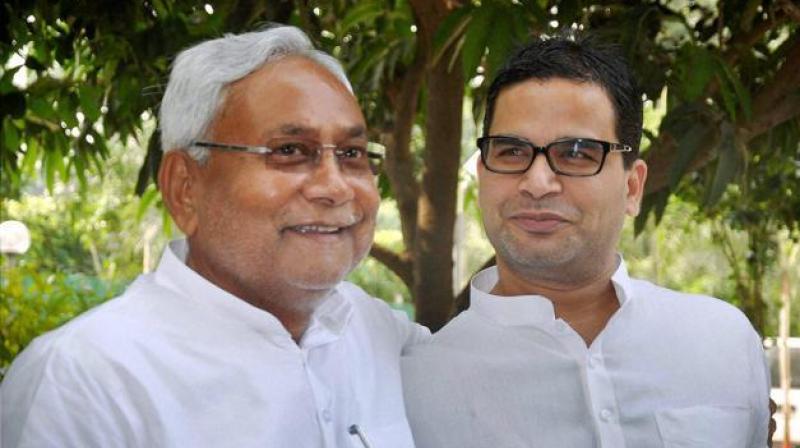
Nitish appoints Prashant Kishor as JD-U Vice President

October 16, 2018 by Nasheman

Bihar Chief Minister and Janata Dal-United President Nitish Kumar on Tuesday named Prashant Kishor as the party Vice President, a month after the election strategist joined the party.

“He (Kishor) has been appointed Vice President of the party,” JD-U spokesperson and Secretary General K.C. Tyagi told IANS.

The 41-year-old former UN official, who founded the Indian Political Action Committee (I-Pac), successfully ran the Nitish Kumar-led Grand Alliance campaign during the 2015 Bihar Assembly election.

The Grand Alliance comprised the JD-U, Lalu Prasad’s RJD and the Congress and it humbled the BJP-led alliance.

Thereafter, Nitish Kumar named Kishor as his Adviser, giving him a Cabinet rank.

IANS

Filed Under: News & Politics

Shehbaz Sharif’s remand extended by 14 days

October 16, 2018 by Nasheman

Pakistan’s anti-corruption body was on Tuesday granted a 14-day extension in the remand of Pakistan Muslim League (Nawaz) President Shehbaz Sharif in a multi-billion rupee housing scam case.

The former Punjab Chief Minister, who has been in the National Accountability Bureau (NAB) custody since October 6, was presented in the accountability court in Lahore amid tight security as his 10-day remand in the Ashiana Housing Scheme case ended.

He will now be in NAB’s remand till October 30, Dawn online reported.

The anti-graft body said Sharif was involved in corruption in the housing scheme during his tenure as the Chief Minister from 2013 to May 2018. It said that he had “misused his powers” and granted contracts to unqualified companies of his friends, causing “losses of millions of rupees to the national exchequer”.

Sharif was arrested earlier this month inside the anti-graft watchdog’s Lahore office where he was summoned to record his statement in connection with the Punjab Saaf Pani Company case.

He denies the graft allegations, describing these as “false and baseless”.

During the Tuesday hearing, the leader said that he had not misused his seat or done any corrupt practice. “This is a false accusation, I have saved the country’s money and put it in the national exchequer.”

“I was called for Saaf Pani and arrested for Ashiana,” he told the court.

Later, talking to Geo News outside the accountability court, Sharif said: “They could not prove a penny’s worth corruption against me. I call NAB officers myself to question me.”

The bureau was also investigating Shehbaz Sharif in the clean water project scam, Paragon Housing Society scandal and Punjab Power Company corruption cases.

IANS

Filed Under: World

Cong loses votes when I give speeches: Digvijay

October 16, 2018 by Nasheman


A video of former Madhya Pradesh Chief Minister Digvijay Singh has gone viral on the social media in which he says that the Congress loses votes when he gives speeches.

In the video, recorded when he had gone to Congress MLA Jitu Patwari’s house, Singh says: “If work is not done then the Congress will not come to power. I am not giving speeches because then the Congress loses votes.”

In recent days, Singh has distanced himself from election campaigning.

Madhya Pradesh goes to polls on November 28. The results will be announced on December 11.

Filed Under: News & Politics

  • « Previous Page
  • 1
  • …
  • 1253
  • 1254
  • 1255
  • 1256
  • 1257
  • …
  • 1904
  • Next Page »

Follow Us

  • Facebook
  • Twitter
  • YouTube

KNOW US

  • About Us
  • Corporate News
  • FAQs
  • NewsVoir
  • Newswire
  • Realtor arrested for NRI businessman’s murder in Andhra Pradesh

GET INVOLVED

  • Corporate News
  • Letters to Editor
  • NewsVoir
  • Newswire
  • Realtor arrested for NRI businessman’s murder in Andhra Pradesh
  • Submissions

PROMOTE

  • Advertise
  • Corporate News
  • Events
  • NewsVoir
  • Newswire
  • Realtor arrested for NRI businessman’s murder in Andhra Pradesh

Archives

  • February 2026 (6)
  • January 2026 (12)
  • December 2025 (6)
  • November 2025 (8)
  • October 2025 (12)
  • September 2025 (25)
  • August 2025 (46)
  • July 2025 (110)
  • June 2025 (28)
  • May 2025 (14)
  • April 2025 (50)
  • March 2025 (35)
  • February 2025 (34)
  • January 2025 (43)
  • December 2024 (83)
  • November 2024 (82)
  • October 2024 (156)
  • September 2024 (202)
  • August 2024 (165)
  • July 2024 (169)
  • June 2024 (161)
  • May 2024 (107)
  • April 2024 (104)
  • March 2024 (222)
  • February 2024 (229)
  • January 2024 (102)
  • December 2023 (142)
  • November 2023 (69)
  • October 2023 (74)
  • September 2023 (93)
  • August 2023 (118)
  • July 2023 (139)
  • June 2023 (52)
  • May 2023 (38)
  • April 2023 (48)
  • March 2023 (166)
  • February 2023 (207)
  • January 2023 (183)
  • December 2022 (165)
  • November 2022 (229)
  • October 2022 (224)
  • September 2022 (177)
  • August 2022 (155)
  • July 2022 (123)
  • June 2022 (190)
  • May 2022 (204)
  • April 2022 (310)
  • March 2022 (273)
  • February 2022 (311)
  • January 2022 (329)
  • December 2021 (296)
  • November 2021 (277)
  • October 2021 (237)
  • September 2021 (234)
  • August 2021 (221)
  • July 2021 (237)
  • June 2021 (364)
  • May 2021 (282)
  • April 2021 (278)
  • March 2021 (293)
  • February 2021 (192)
  • January 2021 (222)
  • December 2020 (170)
  • November 2020 (172)
  • October 2020 (187)
  • September 2020 (194)
  • August 2020 (61)
  • July 2020 (58)
  • June 2020 (56)
  • May 2020 (36)
  • March 2020 (48)
  • February 2020 (109)
  • January 2020 (162)
  • December 2019 (174)
  • November 2019 (120)
  • October 2019 (104)
  • September 2019 (88)
  • August 2019 (159)
  • July 2019 (122)
  • June 2019 (66)
  • May 2019 (276)
  • April 2019 (393)
  • March 2019 (477)
  • February 2019 (448)
  • January 2019 (693)
  • December 2018 (736)
  • November 2018 (570)
  • October 2018 (611)
  • September 2018 (692)
  • August 2018 (666)
  • July 2018 (468)
  • June 2018 (440)
  • May 2018 (616)
  • April 2018 (772)
  • March 2018 (338)
  • February 2018 (157)
  • January 2018 (188)
  • December 2017 (142)
  • November 2017 (122)
  • October 2017 (146)
  • September 2017 (176)
  • August 2017 (201)
  • July 2017 (222)
  • June 2017 (155)
  • May 2017 (205)
  • April 2017 (156)
  • March 2017 (178)
  • February 2017 (195)
  • January 2017 (149)
  • December 2016 (143)
  • November 2016 (169)
  • October 2016 (165)
  • September 2016 (137)
  • August 2016 (115)
  • July 2016 (116)
  • June 2016 (124)
  • May 2016 (170)
  • April 2016 (150)
  • March 2016 (199)
  • February 2016 (201)
  • January 2016 (216)
  • December 2015 (210)
  • November 2015 (174)
  • October 2015 (281)
  • September 2015 (241)
  • August 2015 (250)
  • July 2015 (188)
  • June 2015 (216)
  • May 2015 (281)
  • April 2015 (306)
  • March 2015 (296)
  • February 2015 (280)
  • January 2015 (245)
  • December 2014 (286)
  • November 2014 (254)
  • October 2014 (185)
  • September 2014 (98)
  • August 2014 (7)

Copyright © 2026 · News Pro Theme on Genesis Framework · WordPress · Log in