• Home
  • About Us
  • Events
  • Submissions
  • Advertise
  • Contact Us
  • NewsVoir
  • Newswire
  • Nasheman Urdu ePaper

Nasheman

India's largest selling Urdu weekly, now also in English

  • News & Politics
    • India
    • Indian Muslims
    • Muslim World
  • Culture & Society
  • Opinion
  • In Focus
  • Human Rights
  • Photo Essays
  • Multimedia
    • Infographics
    • Podcasts
You are here: Home / Archives for Nasheman

Death toll in devastating Kerala floods rises to 77

August 16, 2018 by Nasheman


The death toll brought on by floods, landslides, and bridge collapses in India’s monsoon-hit state of Kerala has risen to 77 as heavy rainfall threatened new areas.

Authorities in the southern state, which is home to 33 million people, have placed local agencies on the highest alert level in what has turned out to be Kerala’s worst monsoon in almost a century.

“All districts are under red alert as more rains are expected in the next 24 hours,” an official from the Kerala State Disaster Management Authority told AFP on Thursday.

Kerala is battered by the monsoon every year but the rains have been particularly severe since August 8, flooding hundreds of villages and prompting the authorities to suspend flights in and out of the region.

More than 60,000 people have sought shelter in relief camps and the army and navy have been called in to assist with rescue operations, airlifting people to the hospital, according to the official.

Unconfirmed local media reports mentioned a much higher toll and cited ongoing efforts to reach many flooded areas.

Prime Minister Narendra Modi said on Thursday that he was “praying for the safety and well-being of the people of Kerala” and has ordered the Defence Ministry to “further step up the rescue and relief operations across the state.”

WATCH: India: Monsoon floods, landslides kill dozens in Kerala state
Kerala Chief Minister Pinarayi Vijayan’s office announced on Twitter that Kochi International Airport – the main gateway to the region – would be closed until Saturday “due to heavy rains and resultant flooding”.

Vijayan held emergency meetings with rescue officials in the state late on Wednesday and discussed the situation with Prime Minister Narendra Modi.

The chief minister has requested the deployment of additional personnel from the Indian army, navy and other emergency forces who are already working across the state, famed for its pristine palm-lined beaches and tea plantations.

“Our state is in the midst of an unprecedented flood havoc,” Vijayan said earlier this week. “The calamity has caused immeasurable misery and devastation.”

Authorities have opened the gates of 34 reservoirs as water reached dangerous levels.

Vijayan’s office on Wednesday said that the authorities were also worried about rising water levels in the massive Mullaperiyar dam, and urged officials in the neighboring state of Tamil Nadu to release water from the reservoir.

Hundreds of villages have been flooded, more than 10,000 kilometers of roads and thousands of homes have been destroyed or damaged across the state, officials said.

India: Monsoon floods, landslides kill dozens in Kerala state
“We have asked all airlines, domestic and foreign, to reschedule their Cochin flights either from Trivandrum or from Calicut,” Suresh Prabhu, India’s civil aviation minister said on Twitter.

“For international flights, this will require special dispensation which has been granted considering the emergency DGCA (Directorate General of Civil Aviation) is coordinating,” he added.

More than one million foreign tourists visited Kerala last year, according to official data.

Filed Under: Environment, Uncategorized

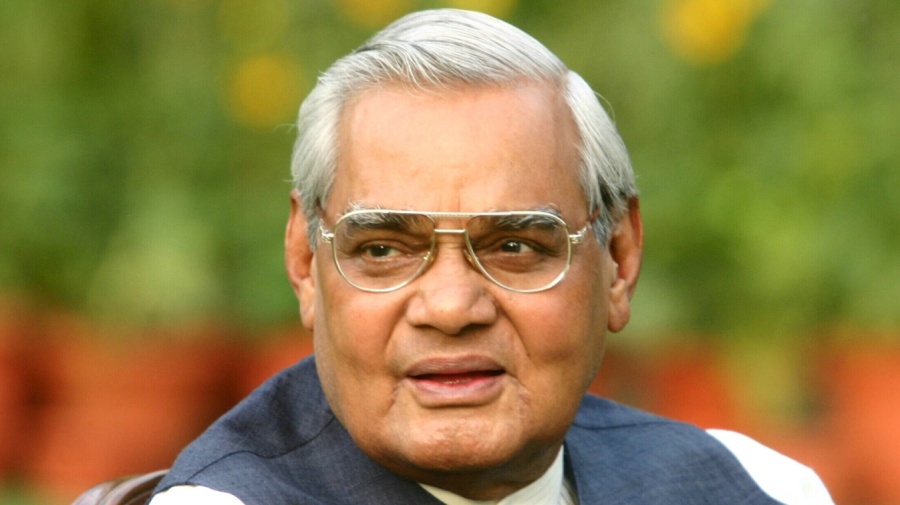
Vajpayee: A man of moderation who raised India’s global stature

August 16, 2018 by Nasheman


He was a man of moderation in a fraternity of jingoistic nationalists; a peace visionary in a region riven by religious animosity; and a man who believed in India’s destiny and was ready to fight for it.

Former Prime Minister Atal Bihari Vajpayee (93), who died on Thursday, will go down in history as a person who tried to end years of hostility with Pakistan and put development on the front burner of the country’s political agenda. He was also the first non-Congress Prime Minister to complete a full five-year term.

Even though he lived the last 13 years of his life in virtual isolation, dogged by debilitating illnesses and bedridden, he has left an enduring legacy for the nation and the region where he was much loved and respected across the political spectrum and national boundaries, including in Pakistan.

In the tumultuous period he presided over the destiny of the world’s largest democracy, Vajpayee stunned the world by making India a declared nuclear state and then almost went to war with Pakistan before making peace with it in the most dramatic fashion. In the process, his popularity came to match that of Indira Gandhi, a woman he admired for her guts even as he hated her politics.

He also became the best-known national leader after Indira Gandhi and her father Jawaharlal Nehru.

After despairing for years that he would never become Prime Minister and was destined to remain an opposition leader all his life, he achieved his goal, but only for 13 days, from May 16-28, 1996, after his deputy, L.K. Advani, chose not to contest elections that year.

His second term came on March 19, 1998, and lasted 13 months, a period during which India stunned the world by undertaking a series of nuclear tests that invited global reproach and sanctions.

Although his tenure again proved short-lived, his and his government’s enhanced stature following the world-defying blasts enabled him to return as Prime Minister for the third time on October 13, 1999, a tenure that lasted a full five-year term.

When finally he stepped down in May 2004, after an election that he was given to believe he would win, it marked the end of a long and eventful political career spanning six decades.

Vajpayee had gone into these elections riding a personality cult that projected him as a man who had brought glory to the nation in unprecedented ways. The BJP’s election strategy rested on seeking a renewed mandate over three broad pillars of achievement that the government claimed — political stability in spite of the pulls and pressures of running a multi-party coalition; a “shining” economy that saw a dizzying 10.4 percent growth in the last quarter of the previous year; and peace with Pakistan that changed the way the two countries looked at each other for over 50 years.

The results of the elections could not have come as a greater shock to a man who was hailed for his achievements and who was named by Time magazine as one of the 100 influential men of the decade.

Success didn’t come easily to the charismatic politician, who was born on Christmas Day in 1924 in Gwalior, Madhya Pradesh, into a family of moderate means. His father was a school teacher and Vajpayee would later recall his early brush with poverty.

He did his Masters in Political Science, studying at the Victoria College in Gwalior and at the DAV College in Kanpur, Uttar Pradesh, where he first contested, and lost, elections. He began his professional career as a journalist, working with Rashtradharma, a Hindi monthly, Panchjanya, a Hindi weekly, and two Hindi dailies, Swadesh and Veer Arjun. By then he had firmly embraced the ideals of the Hindu nationalist Rashtriya Swayamsewak Sangh (RSS).

But even as he struggled to win electoral battles, his command over Hindi, the lingua franca of the North Indian masses, his conciliatory politics and his riveting oratory brought him into public limelight.

His first entry into Parliament was in 1962 through the Rajya Sabha, the upper house. It was only in 1971 that he won a Lok Sabha election. He was elected to the lower house seven times and to the Rajya Sabha twice.

Vajpayee spent months in prison when Indira Gandhi imposed Emergency rule in June 1975 and put her political opponents in jail. When the Janata Party took office in 1977, dethroning the Congress for the first time, he became the foreign minister.

The lowest point in his career came when he lost the 1984 Lok Sabha polls, that too from his birthplace Gwalior, after Rajiv Gandhi won an overwhelming majority following his mother Indira Gandhi’s assassination. And the BJP he led ended up with just two seats in the 545-member Lok Sabha, in what looked like the end of the road for the right-wing party. In no time, Vajpayee was replaced and “eclipsed” by his long-time friend L.K. Advani.

Although they were the best of friends publicly, Vajpayee never fully agreed with Advani’s and the assorted Hindu nationalist groups’ strident advocacy of Hindutva, an ideology ranged against the idea of secular India. Often described as the right man in the wrong party, there were also those who belittled him as a moderate “mask” to a hardline Hindu nationalist ideology. Often he found his convictions and value systems at odds with the party, but the bachelor-politician never went against it.

It was precisely this persona of Vajpayee — one merged in Hindutva ideology yet seemingly not wholly willing to bow to it — that won him admirers cutting across the political spectrum. It was this trait that made him the Prime Minister when the BJP’s allies concluded they needed a moderate to steer a hardliner, pro-Hindu party.

He brought into governance measures that created for India a distinct international status on the diplomatic and economic fronts. In his third prime ministerial stint, Vajpayee launched a widely acclaimed diplomatic initiative by starting a bus service between New Delhi and Pakistan’s Lahore city.

Its inaugural run in February 1999 carried Vajpayee and was welcomed on the border by his Pakistan counterpart Nawaz Sharif. It was suspended only after the 2001 terror attack on the Indian Parliament that nearly led to a war between the two nuclear-armed neighbours.

The freeze between the two countries, including an eyeball-to-eyeball confrontation on the border for nearly a year, was finally cracked in the spring of 2003 when Vajpayee, while in Kashmir, extended a “hand of friendship” to Pakistan. That led to the historic summit in January 2004 with then President Pervez Musharraf in Islamabad — a remarkable U-turn after the failed summit in Agra of 2001. Despite the two men being so far apart in every way, Musharraf developed a strong liking for the Indian leader.

His unfinished task, one that he would probably rue, would be the peace process with Pakistan that he had vowed to pursue to its logical conclusion and a resolution of the Kashmir dispute.

He was not known as “Atal-Ji”, a name that translates into firmness, for nothing. He could go against the grain of his party if he saw it deviate from its path. When Hindu hardliners celebrated the destruction of the 16th century Babri Mosque at Ayodhya, he was full of personal remorse for the apocalyptic action and called it — in a landmark interview to IANS — the “worst miscalculation” and a “misadventure”. He even despaired that “moderates have no place — who is going to listen to the voice of sanity?”

In his full five-year term, he successively carried forward India’s economic reforms programme with initiatives to improve infrastructure, including flagging off a massive national highway project that has become associated with his vision, went for massive privatisation of unviable state undertakings despite opposition from even within his own party.

While his personal image remained unsullied despite his long innings in the murky politics of this country, his judgment was found wanting when his government was rocked by an arms bribery scandal that sought to expose alleged payoffs to some senior members of his cabinet. His failure to speak up when members of his party and its sister organisations, who are accused of killing more than 1,000 Muslims in Gujarat, was questioned by the liberal fraternity who wondered aloud about his secular proclamations. He wanted then Chief Minister — now Prime Minister, Narendra Modi — to take responsibility for the riots and quit but was prevailed upon by others not to press his decision.

A day before his party lost power, Vajpayee was quoted as saying in a television interview that if and when he stepped down he would like to devote his time to writing and poetry. But fate ruled otherwise. The man who once rued that “I have waited too long to be Prime Minister” found his last days in a world far removed from the adulation and attention — though across the nation people prayed for his well-being — surrounded only by care-givers and close family whom he even failed to recognise.
Filed Under: Culture & Society

Vajpayee’s death is end of an era, says Modi

August 16, 2018 by Nasheman


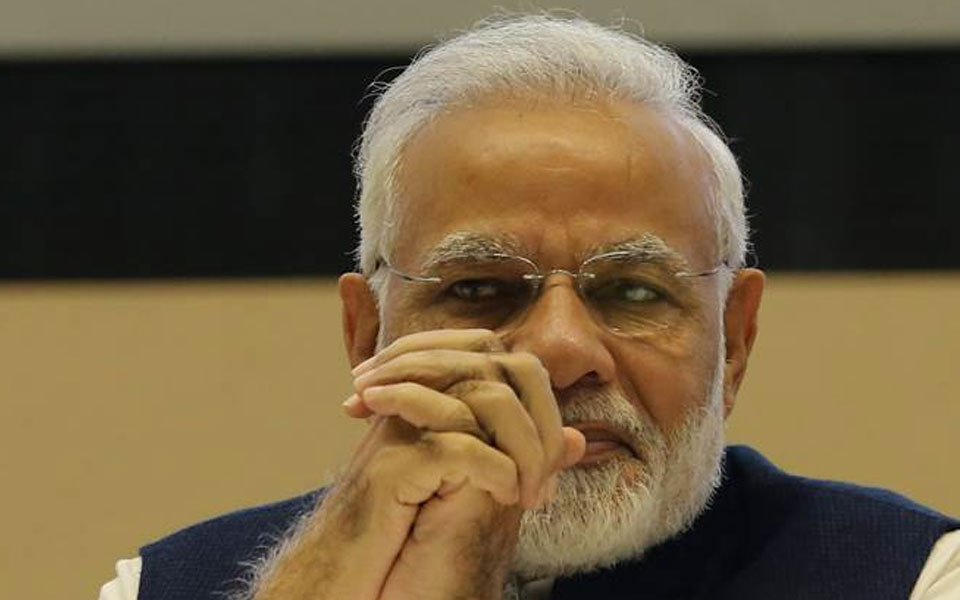
Prime Minister Narendra Modi on Thursday described the passing away of former Prime Minister Atal Bihari Vajpayee as “end of an era” and said that every Indian and every BJP worker will continue to be guided by his vision.

Modi said in a series of tweets that Vajpayee’s death had left him speechless but a wave of feelings was sweeping his mind.

“I am speechless, I am thoughtless but a wave of feelings is sweeping my mind. Our respected Atalji is no more. He dedicated every moment of his life to the service of the country. His passing away is end of an era,” he said.

Modi quoted a poem of Vajpayee to express his feelings. The poem spoke of Vajpayee’s lack of fear of death.

“Atalji is not with us now but every Indian and every BJP worker will get inspiration and guidance from him. May the Almighty rest his soul rest in peace and give strength to every one who loved him to bear the loss. Om Shanti,” he said.

Vajpayee, a founder member of the BJP and the first non-Congress prime minister to complete a full term in office, died in Delhi on Thursday after prolonged illness. He was 93.

Filed Under: Culture & Society

350 US dailies stand up to Trump’s media attacks

August 16, 2018 by Nasheman


At least 350 news outlets have launched a campaign to counter US President Donald Trump’s attacks against the media and promote a free press.

Hundreds of US newspapers, from the Martha’s Vineyard Times to the Dallas Morning News; from the Yankton County Observer in South Dakota to the Bangor Daily News in Maine, devoted print space on Thursday in an joint effort to defend press freedom in the country, CNN reported.

The move was initiated by the Boston Globe for a nationwide denouncement of the President’s “dirty war” against the media, using the hashtag #EnemyOfNone. It pledged to write an editorial “on the dangers of the administration’s assault on the press” and asked others to do the same.

The campaign is significant because it moves the conversation about Trump’s attacks out of Washington and New York and into communities across the country. He often derides media reports as “fake news” and attacks journalists as “enemies of the people”.

The initial positive response from 100 news organisations grew closer to 350 with major US national newspapers and smaller local outlets answering the call, along with international publications like the UK newspaper, the Guardian.

The Boston Globe in its editorial, “Journalists Are Not The Enemy”, argued that a free press had been a core American principle for more than 200 years.

The New York Times in its article, A Free Press Needs You”, called Trump’s attacks “dangerous to the lifeblood of democracy”. It published excerpts from dozens more publications beneath.

The New York Post, answered the Globe’s call by saying “Who are we to disagree?” adding: “It may be frustrating to argue that just because we print inconvenient truths doesn’t mean that we’re fake news, but being a journalist isn’t a popularity contest. All we can do is to keep reporting.”

But it also said: “Will this make a difference? Not one whit”

The Philadelphia Inquirer said its city was the birthplace of US democracy, writing: “If the press is not free from reprisal, punishment or suspicion for unpopular views or information, neither is the country. Neither are its people.”

The Wall Street Journal declined to take part in the campaign.

A poll released by Quinnipiac University showed that most Americans, 65 per cent, regard the news media as an important part of democracy, not an “enemy”. But 26 per cent of respondents, including 51 per cent of Republicans, sided with Trump’s “enemy” rhetoric.

An Ipsos poll, also this month, gave similar figures. In addition it found that 23 per cent of Republicans, and about one in eight Americans overall, believed Trump should close down mainstream news outlets like CNN, the Washington Post and the New York Times.

Press freedom groups have been sounding alarms about the threats posed by Trump’s dehumanizing language.

He certainly ramped up the pressure on mainstream media with numerous tweets. The Trump Twitter Archive says he has tweeted 281 times so far using the term “fake news”.

Filed Under: World

Vajpayee’s death a great loss for India: Kejriwal

August 16, 2018 by Nasheman


Delhi Chief Minister Arvind Kejriwal on Thursday called the death of former Prime Minister Atal Bihari Vajpayee a great loss for the country.

“Am deeply saddened. A great loss for India,” he said in a tweet.

Kejriwal, who turned 50 on Thursday, had visited AIIMS along with his deputy Manish Sisodia to enquire about the health of Vajpayee, who was critical.

The 93-year-old former Prime Minister, who was admitted in the All India Institute of Medical Sciences (AIIMS) on June 11, was “on life support”.

Kejriwal had requested Aam Aadmi Party (AAP) volunteers and his well-wishers not to celebrate his birthday in view of Vajpayee’s condition.

Filed Under: Culture & Society

Kovind condoles Vajpayee’s death

August 16, 2018 by Nasheman


President Ram Nath Kovind on Thursday expressed his condolences on the death of former Prime Minister Atal Bihari Vajpayee.

“Extremely sad to hear of the passing away of Shri Atal Bihari Vajpayee, our former Prime Minister and a true Indian statesman. His leadership, foresight, maturity and eloquence put him in a league of his own. Atalji, the Gentle Giant, will be missed by one and all,” he tweeted.

Vajpayee died at the All India Institute of Medical Sciences (AIIMS) in Delhi. He was 93.

Filed Under: Culture & Society

Vajpayee’s death very big loss: Mamata

August 16, 2018 by Nasheman


West Bengal Chief Minister Mamata Banerjee on Thursday termed former Prime Minister Atal Bihari Vajpayee’s passing away a “very big loss” to the nation.

“Very very saddened that the great statesman and former Prime Minister Atal Bihari Vajpayee ji is no more with us.

“His passing away is a very big loss to our nation. I will always cherish many fond memories with him. Condolences to his family and his many admirers,” Mamata tweeted.

Vajpayee passed away at the All India Institute of Medical Sciences in New Delhi after prolonged illness. He was 93.

Filed Under: Culture & Society

Karnataka to shift flood-hit people to safer places

August 16, 2018 by Nasheman


With heavy rains upto 25 cm lashing coastal and south interior districts of Karnataka, the state is working to shift people stranded in flood-hit regions, an official statement said on Thursday.

“Chief Minister H.D. Kumaraswamy has discussed with the Air Force officials to rescue people stranded in the districts of Kodagu, Dakshina Kannada, Udupi, Hassan, Shivamogga and Chikkamagaluru and shift them to safety,” a statement from the Chief Minister’s Office said.

People living in Hattihole in Kodagu district, about 270 km southwest of here, which has been receiving very heavy rains, will be shifted to safer places soon, the statement said.

“The Chief Minister has directed the district officials to respond to people affected by the rains and open safety shelters if required,” it added.

Over the last 24 hours, parts of Kodagu and Dakshina Kannada districts received extremely heavy rains measuring beyond 24 cm, according to a weather advisory from the Bengaluru division of India Meteorological Department (IMD).

Coastal districts of Udupi received heavy rains upto 11 cm, Uttara Kannada 17 cm, south interior districts of Shivamogga 20 cm and Chikkamagaluru 6 cm.

Districts in the northern part of the state, which have been facing a rainfall deficit, have also received light to moderate rainfall.

Due to the heavy rains, landslides were reported since early this week in several parts of the state, particularly on the Bengaluru-Mangaluru route, leading to several state-run buses and trains suspending their services on rain-affected routes.

The state-run Karnataka State Road Transport Corporation (KSRTC) has suspended its operations from Bengaluru towards Mangaluru and Kerala, due to landslides, heavy rains and flooded roads, a statement said.

A total of six trains including Karwar-Yesvantpur Express, Yesvantpur-Mangalore Junction Express, were partially cancelled and a few other trains were diverted since Tuesday due to the landslides, the South Western Railway said in a statement.

With the state’s reservoirs in the Cauvery basin being filled to their maximum capacity during bountiful rains over the last two months, the incessant rains have been causing the rivers to overflow.

In the Cauvery basin, water from the Krishna Raja Sagara (KRS) reservoir across Cauvery river in Mandya district, Kabini reservoir in Mysuru districtAacross Kabini river, one of the major tributaries of Cauvery, is being released over the past few days, flooding the nearby towns and villages.

Over 1.2 lakh cusecs of rainwater was released as of Wednesday evening from KRS reservoir, 50,000 cusecs from Kabini reservoir, 15,000 cusecs from Harangi reservoir across Harangi river (tributary of Cauvery) in Kodagu district and 12,000 cusecs from Hemavati reservoir across Hemavati river (tributary of Cauvery) in Hassan district, officials said.

The Karnataka State Disaster Management Authority has warned the coastal and south interior districts to be braced for heavy rains for the next four days.

District officials in coastal and southern part of the state have formed teams prepared with lifejackets, boats and other equipment to undertake rescue operations when required.

Due to high waves and heavy winds, the IMD has asked the fishermen to avoid venturing into the Arabian Sea.

“Fishermen are advised not to venture into the Arabian sea over Karnataka coast, north Kerala coastal and over Lakshwadeep area,” it said.

Filed Under: Environment

Former Prime Minister Vajpayee dead at 93

August 16, 2018 by Nasheman


Former Prime Minister Atal Bihari Vajpayee, a moderate face in saffron politics and the first non-Congress prime minister to complete a full term in office, died here on Thursday after a prolonged illness, AIIMS authorities said. He was 93.

“It is with profound grief that we inform about the sad demise of former Prime Minister Atal Bihari Vajpayee at 5.05 p.m. on 16.08.2018,” an AIIMS press statement said.

The statement said Vajpayee was admitted on June 11 and was stable in the last nine weeks. “Unfortunately, his condition deteriorated over the last 36 hours and he was put on life support system. Despite the best of efforts, we have lost him today.”

Vajpayee, a diabetic patient, was undergoing treatment at the All India Institute of Medical Sciences (AIIMS). His condition worsened further on Wednesday evening with leaders from across the political spectrum thronging the hospital and enquiring about his health.

The former Prime Minister, whose birthday on December 25 is celebrated as Good Governance Day, was honoured with the Bharat Ratna in 2014 at his home.

He was Prime Minister for 13 days in mid-1996 when he was forced to resign ahead of the confidence vote for which he did not have the numbers.

Vajpayee again became the Prime Minister in March 1998 but his government fell 13 months later on the floor of the Lok Sabha losing by one vote in the confidence motion after AIADMK headed by the late J.Jayalalithaa withdrew support to the BJP.

The BJP government headed by Vajpayee returned to power in 1999 and completed its full term till 2014.

Filed Under: News & Politics

Wadekar one of the most elegant left-handers I have played with: Prasanna

August 16, 2018 by Nasheman


Shocked over the demise of Ajit Wadekar, spin great Erapalli Prasanna on Thursday said his former teammate was one of the most elegant left handers he had played with.

“I am utterly shocked. I heard it in the morning and I still don’t know the reason. Ajit was the one of the most elegant left-handers I played with and under,” Prasanna told IANS over phone.

Wadekar, who was suffering from prolonged illness, breathed his last at the age of 77.

Wadekar was an excellent catcher in the slips and famously led India to historic series wins in the West Indies and England in 1971.

“He was a defensive captain but when the situation demanded, he used to up the ante and deliver the goods quietly. He went about his business without much ado,” Prasanna said.

Wadekar took over the reins from Mansur Ali Khan Pataudi during the 1970-71 West Indies tour thanks to the casting vote of Vijay Merchant, the chairman of selectors.

In later years, Wadekar served as India’s first ever official head coach, taking over in 1992.

“I will always remember him as a great leader and someone who never liked to lose. Bombay cricket has always been like that and he was no different. So he was defensive but when the chips were down, he knew how to get the results,” Prasanna added.

Filed Under: Sports

  • « Previous Page
  • 1
  • …
  • 1651
  • 1652
  • 1653
  • 1654
  • 1655
  • …
  • 2641
  • Next Page »

Follow Us

  • Facebook
  • Twitter
  • YouTube

KNOW US

  • About Us
  • Corporate News
  • FAQs
  • NewsVoir
  • Newswire
  • Realtor arrested for NRI businessman’s murder in Andhra Pradesh

GET INVOLVED

  • Corporate News
  • Letters to Editor
  • NewsVoir
  • Newswire
  • Realtor arrested for NRI businessman’s murder in Andhra Pradesh
  • Submissions

PROMOTE

  • Advertise
  • Corporate News
  • Events
  • NewsVoir
  • Newswire
  • Realtor arrested for NRI businessman’s murder in Andhra Pradesh

Archives

  • February 2026 (6)
  • January 2026 (12)
  • December 2025 (6)
  • November 2025 (8)
  • October 2025 (12)
  • September 2025 (25)
  • August 2025 (46)
  • July 2025 (110)
  • June 2025 (28)
  • May 2025 (14)
  • April 2025 (50)
  • March 2025 (35)
  • February 2025 (34)
  • January 2025 (43)
  • December 2024 (83)
  • November 2024 (82)
  • October 2024 (156)
  • September 2024 (202)
  • August 2024 (165)
  • July 2024 (169)
  • June 2024 (161)
  • May 2024 (107)
  • April 2024 (104)
  • March 2024 (222)
  • February 2024 (229)
  • January 2024 (102)
  • December 2023 (142)
  • November 2023 (69)
  • October 2023 (74)
  • September 2023 (93)
  • August 2023 (118)
  • July 2023 (139)
  • June 2023 (52)
  • May 2023 (38)
  • April 2023 (48)
  • March 2023 (166)
  • February 2023 (207)
  • January 2023 (183)
  • December 2022 (165)
  • November 2022 (229)
  • October 2022 (224)
  • September 2022 (177)
  • August 2022 (155)
  • July 2022 (123)
  • June 2022 (190)
  • May 2022 (204)
  • April 2022 (310)
  • March 2022 (273)
  • February 2022 (311)
  • January 2022 (329)
  • December 2021 (296)
  • November 2021 (277)
  • October 2021 (237)
  • September 2021 (234)
  • August 2021 (221)
  • July 2021 (237)
  • June 2021 (364)
  • May 2021 (282)
  • April 2021 (278)
  • March 2021 (293)
  • February 2021 (192)
  • January 2021 (222)
  • December 2020 (170)
  • November 2020 (172)
  • October 2020 (187)
  • September 2020 (194)
  • August 2020 (61)
  • July 2020 (58)
  • June 2020 (56)
  • May 2020 (36)
  • March 2020 (48)
  • February 2020 (109)
  • January 2020 (162)
  • December 2019 (174)
  • November 2019 (120)
  • October 2019 (104)
  • September 2019 (88)
  • August 2019 (159)
  • July 2019 (122)
  • June 2019 (66)
  • May 2019 (276)
  • April 2019 (393)
  • March 2019 (477)
  • February 2019 (448)
  • January 2019 (693)
  • December 2018 (736)
  • November 2018 (570)
  • October 2018 (611)
  • September 2018 (692)
  • August 2018 (666)
  • July 2018 (468)
  • June 2018 (440)
  • May 2018 (616)
  • April 2018 (772)
  • March 2018 (338)
  • February 2018 (157)
  • January 2018 (188)
  • December 2017 (142)
  • November 2017 (122)
  • October 2017 (146)
  • September 2017 (176)
  • August 2017 (201)
  • July 2017 (222)
  • June 2017 (155)
  • May 2017 (205)
  • April 2017 (156)
  • March 2017 (178)
  • February 2017 (195)
  • January 2017 (149)
  • December 2016 (143)
  • November 2016 (169)
  • October 2016 (165)
  • September 2016 (137)
  • August 2016 (115)
  • July 2016 (116)
  • June 2016 (124)
  • May 2016 (170)
  • April 2016 (150)
  • March 2016 (199)
  • February 2016 (201)
  • January 2016 (216)
  • December 2015 (210)
  • November 2015 (174)
  • October 2015 (281)
  • September 2015 (241)
  • August 2015 (250)
  • July 2015 (188)
  • June 2015 (216)
  • May 2015 (281)
  • April 2015 (306)
  • March 2015 (296)
  • February 2015 (280)
  • January 2015 (245)
  • December 2014 (286)
  • November 2014 (254)
  • October 2014 (185)
  • September 2014 (98)
  • August 2014 (7)

Copyright © 2026 · News Pro Theme on Genesis Framework · WordPress · Log in