• Home
  • About Us
  • Events
  • Submissions
  • Advertise
  • Contact Us
  • NewsVoir
  • Newswire
  • Nasheman Urdu ePaper

Nasheman

India's largest selling Urdu weekly, now also in English

  • News & Politics
    • India
    • Indian Muslims
    • Muslim World
  • Culture & Society
  • Opinion
  • In Focus
  • Human Rights
  • Photo Essays
  • Multimedia
    • Infographics
    • Podcasts
You are here: Home / Archives for News & Politics / India

Americans don’t trust Trump: Indian-American Congresswoman

September 18, 2018 by Nasheman


Americans are recognizing that they don’t trust the US President who has maintained that he knew nothing about what was went on in his campaign, Indian-American Congressman Pramila Jayapal has said.

Her comments came after Donald Trump’s former campaign manager Paul Manafort pleaded guilty to conspiracy charges last week.

He also agreed to cooperate with Special Counsel Robert Mueller’s ongoing investigations about the Russian interference in the 2016 presidential election.

“You see people recognizing they don’t trust the President. They believe that Bob Mueller is doing a good job and that the investigation should continue. People are saying, look, this is outrageous,” the first Indian-American woman elected to the US House of Representatives told CNN on Sunday.

“This level of corruption, greed, some of the individual charges that are outlined in the Manafort, charging document really show that this guy (Manafort)… is in jail because of jury tampering.

“When you think about this, it isn’t just the individual pieces that we’re seeing, but what we’re seeing is top advisers, people who ran the campaign, the campaign manager, the deputy campaign manager, the President’s personal lawyer who have all pleaded guilty.

“… And you have to begin to wonder how it could possibly be the case that the President knew nothing about what was going on,” asked Jayapal.

She praised Muller for doing a “great investigation”.

“I think Bob Muller has been doing a great investigation. I think he was just handed the keys to the castle, not just with Manafort but also with Michael Cohen.”

In August, Cohen pleaded guilty to violating election laws and said he had been directed to do so by the President. He had also admitted paying hush money to two women to keep them from talking about their affairs with Trump during the presidential campaign.

“They (people) see the chaos of the last 18 months. They don’t want it. They don’t like shattering of norms. What does a person who has the biggest bully pulpit of the White House do? They don’t like the tweets that come from the President, contesting what happened in (Hurricane) Maria,” Jayapal said.

She said that people want Trump to be focussed and to be presidential, but “he is none of those things”.

“In addition to that, people are not seeing their own lives changing. Healthcare is the number one issue on the table.

“When you look at what Republicans have done to undermine healthcare costs, to drive premiums up, to strip pre-existing, the ability to qualify for healthcare with pre-existing conditions, these are things that Americans care about. They do not see healthcare getting better,” she said.

(IANS)

Filed Under: India

India-US military exercise begins in Uttarakhand

September 17, 2018 by Nasheman

India and US armies on Sunday began a two-week joint military exercise in Uttarakhand to hone their tactical and technical skills in countering insurgency and terrorism in a United Nation peacekeeping scenario, said officials.

They said that battalion-strong Army personnel from the US and an equal number from India are participating in ‘Exercise Yudh Abhyas 2018’ at Chaubattia in Almora district.

“State-of-the-art equipment for surveillance and tracking, specialist weapons for close- quarter battle with terrorists, explosive and improvised explosive device detectors, as well as the latest communication equipment are being fielded by both sides,” a Defence Ministry statement said.

The two armies will jointly train, plan and execute a series of tactical drills for neutralisation of likely threats that may be encountered in UN peacekeeping operations during division-level command post exercise, said the statement.

“The experts from both sides will discuss and share each other’s experience in varied topics for mutual benefit.”

The exercise commenced with the unfurling of the national flags of both the countries to the strains of their respective national anthems ‘Jana Gana Mana’ and ‘The Star Spangled Banner’.

The US contingent was represented by 1st Infantry Battalion and 23 Infantry Regiment, while the Indian side is represented by an Infantry Battalion.

“General Officer Commanding, 6 Mountain Division, welcomed the US soldiers in his inaugural remarks and highlighted the shared beliefs in democracy, freedom, equality and justice,” added the statement.

(IANS)

Filed Under: India

Militants involved in J&K highway attack traced gunfight on

September 13, 2018 by Nasheman

Jammu, Sep 13 (IANS) Three militants who fired at two persons on the Jammu-Srinagar highway in Udhampur district before escaping were tracked down to a house in Reasi district on Thursday, police said.

A gunfight has erupted between the holed up militants and security forces following evacuation in the area.

The militants on board a truck attacked a checkpost in Jhajar Kotli area of Udhampur injuring a CRPF trooper and a forest guard on Wednesday. They then abandoned the vehicle and vanished in the bushes. A search operation has been on ever since.

The army, police and the Central Reserve Police Force tracked militant movement using drones, helicopters and other surveillance gadgets in the bushy forests of Jhajar and adjoining areas.

“They were finally tracked down to a house in Kakriyal area near Mata Vaishno Devi University,” the officer said.

The villagers were promptly evacuated from the area as the final assault on the militants was launched.

A villager earlier told the security forces that around 10 p.m. the three armed militants carrying haversacks entered his home, changed their clothes, took biscuits and water and left.

Traffic on the national highway between Nagrota-Jhajar Kotli was suspended on Thursday. Schools in the area were also closed for the day.

The police on Wednesday detained the driver and helper of the truck. One AK-47 rifle and three magazines were also recovered.

A police statement later said the three militants were carrying two AK-47 rifles, a pistol and haversacks.

[IANS]

Filed Under: India

Religion again to the fore before polls in Punjab By Jaideep Sarin

September 13, 2018 by Nasheman

Chandigarh Religion holds centre-stage in Punjab’s murky politics, especially in the run-up to important elections, be it assembly or parliamentary polls.

With the general election, scheduled in April-May next year, just months away, the religious issue of sacrilege cases of the Sikh holy Guru Granth Sahib is again at the forefront of Punjab political discourse.

In 2015, less than 18 months before assembly polls in the state, the sacrilege cases mysteriously increased. The incidents led to protests and the government of the day — of the Shiromani Akali Dal-Bharatiya Janata Party (SAD-BJP) alliance, which had been in power since 2007 — reacted to these. The result was violence and police action which left two persons dead and many others injured.

The opposition Congress took full advantage of the simmering situation to nail the Akali Dal. Sikh religious organisations, except for the Shiromani Gurdwara Parbandhak Committee (SGPC) and some other bodies which derive patronage from the SAD, too, were upset with the handling of the situation by the government led by Akali Dal stalwart and five-time Chief Minister Parkash Singh Badal.

The Congress romped home in the assembly polls with 77 seats in the 117-member assembly (the Congress strength now is 78 seats after winning another by-election). Of course, the party also used issues like rampant drug abuse and corruption to nail the SAD-BJP government.

With the general elections just months away, the present Congress government in the state led by Chief Minister Amarinder Singh has timed the inquiry commission reports on the sacrilege cases and the police firing related to it in a way that has forced the SAD to go on the defensive.

The Akali Dal, which has always depended heavily on its “Panthic” (Sikh religious) agenda over the past few decades, has been defending itself following accusations that its government did little to stop the sacrilege of the Sikh holy book and the violent incidents in the aftermath of all this.

Badal, who is over 90 years old, has been forced to defend the action (or inaction) of his then government in the sacrilege incidents.

It is not for the first time that religious matters are dictating electoral politics in the state.

The Akalis are themselves master players in this as their control of Sikh organisations, particularly the cash-rich SGPC, that have control over Sikh religious affairs.

The SAD, in the past, has never lost an opportunity to highlight the “Panth nu khatraa” (threat to the Sikh religion) from the Congress party and others. The SAD has also used the 1984 Operation Bluestar attack of the Army on the Golden Temple complex and the 1984 anti-Sikh riots against the Congress party to serve its political interests.

The Congress has tried several times in the past to break the stranglehold of the Akalis on the SGPC and other organisations but has largely remained unsuccessful.

Even now, the Congress has been accused of covertly playing games against the SAD and SGPC through Sikh religious preachers, who have their own limited following in the state.

With the Aam Aadmi Party (AAP), which is now the main opposition in the Punjab assembly (relegating the SAD to the third slot), also being in the fray in Punjab’s electoral politics, things have changed a lot for the traditional Congress and SAD opponents.

The AAP too has tried its hand at mixing religion with politics in Punjab by aligning itself before the February 2017 assembly polls with radical elements. Of course, the move backfired and the AAP, which at one stage was expecting to win the assembly elections and form the government, had to contend with being in the opposition.

The numerous “deras” (sects) and preachers who have cropped up in Punjab in the last two or three decades have given a new dimension to the mix of religion and politics in the state.

Amidst all this politics of religion, the real issues of lack of development, drug abuse, industry running away, no fresh investments, unemployment and agriculture taking a hit in the agrarian state have been relegated to the background.

(IANS)

Filed Under: India

Goa’s environment faces problems from infrastructure boom (Environment Feature) By Pamela D’Mello

September 13, 2018 by Nasheman

Panaji Goa’s much-highlighted opencast iron-ore mining has resulted in significant destruction of tree cover in the iron ore belts, where all vegetation is shaved off to scoop out top soil from hills and access the ore. The destruction left in its wake is well documented.

A report by The Energy and Resources Institute (TERI) in 1997 estimated that 2,500 hectares of forests were lost due to mining between 1988 and 1997. The India State of Forest Report 2017, said “forest cover within the recorded forest area has decreased by nine square km (900 ha) due to mining and other developmental activities” within two years from its 2015 assessment.

“Mining companies wanted to mine even the Western Ghat foothills. I refused permission. Seven of Goa’s rivers originate in the Ghats. Where will the water come from if you mine the hills,” former Goa principal chief conservator of forests Richard D’Souza told Mongabay-India. D’Souza, along with the late Governor of Goa, Lt. Gen. J.F.R. Jacob, notified two additional Western Ghat wildlife sanctuaries, Mhadei and Netravali, during a brief spell of President’s rule in 1999.

“That has saved Goa’s soil and water,” D’Souza claimed. Local legislators and the Goa government attempted to undo the notification, but never succeeded. Thanks to that move, the state now has one national park and six wildlife sanctuaries, covering over 755 square km (20.4 percent of its geographical area). Together with Dodamarg in Maharashtra and Anshi in Karnataka, they create a contiguous protected green corridor along the entire eastern section of Goa.

The process of carving out a core tiger reserve from four Goa sanctuaries is currently underway. This is expected to be further bad news for iron ore miners. A tiger reserve will increase the ecologically sensitive buffer zone to 10 kilometres from the reserve edge and put a question mark over 18 more leases. For similar reasons, mining lobbies stalled notification of an ESZ for years. A one-kilometre eco-sensitive zone (ESZ) was finally notified in 2015. Seventeen mines have to be phased out over a 10-year period due to this.

Goa’s export-based iron ore mining has been temporarily contained, largely due to the projected requirements of the domestic steel industry and the backing of the central government and administration towards the latter. The leases held by Goa-based exporters stand cancelled since February 2018. The exporters, who have the backing of the Goa government, have thus far been unable to get the Centre to intervene in their favour to restart mining and permit extensions of the current leases.

But while the spotlight has been on Goa’s miners, Goa’s eastern forests and state-wide green cover, in its coastal and middle regions, the state faces new and bigger threats. Big infrastructure under the central government’s Bharatmala and Sagarmala projects are speedily taking their toll on Goa’s green areas. Centrally-funded big infrastructure projects like eight-lane highways, a new airport, coal rail lines and a resultant real estate and construction boom, has seen large-scale tree-felling.

Road and rail projects are set to divert nearly 218 ha of protected and reserve forests in the Western Ghats, including in national park and wildlife sanctuary areas of the forests. The proposed forest diversion has remained under the media and NGO radar. The detailed project reports for the NH66, NH4A, NH17B and NH 17 six/eight laning projects are not accessible. Work execution has been split and sub-contracted to several construction engineering firms to ensure simultaneous and speedy completion with the National Highway Authority of India (NHAI), Ministry of Road Transport and Highways (MoRTH) and Goa Public Works Department (PWD) overseeing projects.

“Some infrastructure development may be necessary. But when governments are in a tearing hurry, they don’t want to wait and search for less damaging alternatives that would save forests and tree cover. These are five-year governments and they want to sign the contracts and tenders in a hurry before their own term ends. That’s the problem,” said Claude Alvares, director of the environmental action group Goa Foundation.

Infrastructure under the Sagarmala projects to move coal and other products through Goa, also connects the upcoming controversial Mopa greenfield airport and links Mormugao harbour to the steel mills of Karnataka for their coal import supply. As part of this infrastructure, the South Western Railway is laying a second track from Madgaon to Kulem and Kulem to Castlerock. It has sought permissions for forest clearance in this thickly-forested protected area, where an existing track was built in colonial times.

In 15 months from April 2017 to June 2018, the Forests Department granted permission to fell 28,910 trees for government projects, including 21,703 trees at the Mopa airport site. One of Goa’s busiest corporations, the Goa State Infrastructure Development Corporation, plans to cut 250 trees for beautification of a Freedom Fighters Memorial.

After the recent Kerala flood devastation, environmentalist Madhav Gadgil, author of the 2011 Western Ghats Ecology Expert Panel (WGEEP) report, argued for caution in the Western Ghats regions of Goa and Maharashtra, warning of flood risks if indiscriminate development continued to disturb natural flows in the region. Forest conservationists point out that development over the years in the Western Ghats have brought down the area under indigenous original evergreen forests canopy. The percentage of evergreen forest canopy indicates the real health of any forest.

“I hope there will be some caution. In Kerala, we have seen that a week of intense rain in fragile environments can undo all the development and investment and highways that governments have built over two decades,” commented Alvares.

(IANS/Mongabay)

Filed Under: India

Girl child marriage rate highest among SC/ST: NCPCR

September 13, 2018 by Nasheman

New Delhi The prevalence of child marriage in India is the highest amongst Scheduled Tribe girls (15 per cent) followed by Scheduled Castes (13 per cent), according to a report released by the National Commission for Protection of Child Rights (NCPCR).

The report which was released on the NCPCR website on Wednesday, is based on a comparative analysis of data on child marriage in the 15-19 age group from the third and fourth rounds of the National Family Health Survey (NHFS) conducted in 2005-2006 and 2015-16. The report has been prepared by Young Lives India, a research centre, in collaboration with the NCPCR.

According to the report, this phenomenon is evident among the top 10 states with the highest prevalence of child marriage.

West Bengal has the highest rate of child marriage amongst SC girls, while in Arunachal Pradesh it is highest among Scheduled Tribes. In other castes, Maharashtra has the highest percentage of girl child marriage.

Furthermore, Bihar, Gujarat and Telangana report very high prevalence of child marriages amongst OBC girls below the age of 18.

However, according to the report, a comparative analysis of child marriage for 15-19 year old girls as reported in NFHS-3 (2005-06) and NFHS-4 (2015-16) reveals that the overall prevalence of child marriage has reduced to a large extent in the last 10 years in a large number of states.

Substantial reduction of child marriage (more than 20 percentage points) is observed in the states of Bihar, Jharkhand, Rajasthan and Uttar Pradesh in the age group of 15-19.

The findings also reveal that prevalence of girl child marriage in the age-group 15-19 years is significant in rural areas as well as certain states and UTs which have large pockets of child marriage within urban areas such as Haryana, Tamil Nadu, Maharashtra and Manipur.

According to the release, some factors like economic status and women’s educational level are associated with child marriage. It is observed that child marriage is more prevalent amongst women from bottom wealth tercile households.

In 13 states and one UT, more than 40 per cent of the child marriages took place amongst the bottom wealth tercile households.

The findings also show that completion rate of secondary schooling is considerably higher amongst unmarried girls aged 15-19 years in almost all states.

(IANS)

Filed Under: India

HC grants bail to Kashmiri businessman in terror funding case

September 13, 2018 by Nasheman

New Delhi The Delhi High Court on Thursday granted bail to Kashmiri businessman Zahoor Ahmad Shah Watali in a terror funding case.

A bench of Justice S. Muralidhar and Justice Vinod Goel asked him to furnish a personal bond of Rs two lakh with two sureties of like amount.

Watali had challenged the trial court’s June 8 order rejecting his bail plea.

He was arrested on August 17, 2017, and was charge-sheeted by the National Investigation Agency (NIA) on January 18 along with Pakistan-based terrorist leaders Hafiz Saeed, Syed Salahuddin, seven Kashmiri separatist leaders and others in the case of alleged terror funding in the Kashmir Valley.

They were charge-sheeted under stringent anti-terror laws for hatching a conspiracy with Saeed and Salahuddin to wage a war against India to secede Jammu and Kashmir.

The separatists, who were arrested on July 24, 2017, are Aftab Hilali Shah alias Shahid-ul-Islam, Ayaz Akbar Khandey, Farooq Ahmad Dar alias Bitta Karate, Nayeem Khan, Altaf Ahmad Shah, Raja Mehrajuddin Kalwal and Bashir Ahmad Bhat alias Peer Saifullah.

Altaf Ahmad Shah is the son-in-law of hardline Hurriyat leader Syed Ali Shah Geelani, who advocates Jammu and Kashmir’s merger with Pakistan. Islam is an aide of moderate Hurriyat leader Mirwaiz Umar Farooq, and Khandey is the spokesperson for the Geelani-led Hurriyat.

(IANS)

Filed Under: India

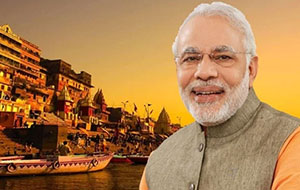
Modi to celebrate 68th birthday in Varanasi

September 13, 2018 by Nasheman

Varanasi Prime Minister Narendra Modi will celebrate his 68th birthday on September 17 in Varanasi, his parliamentary constituency, a district official in Uttar Pradesh said on Thursday.

The Prime Minister’s Office (PMO) has sent a tentative schedule to the district authorities, following which preparations for the visit is underway in the temple town.

Modi will pay obeisance to Lord Shiva at the Kashi Vishwanath temple and later watch a film “Chalo Jeete Hain” inspired by his life along with a few school children, the official said.

The venue for this event has not yet been fixed, he added.

The Prime Minister is also likely to launch some developmental projects, including the four-laning of the Babatpur-Shivpur road, Ring Road phase I and some projects at the Banaras Hindu University (BHU) during his stay.

Chief Minister Yogi Adityanath who was in Varanasi on Wednesday reviewed the preparations for Modi’s visit.

(IANS)

Filed Under: India

US award for Indian-born woman research scholar

September 11, 2018 by Nasheman


An Indian-born woman research scholar from the University of Washington won the Paul Baran Young Scholar Award for 2018 for using smartphones to detect life-threatening symptoms, the California-based Marconi Society, which has instituted the award, said on Tuesday.

“Nandakumar Rajalakshmi is the winner of this year’s Young Scholar Award for her outstanding research work in detecting life-threatening symptoms using smartphones,” the Society said in an e-mail to IANS.

Inspired by bats, which use sonar to navigate in the dark by sending acoustic signals and using reflections to identify objects, Rajalakshmi, 28, has turned a smartphone into an active sonar system to detect physiological activity like movement or respiration in a human body by a remote device.

“Rajalakshimi’s system works by transmitting inaudible sound signals from a smartphone’s speaker and tracking their reflections off the human body. The reflections are analysed by algorithms and signal processing techniques,” the Society said in the e-statement.

The system is disrupting the sleep industry by creating a non-intrusive, low-cost application — ApneaApp for detecting sleep apnea, a breathing disorder that affects millions of people the world over and yet remains undiagnosed.

“I wanted to find a way to detect physiological signals, like pulse and heart rate, which are used for healthcare applications. When I found that many consumer electronic devices have speakers and microphones, I decided to study if inaudible signals could help detect physiological movement,” Rajalakshmi told IANS via another e-mail.

The Society will honour Rajalakshmi with the award on October 2 at Bologna, Italy.

“Being recognised by the Marconi Society is humbling and motivates me to excel further in this field and to have a much larger impact,” she said.

Paul Baran (1926-2011), a Polish-born Jewish American engineer, was a pioneer in the development of computer networks. He won the Marconi Prize in 1991 for inventing packet switching technology, used in data communications, worldwide.

Set up in 1975 by Marconi’s daughter Gioia Marconi Braga through an endowment, the Society annually awards outstanding individuals whose scope of work and influence emulate the principle of “creativity in service to humanity” that inspired Marconi.

The young scholars are selected by an international jury of engineers from leading universities and firms on nomination from their academic advisers.

The award consists of $5,000 (Rs 362,500) and expenses to attend the annual ceremony.

“More than the prize, Young Scholars are offered mentoring and guidance by the Society’s distinguished roster of engineering greats,” added the statement.

A post-doctorate scholar in the University of Washington’s Paul G. Allen School of Computer Science & Engineering at Seattle, Rajalakshmi went to the US in 2013 after a two-year stint as a research assistant at Microsoft India Research Centre in Bengaluru during 2011-13.

She graduated in B.Tech from Guindy College of Engineering in Chennai after studying at TVS Lakshmi School in the temple town of Madurai in Tamil Nadu.

Rajalakshmi’s parents run a healthcare devices firm Ideal Diagnostics Ltd at Madurai, about 460 km southwest of Chennai.

“My father was in the healthcare sector when I grew up and spent a lot of time in these environments. The best part of my work is seeing the people using my technology and knowing that it benefits their well-being. As a computer scientist, I find it very fulfilling,” recalled Rajalakshmi.

Before Rajalakshmi developed the ApneaApp, diagnosing sleep apnea was an expensive polysomnography test that involved an overnight stay in a hospital or sleep clinic connected to a tangle of wires, or in-home systems with high failure rates due to the accidental detachment of sensors during sleep.

Whereas, ApneaApp needs no instrumentation of the individual and can track a person’s breathing remotely from home.

After proving the effectiveness of her app, Rajalakshmi and the University of Washington licensed the innovation to ResMed, a leader in sleep technology and medical devices.

The technology was built into the new SleepScore app for Android and iOS that helps individuals to monitor their sleep quality.

“Rajalakshmi has a knack for selecting problems with high social impact,” said her advisor and associate professor at the university Shyam Gollakota on the occasion.

“What’s incredible is Rajalakshmi has innovated a technology that is like science fiction and has got it adopted by hundreds of people in the real world. It is rare for a graduate student to have such impact with even one application, and she is doing it time and again,” reiterated Gollakota.

Rajalakshmi’s latest work focuses on using sonar to detect opioid overdoses. About 100 people reportedly die daily in the US due to overdosing on opioids, making it a critical healthcare issue.

Deaths from overdose are preventable through timely detection and intervention. Rajalakshmi developed an app that people can download prior to engaging in high-risk behaviour that monitors breathing and other movements and automatically alerts emergency services or other help if these activities cease.

The application was also tested at a clinic in Vancouver, Canada, showing its ability to save many lives through early detection of the symptoms.

“Our Young Scholar award attracts the world’s brightest researchers. Rajalakshmi embodies the characteristics we seek – intellectual capability, entrepreneurial spirit and the vision to use her work to better humankind,” said Marconi Society’s Chairman Vincent Cerf.

(IANS)

Filed Under: India

A riveting tale of an extraordinary Indian By M.R. Narayan Swamy

September 11, 2018 by Nasheman

It will be an understatement to say this is a gripping book, sympathetic yet critical. With his passion for meticulous research, Philip Goldberg has authored what is undoubtedly one of the most stirring and brilliant accounts of a spiritual master, Paramhansa Yogananda, delving in particular into his life in the US that have largely remained shrouded in mystery. The result is this profound biography.

Goldberg makes it clear that he is not a disciple of Yogananda, which makes the book all the more enriching. Yogananda (born Mukund Lal Ghosh in Gorakhpur) achieved global fame with his 1946 masterpiece “Autobiography of a Yogi”. That seminal book is the reason why he still casts a spell, although he passed away decades ago. A professional writer for more than 40 years, Goldberg decided to essay Yogananda’s life because although the yoga guru spent almost all his adult years in America, less than 10 per cent of the “Autobiography…” is about that immensely productive and historically significant period.

Goldberg’s wide-ranging research led him to conclude that Yogananda, his quirks and idiosyncrasies notwithstanding, was an extraordinary human being, a spiritual prodigy, psychically gifted with exceptional inner powers and without doubt a self-realised yogic master. From a young age, he stalked God the way “Sherlock Holmes stalked criminals”.

But for one who moved to the US in 1920 unsure of his English, life wasn’t easy.

With his ochre robes and long hair, his mere appearance could invite ridicule, torment and even abuse. He endured sneers, glares, name-calling and even stone-throwing, but maintained his dignity. Worse, there were times when Yogananda and his close group didn’t have enough to buy food, so they would simply fast for a few days, says Goldberg, uncovering details never known before. Building the network he eventually did in the US was no joke because it was a time of coin-operated phone booths, long-distance operators, telegrams and letter writing. But Yogananda did it.

Only a handful of people came to his earlier “satsangs”. The numbers grew slowly, through word of mouth, as Yogananda began wandering across the length and breadth of America — much like Adi Shankara did in India centuries earlier. He went everywhere he could: Miami, Seattle, Oregon, Los Angeles, New York, Cleveland, Colorado, Boston, Utah.

Yogananda’s very name played a role in popularising yoga, then an unknown subject in the West. As he toured America, every time his name was mentioned or appeared in print, “yoga” became further legitimised in public mind. For someone who was reticent about public speaking at first, he became quite a performer. No wonder, his gatherings — where he spoke about God, yoga, meditation, the oneness of humankind — began to attract as many as 5,000 to 6,000 people. There were occasions when visitors had to be turned away because the venues were overflowing. A time came when The Los Angeles Times would call him “the 20th century’s first superstar guru”.

How did Yogananda succeed? Although his ingredients always contained elements from Hinduism, including karma, dharma, reincarnation, mantras, chakras and core principles of Vedanta, the combination of scientific rationality and respect for the Judeo-Christian tradition would become hallmarks of Yogananda’s teaching. Yogananda, says Goldberg, took the veneration of Christ a step further, producing a massive volume of written and spoken commentary on Jesus and his teachings. This triggered problems too. He was accused of selling out to attract Christian followers and also of “Chritistianising” Hinduism. His introduction of kirtan to America has been largely under-appreciated, the author says.

Once Yogananda attained VIP status, he was welcomed to the White House by President Calvin Coolidge (1923-29). Indeed, he had genuine love for America. He said the US was the most spiritual country, next only to his own India. He also met Mexican President Emilio Candido Portes Gil. What is noteworthy is that Yogananda makes no mention of these personal achievements in his “Autobiography…”, which is more about saints he met in his quest for God and less about himself.

But a time came when Yogananda had to face the worst of America: Media sensationalism, religious bigotry, ethnic stereotyping, sexual allegations and brazen racism. Life became difficult during the World War years as it affected revenue from class fees, books and magazine sales. Donations plunged. Worse, people he though were his soul mates suddenly ditched him and took him to court, causing him immense pain. On one occasion, he begged the Divine Mother: “Free me. Let me go back to India to serve you there.” It was not to happen.

Yogananda kept saying that he was using business in religion and not making a business of religion — as evidenced by the fact that no one was profiting financially from his work. When he returned to the US after a brief visit to India in the 1930s, he was detained for four days by US authorities for some obscure technical reason. But nothing derailed the “serious man with a serious and singular mission, a determined, disciplined, demanding dynamo who slept only three or four hours a night”. But Yogananda was fun-loving too. He loved popular comic strips like “Blondie” and “Bringing Up Father”. He loved to fly kites. And as a cook, he was a perfectionist.

Goldberg is clear that allegations of sexual derailment hurled at him have no basis. “Had I found verifiable evidence that Yogananda had sexual affairs or exploited female disciples, I would not have hesitated to report it. But I did not… My research did not uncover any credible evidence that Yogananda ever broke his vow of celibacy… No woman ever claimed to have had sexual relations with Yogananda — not even in posthumous letters, diaries or memoirs.”

In 1946, Yogananda took advantage of a change in immigration laws and applied for citizenship. His application was approved in 1949 and he became a naturalised US citizen. It was the year he took a train to San Francisco to meet Jawaharlal Nehru, India’s first Prime Minister. And when he died, Yogananda was speaking about India.

According to Goldberg, Yogananda’s crowning achievement, and the most enduring monument to his earthly expedition, was the “Autobiography of a Yogi”. It has sold millions of copies and continues to be a best-seller. But in 1946, publisher after publisher rejected it — until the Philosophical Library went for it. That book, along with Yogananda’s other writings, has had a religious and spiritual impact that “is unique and unassailable”. As Goldberg says, no single person contributed more to East-West current than Yoganand

[IANS]

Filed Under: India

  • « Previous Page
  • 1
  • …
  • 1020
  • 1021
  • 1022
  • 1023
  • 1024
  • …
  • 1512
  • Next Page »

Follow Us

  • Facebook
  • Twitter
  • YouTube

KNOW US

  • About Us
  • Corporate News
  • FAQs
  • NewsVoir
  • Newswire
  • Realtor arrested for NRI businessman’s murder in Andhra Pradesh

GET INVOLVED

  • Corporate News
  • Letters to Editor
  • NewsVoir
  • Newswire
  • Realtor arrested for NRI businessman’s murder in Andhra Pradesh
  • Submissions

PROMOTE

  • Advertise
  • Corporate News
  • Events
  • NewsVoir
  • Newswire
  • Realtor arrested for NRI businessman’s murder in Andhra Pradesh

Archives

  • February 2026 (6)
  • January 2026 (12)
  • December 2025 (6)
  • November 2025 (8)
  • October 2025 (12)
  • September 2025 (25)
  • August 2025 (46)
  • July 2025 (110)
  • June 2025 (28)
  • May 2025 (14)
  • April 2025 (50)
  • March 2025 (35)
  • February 2025 (34)
  • January 2025 (43)
  • December 2024 (83)
  • November 2024 (82)
  • October 2024 (156)
  • September 2024 (202)
  • August 2024 (165)
  • July 2024 (169)
  • June 2024 (161)
  • May 2024 (107)
  • April 2024 (104)
  • March 2024 (222)
  • February 2024 (229)
  • January 2024 (102)
  • December 2023 (142)
  • November 2023 (69)
  • October 2023 (74)
  • September 2023 (93)
  • August 2023 (118)
  • July 2023 (139)
  • June 2023 (52)
  • May 2023 (38)
  • April 2023 (48)
  • March 2023 (166)
  • February 2023 (207)
  • January 2023 (183)
  • December 2022 (165)
  • November 2022 (229)
  • October 2022 (224)
  • September 2022 (177)
  • August 2022 (155)
  • July 2022 (123)
  • June 2022 (190)
  • May 2022 (204)
  • April 2022 (310)
  • March 2022 (273)
  • February 2022 (311)
  • January 2022 (329)
  • December 2021 (296)
  • November 2021 (277)
  • October 2021 (237)
  • September 2021 (234)
  • August 2021 (221)
  • July 2021 (237)
  • June 2021 (364)
  • May 2021 (282)
  • April 2021 (278)
  • March 2021 (293)
  • February 2021 (192)
  • January 2021 (222)
  • December 2020 (170)
  • November 2020 (172)
  • October 2020 (187)
  • September 2020 (194)
  • August 2020 (61)
  • July 2020 (58)
  • June 2020 (56)
  • May 2020 (36)
  • March 2020 (48)
  • February 2020 (109)
  • January 2020 (162)
  • December 2019 (174)
  • November 2019 (120)
  • October 2019 (104)
  • September 2019 (88)
  • August 2019 (159)
  • July 2019 (122)
  • June 2019 (66)
  • May 2019 (276)
  • April 2019 (393)
  • March 2019 (477)
  • February 2019 (448)
  • January 2019 (693)
  • December 2018 (736)
  • November 2018 (570)
  • October 2018 (611)
  • September 2018 (692)
  • August 2018 (666)
  • July 2018 (468)
  • June 2018 (440)
  • May 2018 (616)
  • April 2018 (772)
  • March 2018 (338)
  • February 2018 (157)
  • January 2018 (188)
  • December 2017 (142)
  • November 2017 (122)
  • October 2017 (146)
  • September 2017 (176)
  • August 2017 (201)
  • July 2017 (222)
  • June 2017 (155)
  • May 2017 (205)
  • April 2017 (156)
  • March 2017 (178)
  • February 2017 (195)
  • January 2017 (149)
  • December 2016 (143)
  • November 2016 (169)
  • October 2016 (165)
  • September 2016 (137)
  • August 2016 (115)
  • July 2016 (116)
  • June 2016 (124)
  • May 2016 (170)
  • April 2016 (150)
  • March 2016 (199)
  • February 2016 (201)
  • January 2016 (216)
  • December 2015 (210)
  • November 2015 (174)
  • October 2015 (281)
  • September 2015 (241)
  • August 2015 (250)
  • July 2015 (188)
  • June 2015 (216)
  • May 2015 (281)
  • April 2015 (306)
  • March 2015 (296)
  • February 2015 (280)
  • January 2015 (245)
  • December 2014 (286)
  • November 2014 (254)
  • October 2014 (185)
  • September 2014 (98)
  • August 2014 (7)

Copyright © 2026 · News Pro Theme on Genesis Framework · WordPress · Log in