• Home
  • About Us
  • Events
  • Submissions
  • Advertise
  • Contact Us
  • NewsVoir
  • Newswire
  • Nasheman Urdu ePaper

Nasheman

India's largest selling Urdu weekly, now also in English

  • News & Politics
    • India
    • Indian Muslims
    • Muslim World
  • Culture & Society
  • Opinion
  • In Focus
  • Human Rights
  • Photo Essays
  • Multimedia
    • Infographics
    • Podcasts
You are here: Home / Archives for Business & Technology

India disappointed with UN Global Counter-Terrorism Strategy resolution

June 27, 2018 by Nasheman


India says it is disappointed with the Global Counter-Terrorism Strategy (GCTS) resolution adopted by the General Assembly because it fails to advance “meaningful” international cooperation against terrorism.

“It is disappointing to see the lack of meaningful progress even in a GCTS resolution language, which continues to reflect the inability of member states to act collectively to tackle the threats from non-state actors,” India’s Deputy Permanent Representative Tanmaya Lal said Tuesday after the Assembly unanimously adopted the resolution.

“While most of the membership represented here has experienced terror attacks, at the UN we continue to struggle to advance meaningful multilateral cooperation on countering terrorism, often due to narrow political considerations,” he said.

India did not oppose the resolution and went along with the consensus in the Assembly as Lal noted, “Any multilateral resolution has to strike a balance and a compromise.”

But India was disappointed that it has neither taken into account the developments since the previous GCTS resolution was adopted two years ago nor provided for more unified international action against terrorism.

“In the intervening period of two years terrorist networks have continued to terrorise peoples across different parts of the world, expanding their reach, propagating their ideologies of hate, recruiting across borders, raising funds and improving their use of modern technologies,” he said.

Assembly President Miroslav Lajcak, who introduced the resolution defended it saying that this “Global Strategy is not a global solution” and is “not a magic formula.”

“Because terrorism is very complex, a one-size-fits-all approach would never work,” he added.

The nine-page resolution deals with addressing conditions that are “conducive” to spread of terrorism, and helping countries develop capacities to combat terrorism, besides the generalities like condemning terrorism and apprehending and prosecuting terrorists.

Lajcak warned, “We cannot afford to underestimate the threat facing us” and there was no room for complacency because the Islamic State (IS) is weaker now than two years ago and controls smaller territory.

He said: “ISIS, Al-Qaida and their affiliates have shown that they do not represent a traditional security threat. They use methods we could only have imagined, in our worst nightmares. They have broken all laws of humanity. And they have proven themselves to be able to adapt, to new contexts and situations.”

Filed Under: Business & Technology

Why Patanjali’s ‘Kimbho’ app is such a poorly-scripted idea

June 27, 2018 by Nasheman


Yoga guru Ramdev’s “swadeshi” mobile messaging app “Kimbho”, that appeared briefly in May-end claiming to take on the behemoth WhatsApp, has turned out to be a poorly-crafted business idea.

Patanjali, that posted a turnover of Rs 10,561 crore ($1.6 billion) in the financial year 2017, has been retracting its statements since the launch — first asking people to download the app from Google Play Store, then blaming extremely high traffic for its sudden death, later claiming it was just a one-day test and now asking for two more months for its relaunch.

The app disappeared from Google Play Store within a day of its launch on May 31 over security and performance concerns, leaving the country’s tech industry in a bit of shock.|

If you visit Google Play Store today, you will find at least a dozen fake versions of “Kimbho” which is a Sanskrit word and means “How are you?” or “What’s new?” — in the form of messaging app, TV, Status and what not.

The lingering question is: What was the haste to launch an app, touted as a challenge to Facebook-owned WhatsApp that has over tqo billion users globally and 200 million in India?

Famous French security researcher, who goes by the name of Elliot Alderson, called “Kimbho” a security disaster on Twitter. “This @KimbhoApp is a joke, next time before making press statements, hire competent developers… If it is not clear, for the moment don’t install this app,” Anderson tweeted.

In general course, if it is a Beta launch or a pilot run with a select group of users, the app runs for few weeks, the R&D team refines the product, the IT people plug the security loopholes, check the traffic control systems, apply scalable Cloud-based data management solutions and only then would the company push for a full-fledged launch.

“A messaging app like WhatsApp was build and sold to Facebook at the cost of $19 billion whereas the swadeshi Kimbho’s launcher Patanjali, with total net worth of nearly $2.5 billion, has zero contribution on IT solutions; hence the initiative had to flop in the first place,” Anoop Mishra, one of the nation’s leading social media experts, told IANS.

To run a world-class messaging app like WhatsApp requires top-of-the-line IT infrastructure.

“You need a team of Open Source experts, Cloud and content delivery network (CDN) experts, data engineers, an in-house team of core developers, API developers, user interface (UI) developers, in-house testing team and user data simulation team.

“You also need an outsourced hacking team which keeps finding the loopholes in the existing system which was completely missing in ‘Kimbho’ which was a poorly-scripted app,” Mishra contended.

Apart from the technical and programing infrastructure, a good messaging app requires industry-best third-party tools and scalable Cloud hosting servers to handle and respond to real-time database queries of millions of users so that the app survives the inbound traffic.

To build and run a word-class messaging app requires huge investment of time, tech expertise and money — and eventually needs 10 times more investment for handling servers, security issues and data breaches, Mishra noted.

According to Saket Modi, CEO and Co-Founder of cyber security firm Lucideus, companies nowadays are looking at products that are secure by design.

“Companies are moving from agile DevOps to agile DevSecOps, where security is now being thought of from the development phase itself,” Modi told IANS.

Lucideus was responsible for security assessments for apps like BHIM, Whats App for Payments and Google Tez.

According to Faisal Kawoosa, Head, New Initiatives, CyberMedia Research (CMR), it will not be easy for “Kimbho” to create a space dominated by WhatsApp by just being “Swadeshi”.

“The initial reviews are full of issues and concerns,” Kawoosa said.

“Kimbho” should ideally have seen a soft launch — without any comparison with WhatsApp — building on the momentum while deploying scalable, agile and secure Cloud-based solutions to make it run.

Building a world-class app perhaps needs much more effort than making toiletries or food products.

Filed Under: Business & Technology

With 90% tax on petrol & diesel, bringing them under GST impractical: NITI Aayog Vice Chairman

June 27, 2018 by Nasheman


Petroleum is the taxation milch cow for the central and the state governments and it is unlikely to be brought under the Goods and Services Tax (GST) any time soon.

That’s also the view of the Vice Chairman of Niti Aayog, Rajiv Kumar. Several senior ministers have demanded that petroleum products — basically petrol and diesel — be brought under the new taxation regime.

But says Kumar: “It (oil) can’t be brought under GST. That’s because the total state and central taxes on petrol put together are around 90 percent right now.”

He told IANS in an interview here: “I can’t see how any state will take a cut so huge as the highest rate under the GST is 28 percent. A new GST band will have to be opened up — and that will be an enormous exercise.”

While supporting “in principle” the idea of bringing all items under the new indirect tax system, he said those talking about doing it now have not thought this through.

“The better way to do this is to first start reducing taxes (on petroleum products) as I have said many times in public. States impose an ad-valorem tax on oil and so they all had a windfall gain (when prices rose). There is a need to rationalize it,” he said, adding “states should especially cut taxes.”

Kumar said that both the central and the state governments should start the process of weaning themselves away from their dependence on oil taxation.

According to him, the Central government collects Rs 2.5 lakh crore as tax on oil while almost Rs 2 lakh crore is collected by the states. “From where will they compensate it?” he asks adding that if the taxes are reduced gradually, the burden on the economy will get reduced.

“Higher oil prices are like a tax on the economy. If oil prices are brought down, economic activity will also improve,” Kumar said.

“Once that is achieved, once the revenues have gone up from other sources and the economy has picked up, then you can think of bringing oil under GST. It’s not that easy,” he added.

Ever since the new tax legislation was rolled out on July 1 last year, there had been the talk of bringing it under the GST with top government officials and ministers supporting the need for such a move. The Opposition parties, of course, have been clamoring for it.

In December last year, Finance Minister Arun Jaitley had told the Rajya Sabha that the Central government was in favor of bringing petroleum products under the ambit of GST after building a consensus with states.

More recently, in April, when the international crude oil prices were going up sharply, pushing the domestic petrol prices to record levels, BJP President Amit Shah told a rally in Mumbai that efforts were on to bring petrol and diesel under the GST.

From Road Transport and Highways Minister Nitin Gadkari to Petroleum and Naural Gas Minister Dharmendra Pradhan, almost every senior BJP minister has favored bringing petroleum products under the GST.

Among states, Maharashtra Chief Minister Devendra Fadnavis has also expressed willingness to bring petrol and diesel under GST in his state if a consensus was brought about on it.

Kumar says he was in favour of such a change, but it has to be thought through in practical terms.

“I am just simply saying that let’s not trying to hurry it because you would only run into problems as there is a huge dependence on oil,” he said.

“Even electricity should be brought under GST. Everything should be under GST. But I am not sure whether it is worked out yet. Let’s agree to bring it under GST but over a period of time as is practical,” he said.

Filed Under: Business & Technology

Tea Board must become ‘facilitator’ instead of ‘regulator’: Chairman

June 27, 2018 by Nasheman

Some “radical steps” envisaged by the central government for re-defining the role of the Tea Board have been put on the “back burner” though its performance is still “under the scanner”, its Chairman Prabhat K. Bezboruah has said.

The Union Commerce Ministry has asked the Indian Institute of Foreign Trade to look into the functioning of the Board and how its mandate can be altered to serve the interests of the stakeholders of tea industry better, Bezboruah told IANS in an interview.

“In terms of re-organisation of Tea Board, there were some radical steps envisaged by the Centre when Nirmala Sitharaman was the Commerce Minister. Now, I think these have been put on the backburner and the proposals frozen for the time being. I don’t think there will be any major structural changes in the commodity boards,” he said.

“However, the Board’s performance continues to be under the scanner due to widespread dissatisfaction expressed by many segments of stakeholders. As a consequence, the Union Commerce Ministry has requested Indian Institute of Foreign Trade to look at the functioning of the Board and how its mandate can be altered to serve the interests of the stakeholders of tea industry better,” he said during the candid chat.

Bezboruah, formerly a banker in the US and a well known tea planter from Assam, said the Board must “reinvent itself” and play the role of “facilitator” to the industry instead of a “regulator”.

“I’ve tried to push for changing the role of Tea Board from that of a regulator to that of a facilitator. The Board is still suffering from red tapism and a license raj hangover, and this mindset should be altered. There is no sense having a regulator when everything else related to supply and demand is open and unregulated.

“If the Board cannot control supply — witness the huge growth of the small holder sector — what is the point of over-regulating the organised sector” he asked, adding: “despite the Board’s efforts at enforcing all kinds of archaic rules, the implementation of its diktats was patchy and varied hugely from state to state depending on the implementing official’s whims.”

He pointed out that the centre continued to look at downsizing options and re-defining the Tea Board’s role within the sector.

According to him, the Board should try to make the industry more efficient by improving its yield and productivity by increasing the demand for tea and by educating consumers about the quality of tea.

“Tea Board should therefore focus on generic promotion of tea, targeted export promotion, improving the efficiency of the gardens, development of the industry by improving the yield, changing the product mix and helping the tea properties to mitigate the effects of climate change, among other schemes” Bezboruah said.

He also said the tea industry, which is in a “Catch-22 situation”, has been suffering from low yields, stagnating prices and attrition of workers in the face of “low wages”.

“The industry is barely earning any profit, and the sensitivity of the cost of production to wage increases is an absurd 60 per cent, that is, if wages go up by Rs 10 per day, the cost of production of a typical North India garden will go up by Rs 6.”

According to him, organised players have actually been losing their crop because of “old bushes, overused soil, water logging, climate change, lack of timely rainfall and shortage of workers, among other factors”.

“The Tea Board must look into these problems. The Board and the government should also look at whether there is any organised effort to keep tea prices down,” said Bezboruah, who is the first non-bureaucrat and an industry insider to be at the helm of the Kolkata-headquartered organisation, adding that tea prices have gone up only 20 times in the last 60 years whereas prices of staples like rice and wheat have gone up 100 times over this period.

He, however, welcomed the Appointments Committee of the Cabinet approval of the proposal to appoint IPS officer Arun Kumar Ray as Deputy Chairman of Tea Board.

“Having a permanent Deputy Chairman, who is also the CEO of the Tea Board, is what the industry needs. Somebody who stays in Kolkata, would be able to handle the problems that the Board is facing more effectively,” Bezboruah explained.

Filed Under: Business & Technology

Female political journalists get far less attention on Twitter

June 25, 2018 by Nasheman


With Twitter playing an increasing role in shaping political debates around the world, a new study of American political journalists has shown how male journalists use the microblogging site to increase their influence, while pushing their female peers to the margins of political discussion.

The researchers found that among the journalists accredited to cover the US Congress, known as Beltway Journalists, male journalists amplify and engage male peers almost exclusively, while female journalists tend to engage most with each other.

Male political journalists reply to other male journalists 91.5 per cent of the time, showed the findings to be published in the International Journal of Press/Politics.

The findings suggest that women political journalists get less attention on the microblogging site.

For the study, the researchers looked at 2,292 Twitter accounts belonging to Washington DC-based journalists who are accredited to cover the US Congress, The Guardian reported on Sunday.

While the difference between the numbers of male and female journalists is not starkly high, men dominate the Twitter space with higher number of tweets, have on an average twice as many followers and they are also likely to retweet each other.

“The gender imbalances present on beltway journalism Twitter are another case showing women do not receive adequate recognition or attention for their creative labour,” the report said.

This “may well create an even greater structural disadvantage for female journalists, given how this platform is so critical to success in beltway journalism”, the report added.

It was a problem because debate on Twitter helped frame political reporting on other websites and as a result, the site could be inadvertently marginalising female journalists in “gender silos”, the Guardian mentioned one of the study authors, Nikki Usher of the University of Illinois, as saying.

Filed Under: Business & Technology

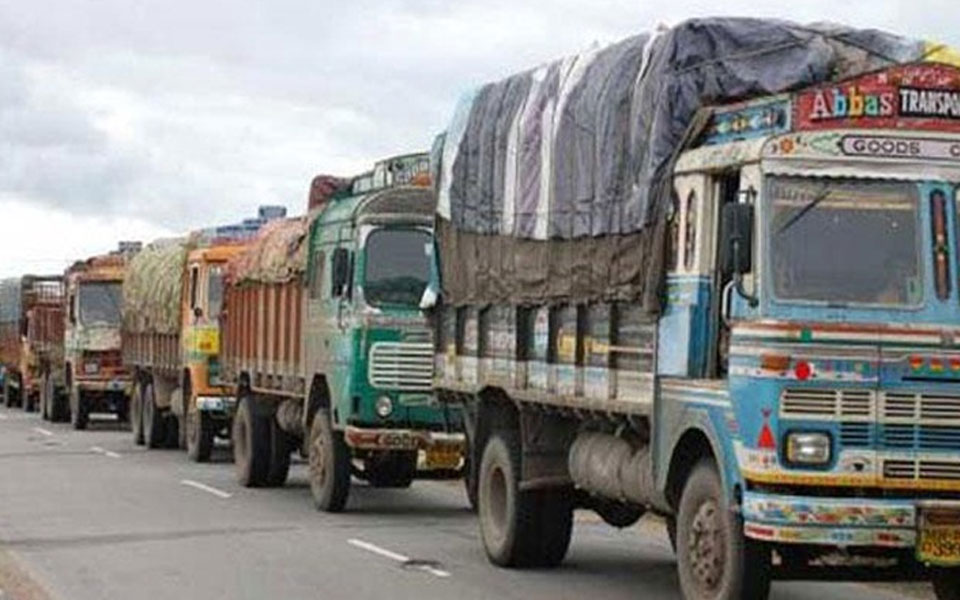
Truckers’ association calls off strike for now

June 22, 2018 by Nasheman


The national truckers’ organization on Friday temporarily called off their strike, claiming to have received a communication from the Union Road Transport Ministry promising a meeting.

“We received a call from Union Minister Nitin Gadkari’s office and they have called us to talk… We have temporarily called off the strike because it was affecting truckers and people both,” ACOGOA General Secretary Kausar Hussain told IANS.

The All India Confederation of Goods Vehicles Owners’ Association (ACOGOA), that had called a nationwide strike on June 18 against the high diesel prices, high toll rates and a sharp hike of third-party insurance premium, said they have received assurance of a meeting after June 27.

“We have received a telephone call from central ministry, that since the minister is not in station till June 27, to call off the strike… In view of this and in the public interest, we have postponed the truckers strike,” said a statement from ACOGOA president B. Channa Reddy.

Road Transport Minister Nitin Gadkari is currently in Tajikistan.

Many truck owners and operators including from West Bengal, Karnataka, Maharashtra, Madhya Pradesh, Jharkhand, Odisha, Uttar Pradesh, Bihar, Punjab, and Rajasthan were on strike.

The ACOGOA had claimed that some 40 lakh trucks were off the roads across the country on June 18, causing over Rs 800 crore revenue loss to the exchequer.

Filed Under: Business & Technology

Machine for the New Generation : More Energy , Less Pollution

June 22, 2018 by Nasheman

By Andrea Princy, Abhirami, Santhosha D

The determination never lets you down. The more we trust in the field we love, the more confidence it gives. On the path of failure, we will find the success as the goal.
Nanjundaiah : A person from a poor family in a village, worked hard and did his B.E ad MBA in Bangalore. He understood the hard work of the farmers and villagers who are suffering without electricity. So, he planned to create a machine which will produce electricity using wind as it’s source of energy. He was given recognition in the IISC and was given a patent for that machine. The IISC people appreciated him and told him to create a machine which can work anywhere without depending on wind. So, he planned to create a machine which will use the energy from the source and keep reusing the same energy.
He named this machine as Renewable Energy Machine. He spent 1 and 1/2 year to complete this machine and used this machine at his place for 1 year and his family was satisfied with the process of the machine. This machine uses a battery to generate energy and renews that energy again and again to generate electricity. This machine hasn’t yet received the patent but after it receives, he is planning to create 4 more types of machines which will be useful for farmers, in automobiles, etc. These machines are useful for household purposes also.
This machine will be the third kind of machine, the first one is petrol and the second is diesel. The source for this machine is taken from batteries, it’s not going to pollute the environment and safe for all living things in the environment.
A humble Indian is gifted with a great talent. An Indian from a village works hard to develop India and aid the poor income society. So, let us appreciate our fellow Indian by purchasing an Indian model for the development of our country.

Filed Under: Business & Technology

A DSLR Phone Camera

June 22, 2018 by Nasheman


An initial snap is an indicator for a great photographic future. People have their photographic brains switched on all the time, and their eyes capture various encounters they face, but sadly it can’t be stored in their conscious mind at all time, so here comes the Phone Camera for our aid in times of need.

Mobile photography has seen it’s advancement in years. The phone camera is considered the best camera for it’s various features. It can be used anywhere, at anytime and by anyone. It is a raw material for a successful progress. It is a portable equipment and weightless and it can be used at all times easily but the camera which is a little heavy should be carried in a bag, and should be looked after carefully and it’s technical to learn but a phone camera has simple and beautiful features to capture a wonderful moments and candid snapshots that can be carried just in our palms but whereas the camera adjusts the reality with Shutter speed, Aperture, and ISO. A phone camera is less cost-effective and the photos can be transferred easily without much pain. Some mobile camera takes dull photos but it doesn’t really matter because there are so many options inbuilt in the camera settings and many apps to change a gloomy image into a vibrant and dazzling image. And millions of people have taken up Phone photography as their creative hobby and Instagram has the largest dedicated platform for phone photographers.

A job of a camera is to click a beautiful image of memories and this can also be done through phone camera and not necessarily a digital camera. A dedicated heart and mind can even use a phone camera images look professional and successful.

Filed Under: Business & Technology

Indian public sector needs some fixing for true Cloud adoption

June 21, 2018 by Nasheman

The vast Indian public sector will embark on a true digital journey only once the government decides to relax old procurement rules, make the stakeholders aware of benefits of Cloud and get rid of the ageing IT infrastructure, a top Amazon Web Services (AWS) executive has stressed.

According to Peter Moore, Regional Managing Director, Public Sector-Asia Pacific at AWS, which is Amazon’s growing Cloud computing business, governments around the world including in India are grappling with the massive loss of data owing to old hardware and software, badly designed IT architecture and poor operating practices in terms of accessing the data.

“Any major transformation in technology requires people to change and India is no different. It has cultural as well as technological challenges when it comes to embracing Cloud. Addressing tech challenges is easy but making people want to do something different is the difficult part,” Moore told IANS in an interview on the sidelines of the AWS public sector summit here.

Civil servants, he said, can’t be forced to learn Cloud computing faster or convinced easily to replace legacy IT infrastructure and reskilling the workforce can only change the scenario.

“We would like to help the government design effective procurement vehicles that cut long paperwork aligned with traditional hardware purchasing,” emphasised Moore, who is driving government agencies, educational institutions and non-profits implement AWS Cloud computing services.

In India, AWS is listed as Amazon Internet Services Pvt Ltd (AISPL) which undertakes the resale and marketing of AWS Cloud services in the country.

In order to make deeper inroads, Moore doesn’t want to waste time on customers who don’t plan to begin their Cloud journey despite continued efforts.

“There is so much opportunity in India. It won’t be wise of us to waste efforts on customers who don’t move say for years despite the best of our efforts. We are seeking customers who are ready to go with us now.

“We are customer-obsessed and more than eager to give them best advice when it comes to either migrating workloads to Cloud or building something entirely new,” Moore said.

AWS has a long list of government customers in India but feels there is a long way to go when it comes to achieving its full potential.

“There is a lot of talk within the Indian government agencies about the success they have had after moving to Cloud. We have all the capabilities that meet the government standards. We have already passed all the tests — be it scalability, agility or security,” Moore told IANS.

AWS is the first Global Cloud Provider (GCP) in the country to achieve full empanelment by the Ministry of Electronics and Information Technology (MeitY) for delivering Cloud services to government customers.

The company successfully completed the Standardisation Testing and Quality Certification (STQC) audit from MeitY for Cloud services last year.

The company launched AWS Asia Pacific (Mumbai) Region with two availability zones in 2016 and has seen stupendous growth in adding new customers in the region.

“For AWS, Cloud computing means that you don’t need to pay upfront and pay only what you consume, scale up and scale down as you need. This is the reason for our tremendous success in a short span of time,” Moore informed.

He sees a real momentum in the Indian tech landscape, especially in the start-up segment.

“Almost all the start-ups in India would not have been start-ups without access to AWS. They are not asking us should we move to Cloud but how to move. There is a real pent-up demand coming from India,” the AWS executive emphasised.

Exponential growth is right around the corner in the public sector, he said, adding that AWS, which has invested a lot for years in setting up right infrastructure in India, is now ready to reap the results.

“We will continue to work to make procurement process easier as it is the key roadblock. We will continue to develop our capacities, add new capabilities and invest significantly in the country towards training, skilling and building resources,” Moore noted.

Filed Under: Business & Technology

France-India commit to increasing trade to 15 bn euro by 2020

June 19, 2018 by Nasheman


The dynamism infused in the Indo-French relations during the visit of French President Emmanuel Macron to India in March seems to be building up as the two countries have committed to raising their bilateral trade from 9 billion euros to 15 billion euros in the next two years official sources said.

Besides this, boosting French investment in India was one of the several issues that Indian External Affairs Minister Sushma Swaraj discussed with her French counterpart Jean Yves Le Drian on Monday evening during her maiden visit to France.

The French have been keen to significantly enhance their presence in Indian business ecosystem, especially in areas where they have in-house strengths, notably sustainable development, transport and smart cities.

The two ministers also discussed numerous international issues such as the impact of the decision by US President Donald Trump to withdraw from the Paris Climate Change Treaty as well as the Iran nuclear deal. Regional issues such as terrorism and situation in South Asia and the Indian Ocean region were also discussed.

Swaraj thanked Le Drian on behalf of the Indian government for the unstinted support that France has given to India’s bid to be inducted as a permanent member of the United Nations Security Council as well as the Nuclear Suppliers Group.

The two leaders also exchanged a letter of intent for collaboration in the conservation of prehistoric monuments. The first such collaboration will take place in the famous Bhimbetka caves in Swaraj’s native Madhya Pradesh.

Filed Under: Business & Technology

  • « Previous Page
  • 1
  • …
  • 68
  • 69
  • 70
  • 71
  • 72
  • …
  • 87
  • Next Page »

Follow Us

  • Facebook
  • Twitter
  • YouTube

KNOW US

  • About Us
  • Corporate News
  • FAQs
  • NewsVoir
  • Newswire
  • Realtor arrested for NRI businessman’s murder in Andhra Pradesh

GET INVOLVED

  • Corporate News
  • Letters to Editor
  • NewsVoir
  • Newswire
  • Realtor arrested for NRI businessman’s murder in Andhra Pradesh
  • Submissions

PROMOTE

  • Advertise
  • Corporate News
  • Events
  • NewsVoir
  • Newswire
  • Realtor arrested for NRI businessman’s murder in Andhra Pradesh

Archives

  • February 2026 (6)
  • January 2026 (12)
  • December 2025 (6)
  • November 2025 (8)
  • October 2025 (12)
  • September 2025 (25)
  • August 2025 (46)
  • July 2025 (110)
  • June 2025 (28)
  • May 2025 (14)
  • April 2025 (50)
  • March 2025 (35)
  • February 2025 (34)
  • January 2025 (43)
  • December 2024 (83)
  • November 2024 (82)
  • October 2024 (156)
  • September 2024 (202)
  • August 2024 (165)
  • July 2024 (169)
  • June 2024 (161)
  • May 2024 (107)
  • April 2024 (104)
  • March 2024 (222)
  • February 2024 (229)
  • January 2024 (102)
  • December 2023 (142)
  • November 2023 (69)
  • October 2023 (74)
  • September 2023 (93)
  • August 2023 (118)
  • July 2023 (139)
  • June 2023 (52)
  • May 2023 (38)
  • April 2023 (48)
  • March 2023 (166)
  • February 2023 (207)
  • January 2023 (183)
  • December 2022 (165)
  • November 2022 (229)
  • October 2022 (224)
  • September 2022 (177)
  • August 2022 (155)
  • July 2022 (123)
  • June 2022 (190)
  • May 2022 (204)
  • April 2022 (310)
  • March 2022 (273)
  • February 2022 (311)
  • January 2022 (329)
  • December 2021 (296)
  • November 2021 (277)
  • October 2021 (237)
  • September 2021 (234)
  • August 2021 (221)
  • July 2021 (237)
  • June 2021 (364)
  • May 2021 (282)
  • April 2021 (278)
  • March 2021 (293)
  • February 2021 (192)
  • January 2021 (222)
  • December 2020 (170)
  • November 2020 (172)
  • October 2020 (187)
  • September 2020 (194)
  • August 2020 (61)
  • July 2020 (58)
  • June 2020 (56)
  • May 2020 (36)
  • March 2020 (48)
  • February 2020 (109)
  • January 2020 (162)
  • December 2019 (174)
  • November 2019 (120)
  • October 2019 (104)
  • September 2019 (88)
  • August 2019 (159)
  • July 2019 (122)
  • June 2019 (66)
  • May 2019 (276)
  • April 2019 (393)
  • March 2019 (477)
  • February 2019 (448)
  • January 2019 (693)
  • December 2018 (736)
  • November 2018 (570)
  • October 2018 (611)
  • September 2018 (692)
  • August 2018 (666)
  • July 2018 (468)
  • June 2018 (440)
  • May 2018 (616)
  • April 2018 (772)
  • March 2018 (338)
  • February 2018 (157)
  • January 2018 (188)
  • December 2017 (142)
  • November 2017 (122)
  • October 2017 (146)
  • September 2017 (176)
  • August 2017 (201)
  • July 2017 (222)
  • June 2017 (155)
  • May 2017 (205)
  • April 2017 (156)
  • March 2017 (178)
  • February 2017 (195)
  • January 2017 (149)
  • December 2016 (143)
  • November 2016 (169)
  • October 2016 (165)
  • September 2016 (137)
  • August 2016 (115)
  • July 2016 (116)
  • June 2016 (124)
  • May 2016 (170)
  • April 2016 (150)
  • March 2016 (199)
  • February 2016 (201)
  • January 2016 (216)
  • December 2015 (210)
  • November 2015 (174)
  • October 2015 (281)
  • September 2015 (241)
  • August 2015 (250)
  • July 2015 (188)
  • June 2015 (216)
  • May 2015 (281)
  • April 2015 (306)
  • March 2015 (296)
  • February 2015 (280)
  • January 2015 (245)
  • December 2014 (286)
  • November 2014 (254)
  • October 2014 (185)
  • September 2014 (98)
  • August 2014 (7)

Copyright © 2026 · News Pro Theme on Genesis Framework · WordPress · Log in