• Home
  • About Us
  • Events
  • Submissions
  • Advertise
  • Contact Us
  • NewsVoir
  • Newswire
  • Nasheman Urdu ePaper

Nasheman

India's largest selling Urdu weekly, now also in English

  • News & Politics
    • India
    • Indian Muslims
    • Muslim World
  • Culture & Society
  • Opinion
  • In Focus
  • Human Rights
  • Photo Essays
  • Multimedia
    • Infographics
    • Podcasts
You are here: Home / Archives for Environment

Wipro launches ‘Wipro earthian’: A one of its kind Sustainability Education Program

August 27, 2015 by Nasheman

wipro-earthian

Bengaluru: Wipro Limited, a leading global information technology, consulting and business process services company, announced the launch of the fifth edition of ‘Wipro earthian’, a nationwide sustainability education program for schools and colleges.

This program provides an interconnected understanding of different disciplines in education related to ecological and social sustainability. It aims at long term education and learning that will help educators, students and educational institutions make more informed choices about their lives and society.

Over the last five years, Wipro reached out to more than 100,000 students from over 50,000 institutions across the country for this program. The program has consistently elicited encouraging responses from institutions and students as evidenced by the thousands of project submissions over the years. Each year, 10 schools and 10 colleges are shortlisted for the awards.

In the 2014 edition, Wipro reached out to around 10,000 students and received close to 600 submissions. The winning institutions were welcomed into the Wipro earthian community and awarded a trophy and cash prizes.

Wipro’s earthian provides a broad platform for interaction, followed by a more intense and continuing engagement program (CEP) for the winning teams. The program includes activities aimed at building skills, appreciating new attitudes and values to help shape a sustainable future. Wipro’s objective with CEP is to engage with these teams over a long period of time and help integrate sustainability education in a holistic way.

Some of the leading institutes in the country like Indian Institute of Science (IISc), Indian Institute of Technology, Delhi (IIT-D), National Institute of Technology, Trichy (NIT-Trichy), Indian Institute of Management Bangalore (IIMB), Indian Institute of Management Kozhikode (IIMK), Institute of Chemical Technology, Mumbai (ICT Mumbai) have been regularly participating in this program. “The first part of solving a problem is to identify that there is a problem. What I really like about earthian is that it is trying to recognise that there is a problem,” said Sushant Bangru, student from IISc, Bangalore, one of the winning teams of Wipro earthian 2014.

Anurag Behar, Chief Sustainability Officer, Wipro Limited said, “This is a special year for Wipro earthian as we reflect on our five year journey. It has been an enriching experience where all of us, institutions, faculty and students have learnt together. Our vision and hope is to make Wipro earthian a unique platform that fosters understanding of how sustainability in education can be a powerful influence on our thoughts and actions.”

As an extension to the main Wipro earthian 2015 program, the company also introduced a new program, ‘Wipro earthian Foundations’ to introduce students in the age group of 9-13 years to the culture of sustainability. As part of this program, these students were invited to write and share stories about their experiences with nature. The two best stories in English and Hindi will be published with a foreword by noted author Ruskin Bond and actor Aamir Khan, respectively.

For more details on the program and for registration please visit: http://www.wipro.org/earthian/
Filed Under: Environment, India Tagged With: Wipro, Wipro earthian

NASA: World ‘locked into’ at least 3 feet of sea level rise

August 27, 2015 by Nasheman

Current satellite data reveals that glaciers ‘might not be as stable as we once thought’

Photo: NASA/Saskia Madlener

Photo: NASA/Saskia Madlener

by Andrea Germanos, Common Dreams

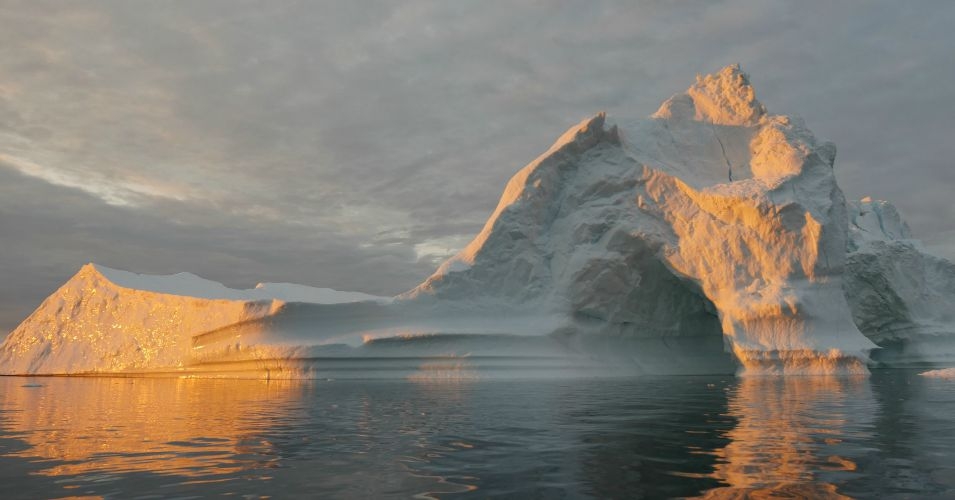
New research underway indicates that at least three feet of global sea level rise is near certain, NASA scientists warned Wednesday.

That’s the higher range of the 1 to 3 feet level of rise the UN Intergovernmental Panel on Climate Change (IPCC) gave in its 2013 assessment.

Sea levels have already risen 3 inches on average since 1992, with some areas experiencing as much as a 9-inch rise.

“Given what we know now about how the ocean expands as it warms and how ice sheets and glaciers are adding water to the seas, it’s pretty certain we are locked into at least 3 feet of sea level rise, and probably more,” said Steve Nerem of the University of Colorado, Boulder, and lead of NASA’s interdisciplinary Sea Level Change Team. “But we don’t know whether it will happen within a century or somewhat longer.”

The Greenland ice sheet has contributed more greatly to sea level rise, losing an average of 303 gigatons of ice a year over the past decade, while the Antarctic ice sheet has lost an average of 118 gigatons a year. But scientists at NASA and the University of California, Irvine warned last year that glaciers in the West Antarctic “have passed the point of no return.”

Glaciologist Eric Rignot of the UC-Irvine and NASA’s JPL, and lead author of the West Antarctic study, stated Wednesday that East Antarctica’s ice sheet remains a wildcard.

“The prevailing view among specialists has been that East Antarctica is stable, but we don’t really know,” Rignot stated. “Some of the signs we see in the satellite data right now are red flags that these glaciers might not be as stable as we once thought.”

Exactly how much rise will happen and when is uncertain, they say. “We’ve seen from the paleoclimate record that sea level rise of as much as 10 feet in a century or two is possible, if the ice sheets fall apart rapidly,” said Tom Wagner, the cryosphere program scientist at NASA Headquarters in Washington. “We’re seeing evidence that the ice sheets are waking up, but we need to understand them better before we can say we’re in a new era of rapid ice loss.”

Filed Under: Environment Tagged With: Climate Change, NASA, Oceans

A World on Fire: July was hottest month ever recorded

August 21, 2015 by Nasheman

Record set for hottest month of the year puts 2015 on track to be hottest year ever recorded… and the consequences are mounting

Firefighters work to dig a fire line on the Rocky Fire in Lake County, California July 30, 2015. This week, three scientific agencies announced that July was the hottest month on Earth since records were started in 1880. (Photo: Reuters/Max Whittaker)

Firefighters work to dig a fire line on the Rocky Fire in Lake County, California July 30, 2015. This week, three scientific agencies announced that July was the hottest month on Earth since records were started in 1880. (Photo: Reuters/Max Whittaker)

by Jon Queally, Common Dreams

The world is burning up.

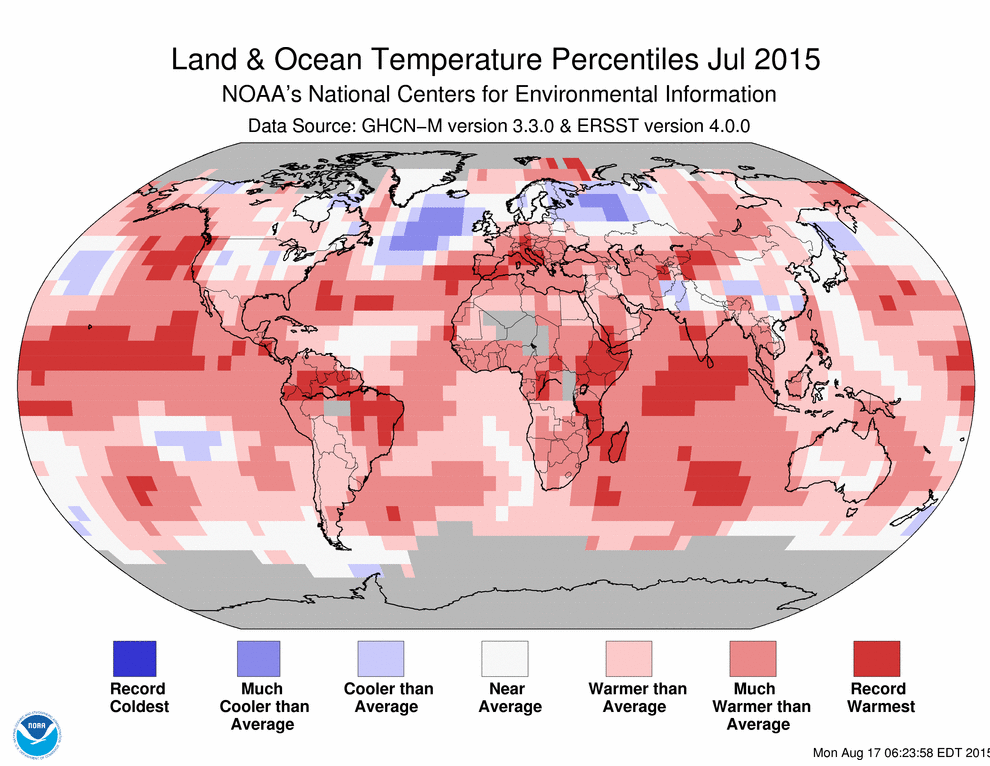
The previously available evidence for that statement is staggering and on Thursday the National Oceanic and Atmospheric Administration in the U.S. announced that July was the hottest month the planet has ever experience since records began and that both land and ocean temperatures are on pace to make 2015 the hottest year ever recorded.

According to NOAA’s latest figures, the July average temperature across global land and ocean surfaces was 1.46°F (0.81°C) above the 20th century average. As July consistently marks the warmest month of the year, NOAA said this most recent one now registers as having the all-time highest monthly temperature since records began in 1880, with an average global thermometer reading of  61.86°F (16.61°C).

NOAA’s temperature analysis follows on the heals of similar findings by both NASA and theJapan Meteorological Agency (JMA) published earlier this week which also said July was a record-breaker in terms of heat.

“The world is warming. It is continuing to warm. That is being shown time and time again in our data,” said Jake Crouch, physical scientist at NOAA’s National Centres for Environmental Information.

“Now that we are fairly certain that 2015 will be the warmest year on record,” Crouch continued, “It is time to start looking at what are the impacts of that? What does that mean for people on the ground?”

At least for those who experience perilous heat waves in places like Pakistan, India, and Egypt in recent weeks and months, they know those direct impacts can be deadly. And climate scientists have spent much of the year—with a special eye on upcoming UN climate talks in Paris—warning that the collective impacts of increased temperatures, both on land and in the oceans, are resulting in severe consequences for human civilization and the natural world.

More troubling than any one month, experts notes, is the consistent and driving trend that has seen temperatures on a steady march upward since the beginning of the century. As Andrea Thompson at Climate Central reports:

After 2014 was declared the warmest year on record, a Climate Central analysisshowed that 13 of the 15 warmest years in the books have occurred since 2000 and that the odds of that happening randomly without the boost of global warming was 1 in 27 million.

Even during recent years when a La Niña (the cold water counterpart to El Niño) has been in place, the year turned out warmer than El Niño years of earlier decades.

Global carbon dioxide levels have risen from a preindustrial level of about 280 parts per million to nearly 400 ppm today. In recent years, CO2 levels — the primary greenhouse gas — have spent longer and longer above the 400 ppm benchmark. They stayed above this point for about six months this year, twice the three months of last year. It is expected that within a few years, they will be permanently above 400 ppm.

The continued rise of CO2 levels will raise the planet’s temperature by another 3°F to 9°F by the end of this century depending on when and if greenhouse gas emissions are curbed, scientists have calculated.

That means that some, future years are likely to continue to set records, even if there will still be year to year variations.

And according to Eric Holthaus, who writes about climate change for Slate, the mounting evidence and rising temperatures are painting an increasingly scary picture of the future:

All this warmth on land is being driven by record-setting heat across large sections of the world’s oceans. The NOAA report notes that the warmest 10 months of ocean temperatures on record have occurred in the last 16 months. This is mostly due to a near-record strength El Niño, but the current state of the global oceans has little historical precedent. Since it takes several months for the oceanic warmth of an El Niño to fully reach the atmosphere, 2016 will likely be warmer—perhaps much warmer—than 2015. And that poses grave implications for the world’s ecosystems as well as humans.

We’ve recently entered a new point in the Earth’s climate history. According toreconstructions using tree rings, corals, and ice cores, global temperatures are currently approaching—if not already past—the maximum temperatures commonly observed over the past 11,000 years (i.e., the time period in which humans developed agriculture), and flirting with levels not seen in more than 100,000 years.

But this is the scary part: The current level of carbon dioxide in the atmosphere is higher than at any point since humans first evolved millions of years ago. Since carbon dioxide emissions lead to warming, the fact that emissions are increasing means there’s much more warming yet to come. What’s more, carbon dioxide levels are increasing really quickly. The rate of change is faster than at any point in Earth’s entire 4.5 billion year history, likely 10 times faster than during Earth’s worst mass extinction—the “Great Dying”—in which more than 90 percent of ocean species perished. Our planet has simply never undergone the kind of stress we’re currently putting on it. That stunning rate of change is one reason why surprising studies like the recent worse-than-the-worst-case-scenario study on sea level rise don’t seem so far fetched.

Filed Under: Environment Tagged With: Climate, Drought, Oceans

Islamic declaration blasts short-sighted Capitalism, demands action on climate

August 19, 2015 by Nasheman

Ahead of UN summit in Paris, new document presents the moral case for Muslims and people of all faiths worldwide to mobilize against fossil fuel addiction and global warming

Released during an international symposium in Istanbul, the Islamic Declaration on Global Climate Change is signed by 60 Muslim scholars and leaders of the faith who acknowledge that—despite the short-term economics benefits of oil, coal, and gas—humanity's use of fossil fuels is the main cause of global warming which increasingly threatens "a functioning climate, healthy air to breathe, regular seasons, and living oceans." (Photo: JohnED76/flickr/cc with overlay)

Released during an international symposium in Istanbul, the Islamic Declaration on Global Climate Change is signed by 60 Muslim scholars and leaders of the faith who acknowledge that—despite the short-term economics benefits of oil, coal, and gas—humanity’s use of fossil fuels is the main cause of global warming which increasingly threatens “a functioning climate, healthy air to breathe, regular seasons, and living oceans.” (Photo: JohnED76/flickr/cc with overlay)

by Jon Queally, Common Dreams

Just as scientists announced July was the hottest month in recorded history, and ahead of a major climate summit in Paris later this year, an international group of Islamic leaders on Tuesday released a public declaration calling on the religion’s 1.6 billion followers to engage on the issue of global warming and take bold action to stem its worst impacts.

Released during an international symposium taking place in Istanbul, the Islamic Declaration on Global Climate Change is signed by 60 Muslim scholars and leaders of the faith who acknowledge that—despite the short-term economic benefits of oil, coal, and gas—humanity’s use of fossil fuels is the main cause of global warming which increasingly threatens “a functioning climate, healthy air to breathe, regular seasons, and living oceans.”

The declaration states there is deep irony that humanity’s “unwise and short-sighted use of these resources is now resulting in the destruction of the very conditions that have made our life on earth possible.”

“Our attitude to these gifts has been short-sighted, and we have abused them,” it continues. “What will future generations say of us, who leave them a degraded planet as our legacy? How will we face our Lord and Creator?”

The declaration by the Muslim leaders follows the widely lauded encyclical released by Pope Francis, leader of the Roman Catholic Church, earlier this summer in which he called for a drastic transformation of the world’s economies and energy systems in order to stave off the worst impacts of an increasingly hotter planet. Additionally, hundreds of Jewish Rabbis also released a Rabbinic Letter on the Climate Crisis and dozens of other denominations and churches have joined the global movement to divest their financial holdings from the fossil fuel industry.

Fazlun Khalid, founder of the Islamic Foundation for Ecology and Environmental Sciences and a signatory to the declaration, said the unified statement “is the work of world renowned Islamic environmentalists” and that its goal is to trigger richer dialogue and further action. Khalid said he would be happy if other people adopt or improve upon the ideas contained within the document.

As with the papal encyclical, the Muslim scholars take special note of how global capitalism—namely the “relentless pursuit of economic growth and consumption”—has fostered an energy paradigm that now threatens the sustainability of living systems and human society.

With a focus on the upcoming Conference of Parties (COP21) talks in Paris, the declaration urges leaders to forge an “equitable and binding” agreement and called on all nations to:

  • Aim to phase out greenhouse gas emissions as soon as possible in order to stabilize greenhouse gas concentrations in the atmosphere;
  • Commit themselves to 100 % renewable energy and/or a zero emissions strategy as early as possible, to mitigate the environmental impact of their activities;
  • Invest in decentralized renewable energy, which is the best way to reduce poverty and achieve sustainable development;
  • Realize that to chase after unlimited economic growth in a planet that is finite and already overloaded is not viable. Growth must be pursued wisely and in moderation; placing a priority on increasing the resilience of all, and especially the most vulnerable, to the climate change impacts already underway and expected to continue for many years to come.
  • Set in motion a fresh model of wellbeing, based on an alternative to the current financial model which depletes resources, degrades the environment, and deepens inequality.
  • Prioritise adaptation efforts with appropriate support to the vulnerable countries with the least capacity to adapt. And to vulnerable groups, including indigenous peoples, women and children.

When it comes to wealthier nations and the oil-rich states of the world, the declaration called on them to specifically:

  • Lead the way in phasing out their greenhouse gas emissions as early as possible and no later than the middle of the century;
  • Provide generous financial and technical support to the less well-off to achieve a phase-out of greenhouse gases as early as possible;
  • Recognize the moral obligation to reduce consumption so that the poor may benefit from what is left of the earth’s non-renewable resources;
  • Stay within the ‘2 degree’ limit, or, preferably, within the ‘1.5 degree’ limit, bearing in mind that two-thirds of the earth’s proven fossil fuel reserves remain in the ground;
  • Re-focus their concerns from unethical profit from the environment, to that of preserving it and elevating the condition of the world’s poor.
  • Invest in the creation of a green economy.

Additionally, focusing on the corporate sector and business interests who profit most from exploitative activities and the current burning of fossil fuels, the declaration argues those institutions to:

  • Shoulder the consequences of their profit-making activities, and take a visibly more active role in reducing their carbon footprint and other forms of impact upon the natural environment;
  • In order to mitigate the environmental impact of their activities, commit themselves to 100 % renewable energy and/or a zero emissions strategy as early as possible and shift investments into renewable energy;
  • Change from the current business model which is based on an unsustainable escalating economy, and to adopt a circular economy that is wholly sustainable;
  • Pay more heed to social and ecological responsibilities, particularly to the extent that they extract and utilize scarce resources;
  • Assist in the divestment from the fossil fuel driven economy and the scaling up of renewable energy and other ecological alternatives.

Such a rounded and full-throated declaration was met with applause by climate campaigners, anti-poverty advocates, and social justice voices from around the world.

“Today’s declaration is an unprecedented call by Muslim leaders to end the destruction of Earth’s resources,” stated Lies Craeynest, the food and climate justice director for Oxfam International. “Muslim leaders single out wealthy nations and oil producing states to lead on a fossil fuel phase out and provide support to those less well off to curb emissions and adapt to a changing climate. They also call on big business to stop their relentless pursuit of growth, change their extractive models and provide greater benefits for people and the climate.”

Referring to Pope Francis’ earlier declaration, Craeynest acknowledged the vital importance of religious leaders taking such bold and powerful stances. “As leaders of the two largest global faiths express grave concern about our fragile climate, there is no justifiable way political leaders can put the interests of the fossil fuel industry above of the needs of people, particularly the poorest, and of our planet.”

Wael Hmaidan, international director of the Climate Action Network, called the declaration a potential game changer and said, “Civil society is delighted by this powerful Climate Declaration coming from the Islamic community as it challenges all world leaders, and especially oil producing nations, to phase out their carbon emissions and supports the just transition to 100% renewable energy as a necessity to tackle climate change, reduce poverty and deliver sustainable development around the world.”

Celebrating the growing call among faith communities and religious scholars for bold climate action, Hoda Baraka, the global communications director for the climate action group 350.org, said the Islamic declaration reveals the important ways in which international consensus is solidifying across cultures. “With the end of the fossil fuel era approaching,” declared Baraka, “we have a moral responsibility to expedite the transition to clean energy protecting those most impacted from the climate crisis. The declaration’s call for divestment reinforces the moral impetus behind the fast-growing movement to divest from fossil fuels and helps expand its reach in faith communities around the world.”

Speaking for the UN climate body, UNFCCC Executive Secretary Christiana Figueres also welcomed the declaration.

“A clean energy, sustainable future for everyone ultimately rests on a fundamental shift in the understanding of how we value the environment and each other,” Figueres said. “Islam’s teachings, which emphasize the duty of humans as stewards of the Earth and the teacher’s role as an appointed guide to correct behavior, provide guidance to take the right action on climate change.”

Filed Under: Environment Tagged With: Climate, Islam, Muslims, Religion

World’s oceans could rise higher, sooner, faster than most thought possible

July 22, 2015 by Nasheman

New research shows that consensus estimates of sea level increases may be underestimating threat; new predictions would see major coastal cities left uninhabitable by next century

'Roughly 10 feet of sea level rise—well beyond previous estimates—would render coastal cities such as New York, London, and Shanghai uninhabitable.' (Image: Woodbine)

‘Roughly 10 feet of sea level rise—well beyond previous estimates—would render coastal cities such as New York, London, and Shanghai uninhabitable.’ (Image: Woodbine)

by Jon Queally, Common Dreams

If a new scientific paper is proven accurate, the international target of limiting global temperatures to a 2°C rise this century will not be nearly enough to prevent catastrophic melting of ice sheets that would raise sea levels much higher and much faster than previously thought possible.

According to the new study—which has not yet been peer-reviewed, but was written by former NASA scientist James Hansen and 16 other prominent climate researchers—current predictions about the catastrophic impacts of global warming, the melting of vast ice sheets, and sea level rise do not take into account the feedback loop implications of what will occur if large sections of Greenland and the Antarctic are consumed by the world’s oceans.

A summarized draft of the full report was released to journalists on Monday, with the shocking warning that such glacial melting will “likely” occur this century and could cause as much as a ten foot sea-level rise in as little as fifty years. Such a prediction is much more severe than current estimates contained in reports issued by the Intergovernmental Panel on Climate Change (IPCC)—the UN-sponsored body that represents the official global consensus of the scientific community.

“If the ocean continues to accumulate heat and increase melting of marine-terminating ice shelves of Antarctica and Greenland, a point will be reached at which it is impossible to avoid large scale ice sheet disintegration with sea level rise of at least several meters,” the paper states.

Separately, the researchers conclude that “continued high emissions will make multi-meter sea level rise practically unavoidable and likely to occur this century. Social disruption and economic consequences of such large sea level rise could be devastating. It is not difficult to imagine that conflicts arising from forced migrations and economic collapse might make the planet ungovernable, threatening the fabric of civilization.”

The Daily Beast‘s Mark Hertsgaard, who attended a press call with Dr. Hansen on Monday, reports that the work presented by the researchers is

warning that humanity could confront “sea level rise of several meters” before the end of the century unless greenhouse gas emissions are slashed much faster than currently contemplated.

This roughly 10 feet of sea level rise—well beyond previous estimates—would render coastal cities such as New York, London, and Shanghai uninhabitable.  “Parts of [our coastal cities] would still be sticking above the water,” Hansen said, “but you couldn’t live there.”

This apocalyptic scenario illustrates why the goal of limiting temperature rise to 2 degrees Celsius is not the safe “guardrail” most politicians and media coverage imply it is, argue Hansen and 16 colleagues in a blockbuster study they are publishing this week in the peer-reviewed journal Atmospheric Physics and Chemistry. On the contrary, a 2C future would be “highly dangerous.”

If Hansen is right—and he has been right, sooner, about the big issues in climate science longer than anyone—the implications are vast and profound.

In the call with reporters, Hansen explained that time is of the essence, given the upcoming climate talks in Paris this year and the grave consequences the world faces if bold, collective action is not taken immediately. “We have a global crisis that calls for international cooperation to reduce emissions as rapidly as practical,” the paper states.

Hansen said he has long believed that many of the existing models were under-estimating the potential impacts of ice sheet melting, and told the Daily Beast: “Now we have evidence to make that statement based on much more than suspicion.”

Though he acknowledged the publication of the paper was unorthodox, Hansen told reporters that the research itself is “substantially more persuasive than anything previously published.”

For his part, Eric Holthaus, a meteorologist who writes about weather and climate for Slate, said the “bombshell” findings are both credible and terrifying. Holthaus writes:

To come to their findings, the authors used a mixture of paleoclimate records, computer models, and observations of current rates of sea level rise, but “the real world is moving somewhat faster than the model,” Hansen says.

[…] The implications are mindboggling: In the study’s likely scenario, New York City—and every other coastal city on the planet—may only have a few more decades of habitability left. That dire prediction, in Hansen’s view, requires “emergency cooperation among nations.”

In response to the paper, climate scientist Michael Oppenheimer of Princeton University affirmed: “If we cook the planet long enough at about two degrees warming, there is likely to be a staggering amount of sea level rise. Key questions are when would greenhouse-gas emissions lock in this sea level rise and how fast would it happen? The latter point is critical to understanding whether and how we would be able to deal with such a threat.”

The new research, Oppenheimer added, “takes a stab at answering the ‘how soon?’ question but we remain largely in the dark.  Giving the state of uncertainty and the high risk, humanity better get its collective foot off the accelerator.”

And as the Daily Beast‘s Hertsgaard notes, Hansen’s track record on making climate predictions should command respect from people around the world. The larger question, however, is whether humanity has the capacity to act.

“The climate challenge has long amounted to a race between the imperatives of science and the contingencies of politics,” Hertsgaard concludes. “With Hansen’s paper, the science has gotten harsher, even as the Nature Climate Change study affirms that humanity can still choose life, if it will. The question now is how the politics will respond—now, at Paris in December, and beyond.”

Filed Under: Environment Tagged With: Antarctica, Climate, Climate Change, COP21, Greenland, Oceans

International Scientists issue call for climate action now: ‘Commit to Our Common Future’

July 11, 2015 by Nasheman

‘Window for economically feasible solutions’ is closing, statement says

Demonstrators demand an ambitious climate deal from the UN climate conference in Copenhagen in 2009. (Photo: AinhoaGoma/Oxfam International/flickr/cc)

Demonstrators demand an ambitious climate deal from the UN climate conference in Copenhagen in 2009. (Photo: AinhoaGoma/Oxfam International/flickr/cc)

by Andrea Germanos, Common Dreams

Time is running out to deal with the “defining challenge of the 21st century,” a group of leading scientists said Friday at the close of a climate conference, and added that this must be the year of bold action like taxing carbon to rein in greenhouse gases.

The call was issued in the outcome statement from the Our Common Future under Climate Change, a four-day meeting that gathered nearly 2,000 international academics five months ahead of the United Nations climate talks in Paris, COP21.

“Warming of the climate system is unequivocal,” it states. “Its effects have the potential to impact every region of the Earth, every ecosystem, and many aspects of the human endeavour. Its solutions require a bold commitment to our common future.

“The window for economically feasible solutions with a reasonable prospect of holding warming to 2°C or less is rapidly closing,” the statement reads, referring to the widely accepted warming threshold for the planet—an increase that many say will still bring disaster.

And a dramatic reduction in greenhouse gas emissions—40-70 percent below current levels by 2050—is what is necessary, they state.

Among the “ambitious” actions laid out in the statement are dumping fossil fuel subsidies and putting a price on carbon. The latter, the statement reads, “helps level the playing field among energy technologies by charging for the damage caused by climate change and rewarding other benefits of mitigation activities.”

Investments in climate change mitigation, adaptation, and clean energy can help bring about “inclusive and sustainable” growth, it adds.

The outcome statement was embraced by the UN top climate official, Christiana Figueres, who stated: “The world’s leading researchers on climate have underlined the crucial importance of nations focusing on a long term goal—call it zero emissions, net zero or climate neutrality. The overwhelming consensus is that Paris 2015 needs to send an unequivocal signal that the world will take a path towards a steep and deep decline in greenhouse gas pollution by the second half of the century.”

Among the signatories to the outcome statement is Potsdam Institute for Climate Impact Research (PIK) director John Schellnhuber. He also spoke at a plenary session at the conference, and called for nothing short of “an induced implosion of the carbon economy over the next 20-30 years” in order to keep warming under the 2°C threshold.

“In the end it is a moral decision,” the Guardian quotes Schellnhuber as saying. “Do you want to be part of the generation that screwed up the planet for the next 1,000 years? I don’t think we should make that decision.”

Filed Under: Environment Tagged With: Climate Change, COP21, United Nations

NASA: The Earth is running out of water

June 18, 2015 by Nasheman

More than half of the world’s 37 largest aquifers are losing water due to population and climate stresses

Lake Hume stands at 4 percent during a drought in Victoria, Australia. (Photo: Tim J Keegan/cc/flickr)

Lake Hume stands at 4 percent during a drought in Victoria, Australia. (Photo: Tim J Keegan/cc/flickr)

by Lauren McCauley, Common Dreams

Bottom line: the Earth is running out of water.

Two new NASA studies led by researchers from the University of California Irvine and published Tuesday show that the depletion of global groundwater resources, due to the dueling impacts of global warming and growing human demand, has caused the world’s water supply to drop to dangerous levels.

The first report compares statistical analysis of water withdrawal to GRACE satellite analysis, which measures variations in gravity on the Earth’s surface, between January 2003 and December 2013. The study compares the difference between the use and availability of these resources to determine the amount of overall renewable groundwater stress, or RGS.

According to the findings, at 21 of the 37 largest aquifers, water is being drained at a greater rate than it is being naturally replenished, 13 of which fell into the most troubled category.

In the United States, the Central Valley aquifer in California—a region known as much for its heavy agriculture as for its ongoing record drought—falls into this group.

“The water table is dropping all over the world,” said Jay Famiglietti, senior water scientist at NASA’s Jet Propulsion Laboratory, who took part in the research. “There’s not an infinite supply of water.”

The second study examines total groundwater storage capacity and found that many estimates are outdated and may even be smaller than previously thought.

Whereas previous definitions of water stress do not account for groundwater as a water supply source, the researchers explain that groundwater is now “increasingly relied upon during times of drought as a resilient water supply source.” Further, they state, “Groundwater is currently the primary source of freshwater for approximately two billion people.”

The researchers warn that as water resources are strapped to meet future demands “due to population growth and climate change”—both of which, they note, may alter the distribution of available freshwater— “the global population without access to potable water will likely increase.”

“We need to get our heads together on how we manage groundwater,” Famiglietti added, “because we’re running out of it.”

Filed Under: Environment Tagged With: Earth, NASA, Water

California oil spill clean-up could take months

May 22, 2015 by Nasheman

Workers clean up an oil slick along the coast of Refugio State Beach in Goleta, California, United States, May 21, 2015. | Photo: Reuters

Workers clean up an oil slick along the coast of Refugio State Beach in Goleta, California, United States, May 21, 2015. | Photo: Reuters

by teleSUR

The spill, which some estimate to be the largest in 46 years to hit the Santa Barbara shoreline, created a nine-mile slick along Refugio State Beach.

Cleaning up oil from a burst pipeline leaked onto iconic California beaches and the surrounding ocean could take months, a U.S. Coast Guard captain said Thursday.

“It’s a long process,” said Coast Guard Captain Jennifer Williams, federal on-scene coordinator of the spill response. “These types of things continue on, perhaps for months, to make sure the environment is restored to its original condition.”

California Governor Jerry Brown declared a state of emergency Wednesday after almost 2,500 barrels of crude petroleum spilled onto two state beaches and into the Pacific the previous day when the Plains All American Pipeline was damaged.

The spill, which some estimate to be the largest in 46 years to hit the Santa Barbara shoreline, created a nine-mile slick along Refugio State Beach stretching 50 yards out into the water, leading environmentalists to fear for the damage to marine life.

The Environmental Defense Center condemned the spill and pointed the finger at Plains for failings that allowed it to occur.

“There continues to be a number of questions … including why there was no automatic shut-off on this relatively new pipeline, and why the early response was not more successful in halting the flow,” the group’s head Owen Bailey said.

“This region is home to an incredible diversity of wildlife, including numerous species of endangered whales and iconic coastlands that bring people from across the world to visit.”

Filed Under: Environment Tagged With: California, Fossil Fuels, Oil

Ruptured pipeline along California Coast dumps 21,000 gallons of Crude Oil into Pacific Ocean

May 20, 2015 by Nasheman

‘To see this level of spill into such a sensitive and treasured environment is devastating to watch. These waters are known as the Galapagos of North America with numerous species of endangered whales migrating through marine protected areas and off the iconic and beloved Gaviota Coast.’

Campers try to rescue an oil-covered bird on Refugio beach. It later swam back into the ocean. (Photo: Noozhawk/Lara Ann Cooper)

Campers try to rescue an oil-covered bird on Refugio beach. It later swam back into the ocean. (Photo: Noozhawk/Lara Ann Cooper)

by Jon Queally, Common Dreams

An oil pipeline that runs along the coast of central California broke on Tuesday, according to officials, dumping tens of thousands of gallons of crude onto local beaches and creating a 4-mile slick in the Pacific Ocean.

Initial estimates put the spill at about 21,000 gallons Tuesday, but the Associated Press cited a U.S. Coast Guard spokesperson on Wednesday who said that figure is likely to change after a Wednesday morning flyover gave a better sense of the spill’s scope.

The pipeline, which runs parallel to Highway 101 near Santa Barbara, left a slick extending about four miles (6.4 km) along Refugio State Beach, extending about 50 yards into the water, explained Petty Officer Andrea Anderson of the USGC.

According to the Los Angeles Times:

The rupture, located along an 11-mile long underground pipe that’s part of a larger oil transport network bound for Kern County, was first reported about noon after a woman at Refugio State Beach in Goleta smelled the crude’s noxious fumes. Coast Guard crews stopped the leak by 3 p.m., said Coast Guard Petty Officer Andrea Anderson.

It’s unclear what caused the break in the pipeline.

After flowing from the pipeline, crude pooled in a culvert before spilling into the Pacific, where it created a four-mile-long sheen extending about 50 yards into the water. Officials said winds could send the oil another four miles south toward Isla Vista.

The pipeline, built in 1991 and designed to carry about 150,000 barrels of oil per day, is owned by Houston-based Plains All American Pipeline, which said in a statement that it shut down the pipe. The culvert was also blocked to prevent more oil from flowing into the ocean, the company said.

By late Tuesday, a thick layer of crude had begun to wash ashore, with black tar smearing the rocks as the brackish tides arrived.

“It is horrible,” said Brett Connors, 35, a producer from Santa Monica who said he spotted sea lions swimming in the oil slick. “You want to jump in there and save them.”

Local affiliate 23 ABC KERO News offered this raw footage of the coastal areas impacted by the spill:

The location of Tuesday’s disaster is not far from the infamous Santa Barbara spill in 1969, the worst of its kind in U.S. history up to that point, which is widely credited with jump-starting the nation’s modern environmental movement which took off in the 1970s.

In response to Tuesday’s spill, Owen Bailey, executive director of the Santa Barbara-based Environmental Defense Center, said his group was closely monitoring the situation both onshore and off, but expressed little surprise that an accident occured with the pipeline.

“Unfortunately with accidents and oil development, it is not a question of if, but of when,” Bailey said. “To see this level of spill into such a sensitive and treasured environment is devastating to watch. These waters are known as the Galapagos of North America with numerous species of endangered whales migrating through marine protected areas and off the iconic and beloved Gaviota Coast.”

Looking both backward and into the future, Bailey decried the fossil fuel industry as he praised the work of locals groups who have long demanded an energy shift away from oil and gas. “In the wake of the terrible 1969 Santa Barbra oil spill, our communities have fought for many years to protect this as one of the most important environments in all of California,” he said. “Looking forward at new, risky  coastal drilling applications from Venoco to drill off Ellwood and Sunset/Exxon to drill from Vandenberg Air Force Base, this is an important reminder that we must redouble our efforts to make safer, cleaner and forward-looking decisions on energy production.”

On Twitter:

Tweets about Spill Santa Barbara

Filed Under: Environment Tagged With: California, Fossil Fuels, Oil

It's official: Global carbon levels surpassed 400 ppm for entire month

May 7, 2015 by Nasheman

National Oceanic and Atmospheric Administration says level sets new record for world’s atmosphere

An animation showing how carbon dioxide moves around the planet. (Screenshot: NASA/YouTube)

An animation showing how carbon dioxide moves around the planet. (Screenshot: NASA/YouTube)

by Sarah Lazare, Common Dreams

Marking yet another grim milestone for an ever-warming planet, the National Oceanic and Atmospheric Administration revealed on Wednesday that, for the first time in recorded history, global levels of carbon dioxide in the atmosphere averaged over 400 parts per million (ppm) for an entire month—in March 2015.

“This marks the fact that humans burning fossil fuels have caused global carbon dioxide concentrations to rise more than 120 parts per million since pre-industrial times,” said Pieter Tans, lead scientist of NOAA’s Global Greenhouse Gas Reference Network, in a press statement. “Half of that rise has occurred since 1980.”

This is not the first time the benchmark of 400 ppm has been reached.

“We first reported 400 ppm when all of our Arctic sites reached that value in the spring of 2012,” explained Tans. “In 2013 the record at NOAA’s Mauna Loa Observatory first crossed the 400 ppm threshold.”

However, Tans said that reaching 400 ppm across the planet for an entire month is a “significant milestone.”

A tweet released by NOAA on Wednesday shows that this development is consistent with rising levels over recent years.

#CLIMATE NEWS: Global #CO2 concentrations surpass 400 ppm for 1st month since records began http://t.co/7OnX817g3K pic.twitter.com/bzDUqflYUC

— NOAA (@NOAA) May 6, 2015

However, zooming to a wider historical lens shows an even more dramatic increase. During pre-industrial times, CO2 levels were at 280 ppm. Scientists have warned that, in order to achieve safe levels, CO2 must be brought down to a maximum of 350ppm—the number from which the environmental organization 350.org derives its name from.

Bill Snape, senior counsel to the Center for Biological Diversity, told Common Dreams, “The fact that we are now firmly over 400 ppm for first time in human history indicates to me that we ought to be moving with much more urgency to fix the underlying problem.”

Filed Under: Environment Tagged With: Climate, Climate Change

  • « Previous Page
  • 1
  • …
  • 27
  • 28
  • 29
  • 30
  • 31
  • …
  • 33
  • Next Page »

Follow Us

  • Facebook
  • Twitter
  • YouTube

KNOW US

  • About Us
  • Corporate News
  • FAQs
  • NewsVoir
  • Newswire
  • Realtor arrested for NRI businessman’s murder in Andhra Pradesh

GET INVOLVED

  • Corporate News
  • Letters to Editor
  • NewsVoir
  • Newswire
  • Realtor arrested for NRI businessman’s murder in Andhra Pradesh
  • Submissions

PROMOTE

  • Advertise
  • Corporate News
  • Events
  • NewsVoir
  • Newswire
  • Realtor arrested for NRI businessman’s murder in Andhra Pradesh

Archives

  • February 2026 (6)
  • January 2026 (12)
  • December 2025 (6)
  • November 2025 (8)
  • October 2025 (12)
  • September 2025 (25)
  • August 2025 (46)
  • July 2025 (110)
  • June 2025 (28)
  • May 2025 (14)
  • April 2025 (50)
  • March 2025 (35)
  • February 2025 (34)
  • January 2025 (43)
  • December 2024 (83)
  • November 2024 (82)
  • October 2024 (156)
  • September 2024 (202)
  • August 2024 (165)
  • July 2024 (169)
  • June 2024 (161)
  • May 2024 (107)
  • April 2024 (104)
  • March 2024 (222)
  • February 2024 (229)
  • January 2024 (102)
  • December 2023 (142)
  • November 2023 (69)
  • October 2023 (74)
  • September 2023 (93)
  • August 2023 (118)
  • July 2023 (139)
  • June 2023 (52)
  • May 2023 (38)
  • April 2023 (48)
  • March 2023 (166)
  • February 2023 (207)
  • January 2023 (183)
  • December 2022 (165)
  • November 2022 (229)
  • October 2022 (224)
  • September 2022 (177)
  • August 2022 (155)
  • July 2022 (123)
  • June 2022 (190)
  • May 2022 (204)
  • April 2022 (310)
  • March 2022 (273)
  • February 2022 (311)
  • January 2022 (329)
  • December 2021 (296)
  • November 2021 (277)
  • October 2021 (237)
  • September 2021 (234)
  • August 2021 (221)
  • July 2021 (237)
  • June 2021 (364)
  • May 2021 (282)
  • April 2021 (278)
  • March 2021 (293)
  • February 2021 (192)
  • January 2021 (222)
  • December 2020 (170)
  • November 2020 (172)
  • October 2020 (187)
  • September 2020 (194)
  • August 2020 (61)
  • July 2020 (58)
  • June 2020 (56)
  • May 2020 (36)
  • March 2020 (48)
  • February 2020 (109)
  • January 2020 (162)
  • December 2019 (174)
  • November 2019 (120)
  • October 2019 (104)
  • September 2019 (88)
  • August 2019 (159)
  • July 2019 (122)
  • June 2019 (66)
  • May 2019 (276)
  • April 2019 (393)
  • March 2019 (477)
  • February 2019 (448)
  • January 2019 (693)
  • December 2018 (736)
  • November 2018 (570)
  • October 2018 (611)
  • September 2018 (692)
  • August 2018 (666)
  • July 2018 (468)
  • June 2018 (440)
  • May 2018 (616)
  • April 2018 (772)
  • March 2018 (338)
  • February 2018 (157)
  • January 2018 (188)
  • December 2017 (142)
  • November 2017 (122)
  • October 2017 (146)
  • September 2017 (176)
  • August 2017 (201)
  • July 2017 (222)
  • June 2017 (155)
  • May 2017 (205)
  • April 2017 (156)
  • March 2017 (178)
  • February 2017 (195)
  • January 2017 (149)
  • December 2016 (143)
  • November 2016 (169)
  • October 2016 (165)
  • September 2016 (137)
  • August 2016 (115)
  • July 2016 (116)
  • June 2016 (124)
  • May 2016 (170)
  • April 2016 (150)
  • March 2016 (199)
  • February 2016 (201)
  • January 2016 (216)
  • December 2015 (210)
  • November 2015 (174)
  • October 2015 (281)
  • September 2015 (241)
  • August 2015 (250)
  • July 2015 (188)
  • June 2015 (216)
  • May 2015 (281)
  • April 2015 (306)
  • March 2015 (296)
  • February 2015 (280)
  • January 2015 (245)
  • December 2014 (286)
  • November 2014 (254)
  • October 2014 (185)
  • September 2014 (98)
  • August 2014 (7)

Copyright © 2026 · News Pro Theme on Genesis Framework · WordPress · Log in