• Home
  • About Us
  • Events
  • Submissions
  • Advertise
  • Contact Us
  • NewsVoir
  • Newswire
  • Nasheman Urdu ePaper

Nasheman

India's largest selling Urdu weekly, now also in English

  • News & Politics
    • India
    • Indian Muslims
    • Muslim World
  • Culture & Society
  • Opinion
  • In Focus
  • Human Rights
  • Photo Essays
  • Multimedia
    • Infographics
    • Podcasts
You are here: Home / Archives for Muslim World

Turkey allows female army officers to wear headscarf

February 22, 2017 by Nasheman

In break from strict secular past, defence ministry allows female officers cover their heads with plain headscarves.

Turkey

by Al Jazeera

Turkey has for the first time allowed female members of the armed forces to wear headscarves while on duty as part of their uniform.

Women serving in the armed forces “will be able to cover their heads” under their caps or berets so long as the headscarf is “the same colour as the uniform and without pattern”, said a new defence ministry regulation announced on Wednesday.

The lift on the ban is going to come into effect once the regulation is announced in the Official Gazette, according to Turkish media.

The ruling Justice and Development Party (AKP) has long pressed for the removal of restrictions on women wearing the headscarf in the officially secular state.

Turkey lifted a ban on the wearing of headscarves on university campuses in 2010.

It allowed female students to wear the garment in state institutions from 2013 and in high school in 2014.

In August 2016, AKP government lifted the ban on headscarves in the police force.

Turkish military has long been known as the “protector of secularism” in the country and worked against efforts to lift the headscarf ban in the public sector for decades.

Turkish authorities have launched an unprecedented shake-up of the country’s security forces after a section of the army attempted to overthrow the government on July 15, and sacked thousands of officers, footsoldiers and even generals who allegedly took part in the violent plot.

Filed Under: Muslim World

Iraqi forces push into ISIL-held southern Mosul

February 20, 2017 by Nasheman

Troops backed by jets battle their way to Mosul airport, as US defence chief arrives in Baghdad on unannounced visit.

Members of the Iraqi rapid response forces look at smoke rising from clashes in southern Mosul during a battle with ISIL fighters [Alaa al-Marjani/Reuters]

Members of the Iraqi rapid response forces look at smoke rising from clashes in southern Mosul during a battle with ISIL fighters [Alaa al-Marjani/Reuters]

by Al Jazeera

Iraqi security forces have pushed into the southern outskirts of Mosul on the second day of a new offensive to drive ISIL fighters from the city’s western half, as US Secretary of Defense Jim Mattis arrived in Baghdad on an unannounced visit.

Iraqi forces backed by jets and helicopters battled their way to Mosul airport on Monday as they prepared to take on the Islamic State of Iraq and the Levant group’s stronghold in the city’s west bank.

“The federal police has resumed its advance … Our cannons are targeting Daesh defence lines with heavy fire,” federal police chief Raed Shaker Jawdat said, using and Arabic acronym for ISIL, also known as ISIS.

The main focus of Monday’s operations was to secure an area south of the Al-Buseif airport.

“It’s a strategic location because it is on a hill. We have to seize today because ISIL fighters can fight back from there,” Jawdat told AFP news agency near the front line.

Counter-Terrorism Service (CTS), who have urban warfare experience and did most of the fighting in east Mosul, were seen heading across the desert to the western side of Mosul.

They are expected to breach the densely populated western part of the city once other forces have moved all the way up to Mosul’s limits.

ISIL fighters defending Mosul’s west bank have no choice, but to protect their bastion. Bridges across the Tigris in the city have been destroyed and Iraqi forces have cut off escape routes.

Meanwhile, Iraqi police forces in armoured vehicles were moving towards the sprawling Ghazlani military base on the southwestern outskirts of the city according to the AP news agency.

Backed by aerial support from the US-led international coalition, Iraqi police, CTS and regular army troops launched an offensive on Sunday to retake western Mosul from ISIL following a 100-day campaign that pushed the fighters from the eastern half of the city.

The Iraqi forces said they had seized 17 villages from ISIL on Sunday, according to top army commander Abdul Ameer Yarallah.

‘Not here to seize anybody’s oil’

Meanwhile, Mattis, on an unannounced visit to Iraq, said the US “is not in Iraq to seize anybody’s oil”, shifting away from an idea proposed by President Donald Trump that has rattled Iraq’s leaders.

“I think all of us here in this room, all of us in America have generally paid for our gas and oil all along, and I’m sure that we will continue to do that in the future,” Mattis told reporters travelling with him on Monday.

Mattis arrived in Baghdad on Tuesday, as the Pentagon considers ways to accelerate the campaign against ISIL in Iraq and Syria.

Under the president’s deadline, Mattis has just a week to send Trump a strategy to ramp up the fight and defeat ISIL.

Trump has signed an order on January 28 that gives Mattis and senior military leaders 30 days to come up with a new plan to beef up the fight. Any plan is likely to depend on US and coalition troops working with and through the local forces in both countries.

Humanitarian cost

As the fight to take control of ISIL-occupied sections of Mosul continues, about 750,000 civilians are still believed to be trapped in western Mosul.

Aid organisations had feared an exodus of unprecedented proportions before the start of the fighting, which began four months ago with a government push on the east, but a significant majority of residents stayed home.

The aid community fears a bigger exodus from west Mosul, however.

“We are racing against the clock to prepare emergency sites south of Mosul to receive displaced families,” Lise Grande, the UN’s humanitarian coordinator in Iraq, said in a statement.

Save the Children urged all parties to protect the estimated 350,000 children currently trapped in west Mosul.

“This is the grim choice for children in western Mosul right now: bombs, crossfire and hunger if they stay – or execution and snipers if they try to run,” said Maurizio Crivallero, the charity’s Iraq director.

Filed Under: Muslim World

Pakistan Senate upholds Hindu personal law; passes marriage bill

February 18, 2017 by Nasheman

Pakistan-Supreme-Court

by Kalbe Ali, Dawn

Islamabad: The Hindu community is set to have a personal law for the first time as the Senate on Friday unanimously passed ‘The Hindu Marriage Bill 2017’.

The bill — appro­ved by the National Assem­bly on Sept 26, 2015 — is likely to get presidential assent next week to become a law.

The bill will mainly help Hindu women get documentary proof of their marriage. It will be the first personal law for Pakistani Hindus, applicable in Punjab, Balo­chis­tan and Khyber Pakhtun­khwa. Sindh has already formulated its own Hindu marriage law.

The bill presented in the Senate by Law Minister Zahid Hamid faced no opposition or objection. It was mainly due to the considerate and sympathetic views expres­sed by the senators and the MNAs of all political parties in the relevant standing committees.

The bill was approved by the Senate Functional Com­mittee on Human Rights on Jan 2 with an overwhelming majority. However, Senator Mufti Abdul Sattar of the Jamiat Ulema-i-Islam-Fazl had opposed the bill, claiming that the Constitution was vast enough to cater for such needs.

While approving the bill, committee chairperson Senator Nasreen Jalil of the Muttahida Qaumi Movement had announced: “This was unfair — not only against the principles of Islam but also a human rights violation — that we have not been able to formulate a personal family law for the Hindus of Pakistan.”

Senators Aitzaz Ahsan, Dr Jehanzeb Jamaldini and Sitara Ayaz, while supporting the bill, had said it related to the marriage of Hindus living in Pakistan and had nothing to do with Muslims.

Dr Ramesh Kumar Vankwani, who had been working relentlessly for three years to have a Hindu marriage law in the country, expressed gratitude to the parliamentarians.

“Such laws will help discourage forced conversions and streamline the Hindu community after the marriage of individuals,” he said, adding that it was difficult for married Hindu women to prove that they were married, which was one of the key tools for miscreants involved in forced conversion.

The law paves the way for a document ‘Shadi Parath’ — similar to Nikahnama for Muslims — to be signed by a pundit and registered with the relevant government department.

However, the Hindu parliamentarians and members of the community had concerns over one of the clauses of the bill that deals with ‘annulment of marriage’. It states that one of the partners can approach the court for separation if anyone of them changes the religion.

“What we demand that the separation case should be filed before the conversion as it has given an option to the miscreants to kidnap a married woman, keep her under illegal custody and present her in a court that she has converted to Islam and does not want to live with a Hindu man,” Dr Vankwani said.

However, the bill is widely acceptable for Hindus living in Pakistan because it relates to marriage, registration of marriage, separation and remarriage, with the minimum age of marriage set at 18 years for both boys and girls.

Filed Under: Muslim World

Pakistan mourns attack victims as security stepped up

February 17, 2017 by Nasheman

Two border crossings with Afghanistan closed and at least 39 ‘terrorists’ killed after attack at Sehwan shrine kills 88.

Thursday's attack was the deadliest in Pakistan since 2014 [Wali Muhammed/Al Jazeera]

Thursday’s attack was the deadliest in Pakistan since 2014 [Wali Muhammed/Al Jazeera]

by Asad Hashim, Al Jazeera

Islamabad, Pakistan – Pakistan has closed two of its border crossings with Afghanistan and demanded that Kabul takes action against 76 “terrorists” it says are hiding in Afghan territory in response to the worst attack on Pakistani soil since 2014.

At least 88 people were killed and hundreds more wounded when a suicide attacker targeted a gathering of worshippers at a shrine in the southern town of Sehwan on Thursday.

The Islamic State of Iraq and the Levant (ISIL, also known as ISIS) group claimed responsibility for the blast.

The shrine, built in 1356, is by the tomb of Syed Muhammad Usman Marwandi, the Sufi philosopher poet better known as Lal Shahbaz Qalandar, one of Pakistan’s most venerated saints.

On Friday, Pakistan’s military said Afghanistan must take “immediate action” against the 76 people identified to them.

Security officials told Al Jazeera that at least 39 suspected fighters had been killed in security raids carried out overnight in response to the attack.

Thursday’s attack came after one of the bloodiest weeks in recent memory in Pakistan, with at least 99 people killed in a series of attacks since Monday, most claimed by the Pakistani Taliban or one of its factions.

On Monday, 13 people were killed in a suicide bombing at a rally in the eastern city of Lahore.

That attack was followed on Wednesday by a suicide bombing at a government office in the Mohmand tribal area and a suicide attack on government employees in Peshawar, killing six people.

Two police officers were killed on Tuesday while trying to defuse a bomb in the Balochistan provincial capital of Quetta.

Border closure

Al Jazeera’s Kamal Hyder said the second major border crossing at Chaman, which leads to Kandahar in Afghanistan from the Pakistani city of Quetta, was closed on Friday after the Torkham border was sealed off late on Thursday.

In Sehwan, meanwhile, police cordoned off the shrine early on Friday as forensic investigators arrived.

The floor of the shrine was still stained with blood on Friday morning as dozens of protesters pushed past police pickets demanding to be allowed to continue to worship there.

At least 20 children are believed to be among the dead, the head of Sehwan’s medical facility, Moeen Uddin Siddiqui, said.

At 3.30am, the shrine’s caretaker stood among the carnage and defiantly rang its bell, a daily ritual that he vowed to continue.

The Sindh provincial government announced three days of mourning as Pakistanis vented their grief and fury on social media, bemoaning the lack of medical facilities to help the wounded, with the nearest hospital around 70km from the shrine.

All shrines in the province have been closed, a decision that prompted furious reaction from protesters in Sehwan.

“Give us the charge of the mazaar [shrine], we will take care of it rather than the police,” a shopkeeper said.

“Keeping it closed is unfair to the people of Sehwan. We can take care of our own place. We can do everything to protect it.”

‘Afghan role’

Pakistan’s military has long blamed the Afghan government for allowing sanctuary on its soil to fighters targeting Pakistan since a 2014 Pakistani military operation to drive out armed groups from the country’s restive tribal areas.

“Recent Ts acts are being exec on directions from hostile powers and from sanctuaries in Afghanistan. We shall defend and respond,” tweeted Pakistan military spokesman Asif Ghafoor.

Afghanistan denies the charge, accusing Pakistan in turn of allowing leaders of the Afghan Taliban and the Haqqani Network armed groups to roam freely on Pakistani soil.

Pakistan denies this, but several high-profile Afghan Taliban leaders have been killed or captured on its soil, including former chief Mullah Akhtar Mansour in a US drone strike last year.

Pakistan Taliban leaders have similarly been captured or killed on Afghan soil.

Following the attack in Lahore, the Pakistani Foreign Office summoned senior Afghan embassy official Syed Abdul Nasir Yousafi.

“Afghanistan was urged to take urgent measures to eliminate the terrorists and their sanctuaries, financiers and handlers operating from its territory,” according to a Foreign Office statement.

Analysts, however, warn that in this “war of sanctuaries”, space is being left open for armed groups to continue to launch attacks.

Since the launch in 2014 of a military operation in the tribal area of North Waziristan – then-headquarters of the Pakistani Taliban and its allies – the Pakistani military says it has killed more than 3,500 fighters and destroyed Taliban infrastructure.

At least 583 soldiers have also been killed.

Since then, violence had decreased markedly, but sporadic high-casualty attacks continued to occur, notably a hospital bombing killing 74 in Quetta and an Easter Day park bombing that killed more than 70 last year.

Thursday’s attack was the deadliest in Pakistan since December 2014, when fighters assaulted a school in Peshawar, killing 154 people, mostly schoolchildren.

Filed Under: Muslim World

UAE ambassador dies of wounds from Afghanistan bombing

February 16, 2017 by Nasheman

by The New Arab

This picture taken on January 10, 2017 shows Afghan policemen standing guard at the site of an explosion near the governor's compound in Kandahar. (AFP/Jawed Tanveer)

This picture taken on January 10, 2017 shows Afghan policemen standing guard at the site of an explosion near the governor’s compound in Kandahar. (AFP/Jawed Tanveer)

The UAE’s ambassador to Afghanistan died on Wednesday of wounds sustained in a 10 January bombing in Kandahar, according to state media.

Juma Mohammed Abdullah al-Kaabi’s death was confirmed by the UAE’s official WAM news agency who described the ambassador as a “martyr” in a blast which killed five other Emirati officials.

The ambassador was leading a UAE delegation to the provincial governor’s office in the southern city when the bomber struck, killing 12 people instantly. Both he and governor Humayun Azizi suffered serious burns.

Afghan President Ashraf Ghani was “deeply saddened” by the envoy’s death, his office said.

“The UAE ambassador and his colleagues paid the ultimate sacrifice in promoting peace and development in Afghanistan to be remembered forever,” it said in a statement.

“The president expresses his condolences and sympathies to the family of the late ambassador as well as to the government and the people of United Arab Emirates.”

The bombing was one of multiple attacks that struck three Afghan cities on 10 January, killing 57 people.

The Taliban claimed responsibility for twin bombs that hit a parliamentary annexe in Kabul and a suicide bombing in Lashkar Gah, capital of restive Helmand province. However, it did not claim the Kandahar attack.

Provincial police chief Abdul Raziq blamed the Kandahar bombing on the Haqqani network, a group separate from, but allied, with the Taliban.

The UAE has historically had good relations with the Taliban and was among three governments that recognized the Taliban administration that ruled in Kabul between 1996 and 2001.

Security in Afghanistan has become increasingly precarious as US-backed forces struggle to combat a resilient Taliban insurgency as well as al-Qaeda and Daesh group militants.

Last week, a search was launched to find two Red Cross workers that were kidnapped after IS militants ambushed a convoy and left six workers dead.

The attack underscores how aid workers in Afghanistan have increasingly become casualties of a surge in militant violence in recent years, prompting the ICRC, which has been working in Afghanistan for three decades, announcing a hold to nationwide operations.

Filed Under: Muslim World

Suicide attack targets government officials in Peshawar in Pakistan

February 15, 2017 by Nasheman

At least one killed and several wounded in blast claimed by Pakistani Taliban as violence across country rises.

by Asad Hashim, Al Jazeera

Peshawar, Pakistan – A suicide bomber targeted a government van in the northwestern Pakistani city of Peshawar, killing at least one person and wounding several others, officials said.

Pakistani Taliban, Tehreek e-Taliban, claimed Wednesday’s attack which follows a recent surge in violence across the country.

“We claim responsibility for the suicide attack on the vehicle of the judiciary. The man who carried out the suicide attack was the brave warrior Sabir Swati,” the group said in a statement, as it warned of further attacks.

“Remember that the Pakistani judiciary and those […] who work for it are an obstacle to the imposition of an Islamic system. These people are the reason for mujahideen [fighters] being imprisoned or executed.”

The attacker, who rammed his motorcycle into the van, appeared to be targeting government judicial employees in the Hayatabad area, police officials said.

“There was a suicide bomber on a motorcycle … the driver of the van has been killed, and four others have been wounded,” said senior police official Sajjad Ahmed, speaking to media at the site of the explosion.

Tauheed Zulfiqar, a spokesperson for the nearby Hayatabad Medical Complex where the wounded were being treated, confirmed the death toll.

Images of the blast showed the mangled wreckage of the van crashed into a low wall, with its windows and doors badly damaged.

Police cordoned off the site and deployed a security perimeter.

“We have found body parts of the bomber as well as his motorcycle, which hit the van,” said Ahmed. “We have started a search operation, we will be able to share more information after it is completed.”

Muhammad Tahir, Peshawar’s police chief, said: “The initial analysis shows that at least 15kg of explosives were used in this attack.”

Prominent opposition politician Imran Khan was due to visit the nearby Hayatabad Medical Complex later in the day, and police had been directed to secure the area.

A bomb disposal unit team and additional security had been dispatched to the area hours earlier, police sources said.

“Security was on high alert, because [Imran Khan] had to go to this hospital,” provincial Information Minister Mushtaq Ghani told local television channel Dawn.

The attack came hours after a suicide bombing at a government office in the nearby Mohmand tribal area, which killed at least five people, including three policemen and two civilians.

On Monday, at least 13 people were killed when a suicide blast targeted police officers at a protest in the eastern city of Lahore.

Filed Under: Muslim World

UN: ‘Looming catastrophe’ in four besieged Syrian towns

February 14, 2017 by Nasheman

UN official pleads with Assad government to allow life-saving aid deliveries to 60,000 civilians trapped in four towns.

According to monitoring group Siege Watch, more than a million people live under siege across Syria [Reuters]

According to monitoring group Siege Watch, more than a million people live under siege across Syria [Reuters]

by Al Jazeera

A senior UN official in Syria has warned of a “looming humanitarian catastrophe” in four besieged towns and called on President Bashar al-Assad to allow safe passage for life-saving aid to some 60,000 trapped civilians.

Ali al-Zaatari, the UN humanitarian coordinator for Syria, warned of dire conditions in Zabadani, Madaya, Fua and Kefraya; towns besieged by government troops and the Lebanese armed group Hezbollah.

“Sixty-thousand innocent people are trapped there in a cycle of daily violence and deprivation, where malnutrition and lack of proper medical care prevail,” he said in a statement released late on Monday.

“The situation is a looming humanitarian catastrophe. The principle of free access to people in need must be implemented now and without repeated requests.”

Zaatari added that the situation was complicated by the “tit-for-tat arrangement” between the towns, whereby no aid can be provided to Madaya and Zabadani without similar access to Fua and Kefraya, and vice versa.

The linkage “makes humanitarian access prone to painstaking negotiations that are not based on humanitarian principles,” he said.

“This has prevented medical cases from receiving proper treatment and evacuation. People are in need, and they cannot wait any longer. We need to act now.”

Fua and Kefraya, the last two government-held villages in Idlib province, are surrounded by a rebel alliance including Jabhat Fateh al-Sham (formerly al-Qaeda’s Syrian branch).

The UN’s last humanitarian access to the four towns was in November, the statement said, without directing blame for the lack of access on one side or the other.

‘One million under siege’

Earlier this month, the UN said it had been able to deliver aid to just 40,000 people in besieged and hard-to-reach areas in January, despite requesting access to more than 900,000 people.

That made January the worst month for humanitarian deliveries in nearly a year, with approval received for just one of 21 humanitarian convoys proposed by the UN, the International Committee of the Red Cross and the Syrian Arab Red Crescent.

According to Siege Watch, a monitoring group that tracks besieged communities, more than one million Syrians live under siege in Damascus governorate, Idlib governorate, Homs and Deir Az Zor.

Filed Under: Muslim World

Syrian government ‘ready’ for prisoner swap with rebels

February 13, 2017 by Nasheman

State media says Assad government ‘continuously ready’ for prisoner exchange with rebels before upcoming peace talks.

A report released last week indicated that up to 13,000 prisoners were hanged in one government prison [Reuters]

A report released last week indicated that up to 13,000 prisoners were hanged in one government prison [Reuters]

by Al Jazeera

The Syrian government signalled on Monday that it was ready to agree to prisoner swaps with rebel groups, a confidence-building measure that might help both sides prepare to attend peace talks.

The government is “continuously ready” for such an exchange with rebel groups, “particularly in the framework of efforts being made for the coming meeting in Astana”, a news flash on the state-run Al Ikhbariya TV station said, citing an official source.

Al Jazeera’s Andrew Simmons, reporting from the Turkish city of Gaziantep along the Syrian border, said it was “difficult to know how significant this is because there have been prisoner swaps in the past”.

Russia, Turkey and Iran – who created a trilateral mechanism to enforce the fragile ceasefire in Syria last month in Astana – are set to meet again in the Kazakh capital later this week.

The Kazakh foreign ministry said over the weekend that the Syrian government and rebel delegations had been invited to attend the meetings, set for February 15-16.

The meetings in Astana were originally aimed at consolidating the truce in Syria, a nationwide halt in the fighting established late in December that has steadily fallen apart over the past month.

The Astana talks were also meant to pave the way towards peace negotiations Geneva, tentatively set to begin on February 20.

“Originally, the thought was this was going to be a final attempt to get the ceasefire really tightened up in advance of the Geneva talks, but now there are suggestions that it could be more than that … that there is some sort of peace deal on the table that might have legs for Geneva … [it’s] not clear yet,” said Simmons.

The Syrian government has conducted prisoner exchanges in the past with a wide range of rebel groups under the auspices of the Syrian Red Crescent and the International Committee of the Red Cross.

This month, in a rare move, the Syrian government and rebel groups swapped dozens of female prisoners and hostages, some of them with their children, in Hama province in northwestern Syria.

Syria’s main opposition body approved, on Sunday, a new delegation to take part in Geneva talks later this month, which includes Russian-backed blocs that have been critical of the armed insurrection against Syrian President Bashar al-Assad.

The High Negotiation Committee (HNC), the main umbrella group, said in a statement after two days of meetings in the Saudi capital, Riyadh, that the new 21-member negotiating team included members of two dissident alliances with which it has previously been at odds.

Those two alliances – the so-called Moscow and Cairo groups – have long disavowed the armed rebellion and insisted that political change can only come through peaceful activism. Their members include a former Syrian government minister with close ties to Moscow.

Mohammad Sabra, who was appointed as chief negotiator, told Saudi-owned Al Hadath news channel that the delegation brought together various groups. He also accused unidentified foreign powers of trying to impose their views on the composition of the delegation, an apparent reference to Russia.

The body also chose a new head of the negotiating team, Nasr al-Hariri, a veteran opposition figure from southern Syria.

The HNC said in the statement the goal of the negotiations was a political transition under UN auspices in which Assad had no role in the future of the country. But it steered away from its previous insistence the Syrian president should leave at the start of a transitional phase.

The HNC also said foreign powers had no right to present a vision of Syria’s future political system without the consent of Syrians.

Russia last month tabled the draft of a proposed new constitution for Syria, though it insisted the document had been circulated for the purposes of discussion only.

The HNC represented the opposition in Geneva talks last year, but it was not invited to recently convened talks in the Kazakh capital, Astana.

The indirect talks between government and rebel delegates in Astana were held with the aim of shoring up a ceasefire brokered by Turkey and Russia.

Filed Under: Muslim World

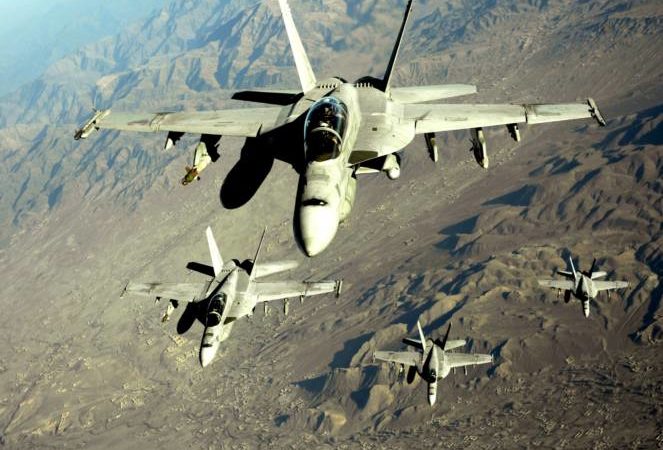
UN: Coalition air raids kill 18 civilians in Helmand

February 13, 2017 by Nasheman

UN inquiry concludes air strikes in Helmand’s Sangin district killed at least 18 civilians, mostly women and children.

Helmand

by Al Jazeera

Civilians, mostly women and children, were killed last week in air raids by coalition forces in Afghanistan’s Helmand province, an initial United Nations inquiry suggested.

On Thursday and Friday, as many as 18 civilians died in air strikes in Helmand’s Sangin district, according to a statement released by the UN Assistance Mission in Afghanistan on Sunday.

The UN said the strikes had been conducted by “international military forces”, but only US aircraft have been involved in recent coalition strikes, according to US military officials.

Afghan officials and local residents told Al Jazeera that the death toll was higher than 18.

“The jets arrived at around 3am (local time) on Friday and started bombing indiscriminately in a heavy residential area. I lost my aunt, two cousins and a nephew in the strikes,” Mullah Fazal Ahmed told Al Jazeera.

“Six others in my family were wounded,” said Ahmed, adding that the bombardment lasted for up to half an hour.

“Most of them who were pulled out of the rubble were bodies of women and children, as young as five-years-old.”

US military officials said their aircraft conducted around 30 air raids in Helmand in the past week. NATO’s Resolute Support mission has initiated an inquiry into the incident.

“We are investigating the allegations, but let me tell you, no one has reached any final conclusion on this incident in Helmand,” Brigadier General Charles Cleveland, a US army spokesman in Afghanistan told Al Jazeera.

“We all know that there is a fight against the Taliban going on in Sangin for the past 10 days, there are mortars being fired by the Taliban and Afghan forces are fighting them, so its not at all clear at the moment how these civilians were killed.”

The NATO-led military mission has deployed hundreds of troops to Helmand in a bid to help Afghan security forces in their war against Taliban fighters.

Civilian casualties from both American and Afghan air strikes increased dramatically last year, according to the UN’s most recent report on threats to civilians.

At least 891 civilians were killed or injured in 2016, a figure highest in areas outside of Kabul.

Filed Under: Muslim World

Airstrike on Gaza Strip tunnel kills two Palestinians

February 9, 2017 by Nasheman

Two dead and five wounded near Gaza-Egypt border after missile slams into a tunnel defying Israeli blockade.

The father of one of two Palestinians killed in a tunnel bombing mourns at a hospital [Ibraheem Abu Mustafa/Reuters]

The father of one of two Palestinians killed in a tunnel bombing mourns at a hospital [Ibraheem Abu Mustafa/Reuters]

by Al Jazeera

Two Palestinian civilians were killed and five others were wounded in an airstrike that hit a tunnel in Gaza near the Egyptian border.

It was unclear who launched the attack on Thursday. A Palestinian official blamed Israel, however, a military spokeswoman denied any knowledge of the strike.

Ashraf al-Qedra, Gaza’s health ministry spokesperson, said in a statement the two men were “martyred and five other people were wounded as a result of being targeted by an Israeli warplane along the Palestinian-Egyptian borders”.

According to al-Qedra, the two men killed were identified as Hossam al-Sufi, 24, and Mohammed al-Aqra, 38.

An Israeli military spokeswoman said she was unaware of the attack, which happened pre-dawn between the Gaza Strip and Rafah on the Egyptian side of the border.

The incident took place after at least three rockets were fired from the Sinai peninsula into Israel’s southernmost resort city of Eilat late on Wednesday.

The Israeli army said in a statement its missile defence system, known as the “Iron Dome”, intercepted the rockets, preventing any casualties or damage.

Israeli media reported a group affiliated with the Islamic State of the Iraq and the Levant (ISIL, also known as ISIS) claimed responsibility for the attack on Eilat.

Gaza has been under a decade-long siege imposed by Israel following Hamas’ election victory and subsequent takeover of the enclave in 2007.

Since 2013, Egypt has largely shut off its border with Gaza, blocking nearly 2,000 tunnels connecting Gaza with Rafah, stemming the flow of much-needed goods and resources.

Egypt recently eased some border restrictions with Gaza.

Filed Under: Muslim World

  • « Previous Page
  • 1
  • …
  • 21
  • 22
  • 23
  • 24
  • 25
  • …
  • 87
  • Next Page »

Follow Us

  • Facebook
  • Twitter
  • YouTube

KNOW US

  • About Us
  • Corporate News
  • FAQs
  • NewsVoir
  • Newswire
  • Realtor arrested for NRI businessman’s murder in Andhra Pradesh

GET INVOLVED

  • Corporate News
  • Letters to Editor
  • NewsVoir
  • Newswire
  • Realtor arrested for NRI businessman’s murder in Andhra Pradesh
  • Submissions

PROMOTE

  • Advertise
  • Corporate News
  • Events
  • NewsVoir
  • Newswire
  • Realtor arrested for NRI businessman’s murder in Andhra Pradesh

Archives

  • February 2026 (6)
  • January 2026 (12)
  • December 2025 (6)
  • November 2025 (8)
  • October 2025 (12)
  • September 2025 (25)
  • August 2025 (46)
  • July 2025 (110)
  • June 2025 (28)
  • May 2025 (14)
  • April 2025 (50)
  • March 2025 (35)
  • February 2025 (34)
  • January 2025 (43)
  • December 2024 (83)
  • November 2024 (82)
  • October 2024 (156)
  • September 2024 (202)
  • August 2024 (165)
  • July 2024 (169)
  • June 2024 (161)
  • May 2024 (107)
  • April 2024 (104)
  • March 2024 (222)
  • February 2024 (229)
  • January 2024 (102)
  • December 2023 (142)
  • November 2023 (69)
  • October 2023 (74)
  • September 2023 (93)
  • August 2023 (118)
  • July 2023 (139)
  • June 2023 (52)
  • May 2023 (38)
  • April 2023 (48)
  • March 2023 (166)
  • February 2023 (207)
  • January 2023 (183)
  • December 2022 (165)
  • November 2022 (229)
  • October 2022 (224)
  • September 2022 (177)
  • August 2022 (155)
  • July 2022 (123)
  • June 2022 (190)
  • May 2022 (204)
  • April 2022 (310)
  • March 2022 (273)
  • February 2022 (311)
  • January 2022 (329)
  • December 2021 (296)
  • November 2021 (277)
  • October 2021 (237)
  • September 2021 (234)
  • August 2021 (221)
  • July 2021 (237)
  • June 2021 (364)
  • May 2021 (282)
  • April 2021 (278)
  • March 2021 (293)
  • February 2021 (192)
  • January 2021 (222)
  • December 2020 (170)
  • November 2020 (172)
  • October 2020 (187)
  • September 2020 (194)
  • August 2020 (61)
  • July 2020 (58)
  • June 2020 (56)
  • May 2020 (36)
  • March 2020 (48)
  • February 2020 (109)
  • January 2020 (162)
  • December 2019 (174)
  • November 2019 (120)
  • October 2019 (104)
  • September 2019 (88)
  • August 2019 (159)
  • July 2019 (122)
  • June 2019 (66)
  • May 2019 (276)
  • April 2019 (393)
  • March 2019 (477)
  • February 2019 (448)
  • January 2019 (693)
  • December 2018 (736)
  • November 2018 (570)
  • October 2018 (611)
  • September 2018 (692)
  • August 2018 (666)
  • July 2018 (468)
  • June 2018 (440)
  • May 2018 (616)
  • April 2018 (772)
  • March 2018 (338)
  • February 2018 (157)
  • January 2018 (188)
  • December 2017 (142)
  • November 2017 (122)
  • October 2017 (146)
  • September 2017 (176)
  • August 2017 (201)
  • July 2017 (222)
  • June 2017 (155)
  • May 2017 (205)
  • April 2017 (156)
  • March 2017 (178)
  • February 2017 (195)
  • January 2017 (149)
  • December 2016 (143)
  • November 2016 (169)
  • October 2016 (165)
  • September 2016 (137)
  • August 2016 (115)
  • July 2016 (116)
  • June 2016 (124)
  • May 2016 (170)
  • April 2016 (150)
  • March 2016 (199)
  • February 2016 (201)
  • January 2016 (216)
  • December 2015 (210)
  • November 2015 (174)
  • October 2015 (281)
  • September 2015 (241)
  • August 2015 (250)
  • July 2015 (188)
  • June 2015 (216)
  • May 2015 (281)
  • April 2015 (306)
  • March 2015 (296)
  • February 2015 (280)
  • January 2015 (245)
  • December 2014 (286)
  • November 2014 (254)
  • October 2014 (185)
  • September 2014 (98)
  • August 2014 (7)

Copyright © 2026 · News Pro Theme on Genesis Framework · WordPress · Log in