• Home
  • About Us
  • Events
  • Submissions
  • Advertise
  • Contact Us
  • NewsVoir
  • Newswire
  • Nasheman Urdu ePaper

Nasheman

India's largest selling Urdu weekly, now also in English

  • News & Politics
    • India
    • Indian Muslims
    • Muslim World
  • Culture & Society
  • Opinion
  • In Focus
  • Human Rights
  • Photo Essays
  • Multimedia
    • Infographics
    • Podcasts
You are here: Home / Archives for Women

Five months pregnant Lily walks runway at New York Fashion Week

September 10, 2018 by Nasheman

new York Five months pregnant supermodel Lily Aldridge walked the runway at the New York Fashion Week. She says that it was nothing but empowering.

On Saturday, the supermodel, 32, owned her five months pregnant status on the Brandon Maxwell runway at the Classic Car Club, strutting her stuff in a backless red dress with her hair pulled back.

Aldridge’s fellow models including Cindy Bruna, Taylor Hill and Joan Smalls were on hand to support her.

In a chic slideshow on Instagram, Gigi Hadid, decked out in pink, enthusiastically motioned towards Aldridge, and Bella Hadid patted Aldridge’s growing stomach, reports variety.com.

“So proud to walk the Brandon Maxwell runway 5 months pregnant! I’ve walked few runways in my life and this is a moment that I’ll look back on forever with great emotion. Thank you Brandon for letting me shine and being such a true gentleman, Love you forever,” Aldridge wrote.

After expressing gratitude to her glam squad, Aldridge added, “It was so much fun being backstage will all the girls, everyone was so uplifting and rubbing my belly celebrating this beautiful journey with me. Nothing but empowerment at Brandon Maxwell.”

(IANS)

Filed Under: Women

Subject of women empowerment very close to me: Anita Dongre

September 5, 2018 by Nasheman

New Delhi Designer Anita Dongre says that with her new campaign #ANDImpact for which Bollywood actress Kareena Kapoor Khan has also shot a video, her brand highlights importance of a sustainable environment and celebrates four such women change-makers — Priyanka Raina, Purnima Burman, Srishti Bakshi and Rashi Anand.

“Through its latest campaign, #ANDImpact, the brand highlights the importance of a sustainable environment and celebrates four such women change-makers who are individually working towards this cause,” Dongre told IANS over an email.

Priyanka is the wife of cricketer Suresh Raina and founder and director at Gracia Raina Foundation dedicated to creating awareness and work closely with mothers and children.

Srishti is the founder of Crossbow Miles, a social initiative that mobilizes communities to make the country safer for girls and women.

Rashi is an entrepreneur and social activist working towards social welfare activities primarily aimed at educating and aiding street children, and Purnima is a conservationist, environmentalist and winner of the Whitley Award (also known as Green Oscar), a prestigious international nature conservation prize in honour of her work to protect the greater adjutant stork and its wetland habitat.

“The subject of women empowerment is very close to me, Whether it is through Grassroot where we empower rural women by providing them with employment opportunities and sustainable livelihoods, or through AND where we bring forward stories of urban women entrepreneurs to inspire other women,” said Dongre.

For their latest autumn 2018 collection, which will launch on Friday across all AND stores, Dongre has collaborated with Reliance for their R|Elan initiative and have also incorporated TENCEL™; the premium eco-friendly textile from the Lenzing group.

While R|Elan is the blend of functionality with both business and environmental longevity, TENCEL™ offers a range of features including botanic origin, sustainable production, enhanced breathability, colour retention and biodegradability.

On the collection, Dongre said it is all about the season’s must-have midi dresses in denim and autumn checks that make for smart everyday wear as well as modern office wear.

“It comprises versatile styles apt for every occasion at and outside work. Colour palette is monochromatic with hints of deep winter hues and pastel tones,” she said.

(IANS)

Filed Under: Women

Maneka asks Indian Envoy in Spain to send abandoned girl back

August 29, 2018 by Nasheman


Union Women and Child Development Minister Maneka Gandhi on Tuesday asked the Indian Ambassador in Spain to send back the adopted girl who was abandoned by her foster parents in the country.

She was reacting to a recent media report according to which a Spanish couple had abandoned the 13-year-old girl they adopted from an agency in Madhya Pradesh after they were allegedly deceived about her age.

The couple was reportedly told that the girl was seven-year-old at the time of adoption earlier this year.

“It is very unfortunate that the adopted girl has been abandoned in Spain. I have requested our Ambassador in Spain D. B. Venkatesh Varma to immediately send her back to India where we will ensure her rehabilitation and safe custody,” the Minister said.

Gandhi also expressed her concern for the girl who is currently in foster care in some institution in Madrid and added that the Ministry is in the process of fixing the responsibility for the lapses which happened on the part of the Child Care Institution in Bhopal.

(IANS)

Filed Under: Women

Women activists urge PM to ban on illegal GMO imports

August 29, 2018 by Nasheman


Environmental activist and scholar Dr Vandana Shiva on Tuesday urged the Prime Minister to ban “illegal GMO import” and stop unnecessary imports to support Indian farmers and strengthen the country’s sovereignty.

In a joint letter to PM Narendra Modi, Shiva of Navdanya and founder of Guild for Service Dr Mohini Giri pointed out how our country is “unnecessarily importing roundup-sprayed pulses and processed food with Genetically Modified Organism (GMO)” technique.

“While our farmers grow a diversity of safe, healthy, GMO-free food, we are unnecessarily importing roundup-sprayed pulses and processed food with GMOs. We can feed two times India’s population with bio-diverse nutrition-sensitive organic agriculture,” the letter said.

It further said that illegal imports of GMOs and roundup-ready food grains are destroying the livelihood of our farmers and women in the indigenous food economy and health of the people.

“Our government seems to be in a rush to put the profits of MNCs above the food sovereignty of India, the livelihood of Indian farmers and women, and the right to safe and healthy food of the Indian people,” it said.

Shiva and Giri then called upon Modi to stop the entry of GMO foods and roundup-laced pulses and edible oils, and “build on indigenous alternatives which can provide fair incomes to our farmers and a healthy diet to the last child”.

In another letter to Minister of Environment, Forest and Climate Change Dr Harsh Vardhan, Shiva implored the Minister to investigate Bt Cotton (genetically modified crop) for criminal fraud, accusing Monsanto — an agrochemical and agricultural biotechnology corporation — of deceiving Indian farmers by making unscientific and fraudulent claims.

“Over the two decades since Monsanto entered India, it has violated laws, deceived Indian farmers by making unscientific and fraudulent claims, extracted super profits through illegal royalty collection by violating India’s Patent and Intellectual Property laws, pushed farmers into debt, and, as a consequence of the debt trap, to suicide,” Shiva said.

“Monsanto cheated Indian farmers by claiming that its Bt cotton will control the bollworm. The claim of Bt cotton being a pest control technology has been proven false with the emergence of resistant pests and farmers are being forced to use pesticides. Farmers are now dying due to pesticide poisoning,” she added.

Filed Under: Women

Midwifing change: How maternity deaths were reduced to zero in remote tribal hamlets

August 20, 2018 by Nasheman

The scenic beauty of Araku Valley in Andhra Pradesh is in stark contrast to the lives of indigenous tribespeople inhabiting the region. Living in virtual destitution, these tribals — like their counterparts scattered in remote locations across the rest of India — lack access to basic amenities like safe drinking water, healthcare and education. Till a few years ago, some of these habitations were not even covered in the national census and nobody knew they even existed.

But efforts of a leading NGO over the last seven years have yielded results in 181 habitations around Araku. This is testified by the fact that no maternal deaths have been reported here over the last two years — a giant step forward for a place where maternal mortality was double the national average.

Before emerging as a tourist destination about a decade ago, Araku, 100 km from the port city of Visakhapatnam, was an area that was the redoubt of Maoist extremists. Politicians and officials used to stay away from this forested area in the Eastern Ghats.

The population in scattered and inaccessible hamlets was suffering from malnutrition, leading to high maternal mortality and neonatal mortality rates. Some traditional practices of the tribals and deliveries at home were also contributing to this situation.

When the NGO Piramal Swasthya, the health vertical of Piramal Foundation, launched the Asara Tribal Health Programme in 2011, maternal mortality in this tribal area was over 400 per 100,000 live births as against the then national average of around 200.

No maternal deaths have been reported over the last two years while the percentage of institutional deliveries has risen from 18 per cent to 68 per cent. The neonatal mortality rate too has come down from 37 to 10 per 100,000 live births, say the officials of Piramal Swasthya.

The agents behind this change are Auxillary Nurse Midwives (ANMs) like P. Padma who toil selflessly to help the pregnant women in these remote hamlets. The 27-year-old has been working with the NGO for six years and has attended about 3,000 women. She has seen the transformation.

“The situation in the tribal hamlets was pathetic as women were reluctant to come to hospitals for delivery. A major reason for this was the superstition among tribals. Piramal Swasthya has removed the superstitions and motivated the women,” Padma.

Padma travels 12-13 km in a four-wheeler and, when the road ends, she goes on a bike driven by a “pilot”, covering another 11 km. When this narrow path also ends, she hikes across mountains and valleys for another 12-13 km to the last habitation of Araku.

This is what she does every day, explains Vishal Phanse, Chief Executive Officer, Piramal Swasthya.

Once in the habitation, the ANM identifies every pregnant woman, conducts basic tests, provides counselling on healthy practices and fixes an appointment for consultation with a specialist at the telemedicine centre. The next day, a four-wheeler is sent to pick up all pregnant women registered and get them to the telemedicine centre, where an expert gynaecologist sitting in Hyderabad provides the consultation through teleconferencing. Free medication, along with nutrition supplements, is also provided to the expectant mother and she is then dropped back to her habitation.

“If a woman can’t walk we arrange ‘palki’ (a kind of palanquin) to bring her till the four-wheeler to take her to the telemedicine centre,” Padma said. Last month, a woman delivered a baby on the palki in Colliguda village. She helped the woman and later safely transported her and the newborn to the hospital.

ANMs support the women and children through their pregnancy, child birth and neonatal period while keeping the government machinery in the loop.

Piramal Swasthya overcame all odds to achieve its goal of ending preventable deaths in 181 habitations, serving 49,000 pregnant women.

Adding some more interventions like training traditional birth attendants and health education of adolescent girls, it is now expanding the programme across 11 “mandals” or blocks comprising 1,179 habitations in the tribal belt of Visakhapatnam district to reach 2.5 lakh population.

It is currently running six telemedicine centres and plans to add five more. The NGO will also be opening two more community nutrition hubs in addition to existing one, where women are educated about a healthy and nutritious diet and trained in the use of traditional and locally available food items.

Based on the learning in Visakhapatnam, the NGO wants to create something which can be replicated in the entire tribal belt of India. More than 10 percent of India’s population is tribal and among them maternal mortality is two-and-a-half times the national average.

“If what works in Araku, works in Visakhapatnam, then we can replicate it in the entire tribal belt of the country,” said Phanse.

Niti Aayog, India’s policy think-tank, is looking at this model with key interest as to how they can scale it up.

“In fact, a lot of people including the United Nations, governments in states and at the Centre are looking at it. We had a lot of visitors trying to understand how we managed to do this. We ourselves are learning every day. Technology is a great enabler if you have to scale it up at the national level.”

Phanse believes that 80 percent of what worked in Araku can be replicated in tribal areas across the country and 20 percent could be local customisation that they have to work on.

What worked for Piramal Swasthya in Araku? “We have doctors, public health professionals and experts with the youngest aged 26 and the oldest 78. That’s the kind of expertise we have with actual feet on the ground. Our actuality to work with them, for them, staying with them and understanding them is what I think has worked best for us,” said Phanse.

“If you want make anything sustainable in healthcare you have to create health seeking behaviour in the community. We were successful because we changed the community,” he added.

Phanse feels that the community engagement and participation in the programme is key to its success.

For Piramal, winning the trust of the local community was the key challenge. As Araku was an extremist stronghold, gaining the trust of locals took time.

Most of the 38 people that work for the organisation are from the local community who are wedded to the cause. Forging the local partnership by using the services of dedicated individuals who can speak the language of the community ensured smooth implementation.

With 4,000 employees in just its health vertical, Piramal Swasthya is prehaps the largest NGO in India, implementing 29 healthcare projects in 16 states.

India ranks 131 among 188 countries on the Human Development Index (HDI) 2016 released by the United Nations Development Programme (UNDP). India was placed behind countries like Gabon (109), Egypt (111), Indonesia (113), South Africa (119) and Iraq (121), among others. The government is working towards improving this rating by creating competition between states to perform better on key social indicators like infant mortality rate, maternal mortality rate and life expectancy.

Filed Under: HEALTH, Women

How tribal women of Kanha are driving their own destiny

August 2, 2018 by Nasheman

Mukki zone in the famous Kanha National Park had been known throughout its recorded history to have been ruled by tigresses, rather than tigers. True to this legacy, tribal women of the Mukki zone are breaking conventional chains by taking over men-dominated jobs in the region. These women now drive, guide tourists, guard the forest that traditionally gave them sustenance and are coming forward to shoulder bigger responsibilities.

While the idea to promote women in forest staff, especially as drivers in this largest national park of central India, was conceptualised and executed only in December last year, the way these women excelled in a short span of time has surprised everyone. And encouraged by the success of the experiment, forest authorities are planning to set an example by making Mukki the country’s first women-controlled forest zone while also replicating the idea in other zones.

Judged and under pressure from the day one, it was a difficult journey for Neeta Markam to become the first licensed forest driver here. Her battles began from home, right from convincing her father that she can share family responsibilities and that she wanted to do so by being a driver in Kanha.

People made fun of her when she enrolled in an induction course meant for drivers in this forest reserve but now other girls come to her for advice how they can also do what she did.

“It never said that the course was only for men. My aunt convinced my father and he let me go even as some families taunted, while other girls and boys made fun. Today more girls want to be drivers and they come to me seeking advice. And the boys who made fun of me are now jealous,” Neeta, who belongs to the Gond tribe and hails from Mukki village at the edge of core tiger reserve, told IANS.

Neeta recalled composure of other trainees at driving school watching a girl stepping in. She also recalled how in the beginning of the safari season, people would be a skeptic of being driven into a forest by a woman driver, often asking her bluntly if she would be able to manage.

“At times I had to convince them that this forest is my home and I had been trained to drive and show them around,” she recalled.

The Mukki zone – one of the three zones of Kanha Tiger Reserve – presently has two women drivers, six women guides, and one forest guard apart from about ten tribal women operating the forest canteen, all hailing from neighboring villages situated within the forest buffer.

As the tiger reserve is set to open again in October after a three-month hiatus, training is going on for six more guides with local ecology, and a batch of ten women with basic hygiene to work in the forest kitchen.

While Madhya Pradesh has the highest number of the displaced tribal families, the example set by the forest authorities by extending support to rather marginalized tribes is now raising hopes and aspiration among villagers who previously abstained from allowing women to do jobs they thought were meant for men.

“In its recorded history, Mukki zone, unlike Khatiya and Kanha gate, had always been ruled by tigresses, rather than tigers. Staying true to its nature and name, we wanted to take the tradition ahead and turn it into a place where women guards go on night patrolling, drive vehicles and also show people around. And when you come back, you stop by an all-women-led cafeteria,” S.K Khare, assistant director at Kanha Tiger Reserve, told this visiting correspondent.

In an initiative by the Kanha Tiger Reserve’s administration, the Mukki zone cafetaria is now run by tribal women from villages at the vicinity of the core forest areas.

He added that at present, Kanha is one of the few national parks where women forest guards are stationed in the core forest posts and licensed women drivers to take tourists inside the forests.

Madhuri Thakur, who cleared her intermediate examination in 2017 at the age of 20 years, is another licensed driver. Inspired by her father, a retired forest guard, Madhuri said while the forest officials and her trainers had always been patient, her colleagues also encourage all women to believe in themselves.

“Once Neeta brushed her jeep and started crying; then other drivers came and started boosting her confidence and making her comfortable. They jokingly told her that this is merely a small incident and they had almost killed a person in their initial phase,” Madhuri recalled.

As the tribal culture marries girls young, the emerging trend of empowerment pitches these women to change traditions.

“I don’t want to marry now, and even if my family forces me to do so, I would prefer to be married somewhere near my village because I don’t want to quit this job that I love. Why should women make all the sacrifices,” said Madhuri, who aspires to own her own vehicle some day.

Forest guard Lakshmi Maravi, who also hails from the Gond community and is the sole breadwinner of her family of three siblings and a mother, said that forests had given her a sense of belonging and an identity.

“During my training, I was skeptical of my abilities but now I go on night trails, shoo away the poachers and keep the forest safe. Now I feel I was made to do this,” Maravi said.

Suhkati Dhurvey, a forest guide, told the visiting IANS correspondent that merely six guides is a good start, but it isn’t enough. She, along with others, earn about Rs 10,000 per month, but since the park is closed for three months, this hampers their income.

“There should be more women employed in this sector; it means a lot for tribal ladies and gives them hope that they are more than mere labourers,” said Dhurve.

She said that spotting birds is far more fun than tigers and that is something she likes to encourage tourists to do as well to show that there is more to a tiger reserve than tigers alone.

Asserting that employing women was not just another social experiment of “women empowerment”, forester Khare said it is rather part of a larger cause.

He said while there was a mistrust and misunderstanding among the tribes and the forest department – as tribals largely depend on the forests and the department has the responsibility of conservation – only steps like empowerment can make both go along.

“Almost every woman who works here has a some sort of crisis back home. These jobs have given them hope,” he said.

Stating that while earlier women were not preferred for the job of a guide or a guard, it was observed that they work harder and with more passion than men.

“It is important that we create better work culture and environment. After we employed women, we saw the staff had started acting more responsibly,” Khare said, adding that the aim is to make Mukki zone an “all-women-operated area”.

Filed Under: Women

Extend compensation scheme for sexual assault victims to child victims too: SC

July 26, 2018 by Nasheman


The scheme proposed by the National Legal Services Authority (NALSA) for compensating victims of sexual assault and acid attacks should be made applicable to child victims of such assaults, said the Supreme Court on Wednesday.

A bench of Justice Madan B. Lokur and Justice Deepak Gupta was of the opinion that the scheme should be modified to some extent to include children of sexual assault.

The bench asked senior advocate Indira Jaising, assisting the court as an amicus curiae in the matter, if slight modifications could be done in the ‘Compensation Scheme for Women Victims/Survivors of Sexual Assault/Other Crimes-2018’ to also include child victims.

The bench asked Jaising to submit a note in this regard to the court.

The NALSA’s scheme clearly defines the compensation slabs for victims of sexual assault, acid attacks and even loss of a foetus, and earmarks minimum Rs 5 lakh and Rs 7 lakh respectively for women who go through a crisis post sexual assault or an acid attack/

As per the scheme, a minimum of Rs 5 lakh is to be paid in case of loss of life or gang rape of a victim and maximum of Rs 10 lakh. A minimum amount of Rs 4 lakh is to be paid in case of rape or unnatural sexual assault, with the maximum fixed at Rs 7 lakh.

In case of victims of burning and acid attacks, the minimum compensation will be Rs 7 lakh for total disfigurement, with a maximum of Rs 8 lakh. Rs 5 lakh has been fixed in case of 50 per cent burns, while the upper limit would be Rs 8 lakh.

For loss of limb or body part resulting in 80 per cent permanent disability, Rs 2 lakh is to be given, with Rs 2 lakh in case of grievous physical injury.

The scheme provides that in case of pregnancy on account of rape, the victim would get between Rs 3 lakh and Rs 4 lakh, while for miscarriage or loss of fertility due to such assaults, the amount would be between Rs 2 lakh and Rs 3 lakh.

After the December 16, 2012, gang-rape and murder case in Delhi, the Central government announced in 2013 the Nirbhaya Fund scheme to support state governments and NGOs working for women’s safety.

The court was hearing petitions filed after the 2012 case, raising concerns over the safety and security of women.

Earlier, NALSA had told the apex court that hardly 5-10 per cent of sexual assault victims across the country were able to get compensation under the relevant schemes in various states.

Filed Under: Women

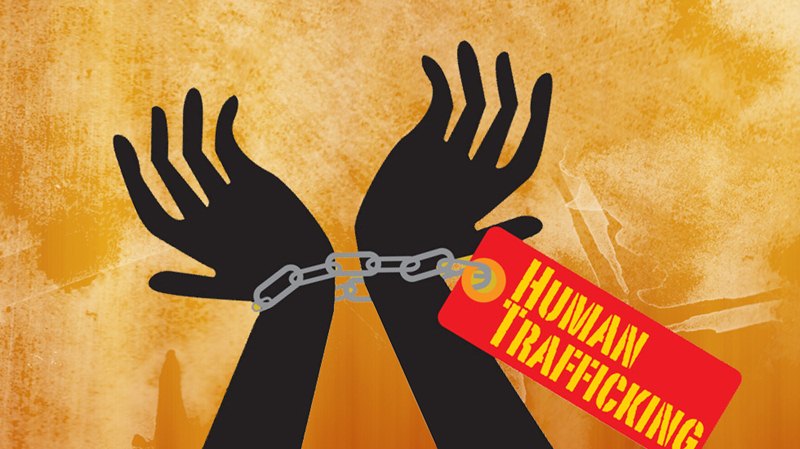
‘Anti-trafficking bill ignores consenting sex workers’

July 25, 2018 by Nasheman


Geeta (name changed), a resident of Sangli village in Maharashtra, was 19 when she became a sex worker, not as a victim of trafficking but as an option to feed herself and support her family financially.

Now 32 and a mother of 10-year-old son, Geeta is facing a new hurdle — that of forced rehabilitation by the government of sex workers. And she expressed her anxiety that if Parliament clears an anti-human trafficking bill pending before it, it causes chaos in her life.

“I don’t want to go to any rehab center, I don’t want to learn stitching work or making pickles. Nobody forced me to be a sex worker; it was my choice and I am earning well enough to survive with my son,” Geeta told IANS.

This is not just the voice of Geeta — many other sex workers to believe the anti-trafficking bill will create turmoil in their lives.

Kusum, 40, who only uses her first name, lives in one of the brothels on Delhi’s GB Road. She said she is not ashamed of being known to the world as a sex worker and insisted on not changing her name.

“I had chosen to go ahead as a sex worker, nobody pressurized me. This is my profession, just like other jobs. Had I wanted to move out of it, I could have done so a long time ago. Now, the government is pushing for rehab but they don’t understand that sex worker are not perceived by the society with dignity,” said Kusum, who is also President of the All India Network of Sex Workers (AINSW).

“Not all sex workers are victims of human trafficking and the government needs to understand the difference between the two. There are many like me who have chosen it as a source of income,” she added.

As the monsoon session began on July 18, the Trafficking of Persons (Prevention, Protection, and Rehabilitation) Bill, 2018, was tabled in the Lok Sabha by Women and Child Development Minister Maneka Gandhi.

According to National Crime Records Bureau (NCRB) figures, around 8,100 cases of trafficking were recorded in India in 2016 and around 23,000 victims of trafficking were rescued the same year (61 percent of these were children).

Trafficking, under the Section 370 of the Indian Penal Code (IPC), has been defined as “any act” of physical and sexual exploitation, slavery or practices similar to slavery and servitude.

Legal experts and social activists also expressed their worry that the bill might have a direct negative impact on the lives of many sex workers as it does not address the legal and real-time challenges in trafficking in persons.

“The clauses of the bill do not directly point at sex workers; however, some of the clauses are linked to them,” Samarjit Jana, Director, Sonagachi Research and Training Institute, Kolkata, told IANS.

According to the activists, the bill must clearly state that it does not include consenting adults and they should be enabled to continue with their chosen occupation.

“Trafficking of persons into forced or coerced labour should not be equated with sex work undertaken by consenting adults. This conflation can lead to misuse and over-broad application of the provisions in this bill,” Jana, who has for long been associated with the rights of sex-workers, stated.

Another issue that the experts are concerned about is that the government does not offer a proper rehabilitation programme.

“What the government is offering as rehabilitation cannot be called a substantive package for surviving. In the name of rehabilitation, all they offer is stitching classes. How can a sex-worker, who is also a mother, earn enough through simply sewing work,” asked Aarthi Pai, an activist, and lawyer associated with the Bengaluru-based NGO Sangram.

“There is also the social-stigma factor which the government has been totally ignoring. Indian society will never accept an individual who has been a sex worker. The government needs to have a deeper insight into such factors,” she noted.

Jana pointed out that certain guiding principles were shared with the government, asking the WCD Ministry to consider certain factors before drafting the bill — but these have been ignored.

Earlier this month, around 4,300 sex workers had also written to Maneka Gandhi appealing to her to ensure that the new law does not lead to their incarceration. There has apparently been no action on this either.

Filed Under: Women

Karnataka to bring back Mysuru woman from Shimla hospital

July 24, 2018 by Nasheman


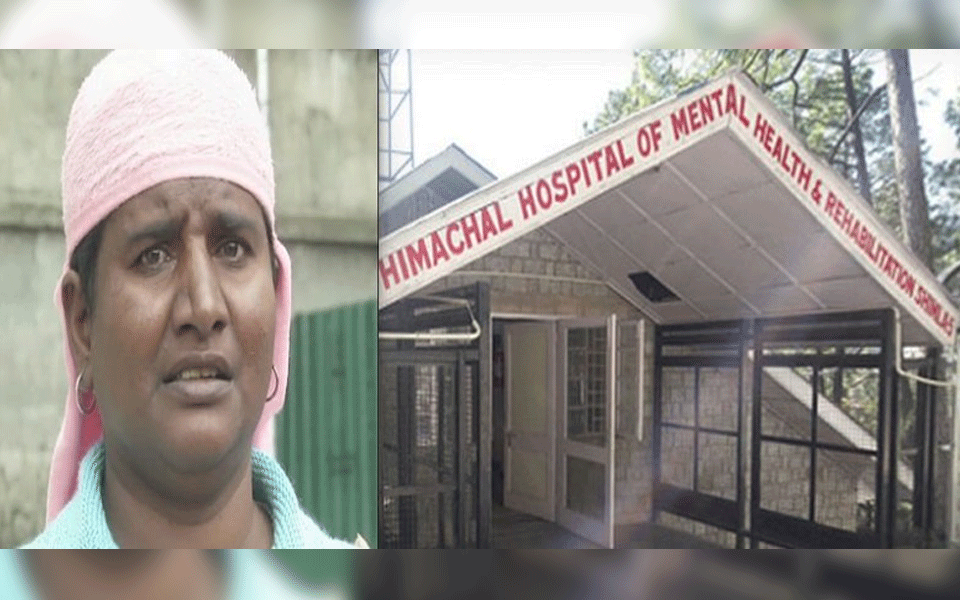
Karnataka will bring back a 40-year-old Mysuru woman under treatment at a rehab hospital in Shimla, an official statement said on Monday.

“Chief Minister H.D. Kumaraswamy on being alerted about the stranded woman directed Mysuru Deputy Commissioner Abhiram G. Shankar to make necessary arrangements to bring her back to the state,” a statement from the Chief Minister’s Office said.

As reported by the local media, 40-year-old Saraswathi from Makanahalli village in Mysuru district, went missing about two years ago when she came to Bengaluru to work in a garment factory.

She had reportedly reached Himachal Pradesh’s Kangra and was later admitted to the Himachal Hospital of Mental Health and Rehabilitation in Shimla for treatment in June 2016.

“She could not contact her family facing language issues in Himachal and was unable to recall how she reached there,” the statement added.

The Chief Minister has directed the Mysuru Deputy Commissioner to provide necessary treatment and shelter on her return to the state.

Filed Under: Women

SC said that Woman’s right to entry for Sabarimala Temple

July 18, 2018 by Nasheman


The Supreme Court on Wednesday said that a woman’s right to pray is equal to that of a man as enshrined in the Constitution and forming a law cannot negate that. The apex court was hearing a batch of petitions challenging the ban on entry of women in Kerala’s Sabarimala temple on grounds of biological factors.

“On what basis you (temple authorities) deny the entry. It is against the Constitutional mandate. Once you open it for the public, anybody can go,” Chief Justice Dipak Misra said.

He said that if the temple has allowed men to enter, then it must allow women to enter too. “There is no concept of a private temple. If there is a temple then it is a public place and everyone is allowed to go there. If men can go there then women can also go,” he said during the hearing.

The CJI also opposed the Kerala government’s assertion that ceremonial rules pertaining to temples and method of worship are set by the temple and are protected under the right to worship, saying that a “temple cannot claim denominational rights.”

“Your right to worship as a woman at par with a man is not dependent on a legislation. It’s there in the Constitution. It’s there in article 25(1). Law facilitates equal right of worship by everyone,” he said.

Justice DY Chandrachud, who was part of the five-judge constitutional bench that was hearing the case, further said, “Every woman is also the creation of God and why should there be discrimination against them in employment or worship.”

The Supreme Court had in October last year formed the constitution bench to hear the case and it will decide four significant questions, primary among which is whether the ban amounts to discrimination against women.

The constitution bench also includes Justices Rohinton Fali Nariman, AM Khanwilkar and Indu Malhotra.

The petitioner – the Indian Young Lawyers Association – has challenged the 800-year-old practice of prohibiting the entry of women into the famed Lord Ayyappan Temple.

The PIL has sought direction to the Kerala government, the Travancore Devaswom Board, Chief Thanthri (priest) of Sabarimala Temple and the District Magistrate of Pathanamthitta to ensure entry of female devotees between the age group of 10-50.

Appearing for the petitioner, counsel Ravi Prakash Gupta told the court the restrictions on the entry of women in Sabarimala temple is not the essence of their religious affairs as discrimination on the entry of women in the temple is “neither a ritual nor a ceremony associated with Hindu religion”.

Gupta said: “Mere sight of a woman does not affect anybody’s celibacy, if one has take oath of it, otherwise such oath has no meaning.”

Filed Under: Women

  • « Previous Page
  • 1
  • 2
  • 3
  • 4
  • 5
  • 6
  • …
  • 11
  • Next Page »

Follow Us

  • Facebook
  • Twitter
  • YouTube

KNOW US

  • About Us
  • Corporate News
  • FAQs
  • NewsVoir
  • Newswire
  • Realtor arrested for NRI businessman’s murder in Andhra Pradesh

GET INVOLVED

  • Corporate News
  • Letters to Editor
  • NewsVoir
  • Newswire
  • Realtor arrested for NRI businessman’s murder in Andhra Pradesh
  • Submissions

PROMOTE

  • Advertise
  • Corporate News
  • Events
  • NewsVoir
  • Newswire
  • Realtor arrested for NRI businessman’s murder in Andhra Pradesh

Archives

  • February 2026 (6)
  • January 2026 (12)
  • December 2025 (6)
  • November 2025 (8)
  • October 2025 (12)
  • September 2025 (25)
  • August 2025 (46)
  • July 2025 (110)
  • June 2025 (28)
  • May 2025 (14)
  • April 2025 (50)
  • March 2025 (35)
  • February 2025 (34)
  • January 2025 (43)
  • December 2024 (83)
  • November 2024 (82)
  • October 2024 (156)
  • September 2024 (202)
  • August 2024 (165)
  • July 2024 (169)
  • June 2024 (161)
  • May 2024 (107)
  • April 2024 (104)
  • March 2024 (222)
  • February 2024 (229)
  • January 2024 (102)
  • December 2023 (142)
  • November 2023 (69)
  • October 2023 (74)
  • September 2023 (93)
  • August 2023 (118)
  • July 2023 (139)
  • June 2023 (52)
  • May 2023 (38)
  • April 2023 (48)
  • March 2023 (166)
  • February 2023 (207)
  • January 2023 (183)
  • December 2022 (165)
  • November 2022 (229)
  • October 2022 (224)
  • September 2022 (177)
  • August 2022 (155)
  • July 2022 (123)
  • June 2022 (190)
  • May 2022 (204)
  • April 2022 (310)
  • March 2022 (273)
  • February 2022 (311)
  • January 2022 (329)
  • December 2021 (296)
  • November 2021 (277)
  • October 2021 (237)
  • September 2021 (234)
  • August 2021 (221)
  • July 2021 (237)
  • June 2021 (364)
  • May 2021 (282)
  • April 2021 (278)
  • March 2021 (293)
  • February 2021 (192)
  • January 2021 (222)
  • December 2020 (170)
  • November 2020 (172)
  • October 2020 (187)
  • September 2020 (194)
  • August 2020 (61)
  • July 2020 (58)
  • June 2020 (56)
  • May 2020 (36)
  • March 2020 (48)
  • February 2020 (109)
  • January 2020 (162)
  • December 2019 (174)
  • November 2019 (120)
  • October 2019 (104)
  • September 2019 (88)
  • August 2019 (159)
  • July 2019 (122)
  • June 2019 (66)
  • May 2019 (276)
  • April 2019 (393)
  • March 2019 (477)
  • February 2019 (448)
  • January 2019 (693)
  • December 2018 (736)
  • November 2018 (570)
  • October 2018 (611)
  • September 2018 (692)
  • August 2018 (666)
  • July 2018 (468)
  • June 2018 (440)
  • May 2018 (616)
  • April 2018 (772)
  • March 2018 (338)
  • February 2018 (157)
  • January 2018 (188)
  • December 2017 (142)
  • November 2017 (122)
  • October 2017 (146)
  • September 2017 (176)
  • August 2017 (201)
  • July 2017 (222)
  • June 2017 (155)
  • May 2017 (205)
  • April 2017 (156)
  • March 2017 (178)
  • February 2017 (195)
  • January 2017 (149)
  • December 2016 (143)
  • November 2016 (169)
  • October 2016 (165)
  • September 2016 (137)
  • August 2016 (115)
  • July 2016 (116)
  • June 2016 (124)
  • May 2016 (170)
  • April 2016 (150)
  • March 2016 (199)
  • February 2016 (201)
  • January 2016 (216)
  • December 2015 (210)
  • November 2015 (174)
  • October 2015 (281)
  • September 2015 (241)
  • August 2015 (250)
  • July 2015 (188)
  • June 2015 (216)
  • May 2015 (281)
  • April 2015 (306)
  • March 2015 (296)
  • February 2015 (280)
  • January 2015 (245)
  • December 2014 (286)
  • November 2014 (254)
  • October 2014 (185)
  • September 2014 (98)
  • August 2014 (7)

Copyright © 2026 · News Pro Theme on Genesis Framework · WordPress · Log in