• Home
  • About Us
  • Events
  • Submissions
  • Advertise
  • Contact Us
  • NewsVoir
  • Newswire
  • Nasheman Urdu ePaper

Nasheman

India's largest selling Urdu weekly, now also in English

  • News & Politics
    • India
    • Indian Muslims
    • Muslim World
  • Culture & Society
  • Opinion
  • In Focus
  • Human Rights
  • Photo Essays
  • Multimedia
    • Infographics
    • Podcasts
You are here: Home / Archives for Culture & Society

Hollywood Round Up

October 5, 2018 by Shaheen Raaj

A Grand Mahurat Of Hollywood Film ‘He Is Back’ Held In Dubai

Showtimes Cinema & SBM Studios in Association with Ninjoor Pictures recently rolled out their ambitious international venture titled He Is Back!

Produced by Suresh Sharma who last produced the gritty drama Halla Bol & Suresh Babu Malge who also produced many movies & directed by Cheetah Yajnesh Shetty who helmed Hum Tumpe Marte Hain.

Incidentally speaking He Is Back was launched in Dubai where the who’s who of the world were present.

The movie was inaugurated with the lamp lighting by Her Royal Excellency Of Thailand Mom Luang Rajadarasri Jayankura, Kirsan Ilyumzhinov, Former President of the Republic of Kalmykia in the Russian Federation & Prince Firooz Alexander Sefre, Member of the Royal Institute of British Architects Chartered Architect Riba, England.

The other eminent guests were Edmond Avakian, Thomas Fung, Fatemah Hossain Zamani & Lazar Jakovljevic.

Inspired by Bruce Lee, the movie revolves around the theme of how a poor boy changes the world! The film introduces Abb Li in the lead role who happens to be a big worshiper of Bruce Lee. It is learnt that Abb Li is such a loyal follower of Bruce Lee that he has transformed his body also to Bruce Lee style.

The movie also introduces actress Aline Ilyumzhinov in the lead role along with an ensemble cast of Hollywood biggies!

Story by Chitah Yajnesh Shetty & sound by Resul Pukutty, the film has screenplay & dialogues by David White and involves big international names in the movie making business including DOP Ross Clarkson & world renowned action director Kecha Khampakdee.

Southern filmmaker Rockline Venkatesh gave the clap & Dr. B R Shetty, Abu Dhabhi switched on the camera. AmarjIt Shetty is the co- producer of the film & William Bond is the executive producer.

Filed Under: Film

Film Review : Sui Dhaaga – Made In India

October 4, 2018 by Shaheen Raaj

Sui Dhaaga – Made In India Is A Heart Touching Story Told Beautifully

Banner: Yash Raj Films
Producer: Adiya Chopra
Director: Sharat Kataria
Star Cast: Varun Dhawan, Anushka Sharma, Raghuveer Yadav, Yamini Das, Sawan Tank, Manukriti Patwa, Siddharth Bhardawaj, Ashish Verma, Namit Das, Bhupesh Singh, Govind Pandey, Harleen Bedi & above all Katrina Kaif
Music: Anu Malik & Andrea Guerra

Director Sharat Kataria’s 1st ever outing Dum Laga Ke Haisa was a sincere movie & now in his 2nd outing
Sui Dhaaga – Made In India once again Sharat Kataria delivers a very heart touching film.

Since more than a decade, filmmakers have been increasingly setting their stories in the heartland of India. This gives the film an authentic & realistic touch and also helps the film get a wider appeal. More number of people watch such films, provided they are told in a simple & entertaining manner, as they could relate to such stories more than the ones set in urban or foreign regions. Sui Dhaaga – Made In India, is not only based in a village, it also makes some important comments about social entrepreneurship for the social & the economic development of the rural artisans.

The scripted scenario of Sui Dhaaga – Made In India opens with a heartwarming story of pride & self-reliance of Mauji (Varun Dhawan), who stays in a village near Delhi with his wife Mamta (Anushka Sharma), father (Raghubir Yadav) & mother (Yamini Das). Mauji works at a shop that sells sewing machines, owned by Bansal (Sidharth Bhardwaj) & his son Prashant (Ashish Verma). Both have a habit of ill-treating Mauji and make him do fun antics. When Prashant gets married, Bansal invites Mauji & his entire family. Mamta feels humiliated when she sees Mauji being asked to imitate a dog by the Bansal’s. Mamta encourages him to start his own business, especially since he is a pro at sewing. However, Mauji’s grandfather was a tailor who had faced immense losses. Hence, his father vowed never to get into this business again. Mauji at first rejects Mamta’s suggestion but later leaves his job and puts a stall on the streets in Delhi. On the other hand, Mauji’s mother falls down in their house and she’s hospitalized. The tests reveal that she has multiple blockages in her heart. The family is already having a hand-to-mouth existence and Mauji’s mother’s hospitalization further add to their woes. Moreover, Mauji has left his job as well. What happens next forms the rest of the crux of the story of Sui Dhaaga – Made In India.

Sharat Katariya’s story is simple and the need of the hour. It reminds one of the films of yesteryear director Hrishikesh Mukherjee and gives a nice ode to that kind of adorable cinema. Sharat Katariya’s screenplay however is much more impressive. He does total justice to the characters & the setting and also keeps the viewers involved. However, unlike his previous outing Dum Laga Ke Haisha (2015) which had plenty of funny moments, Sui Dhaaga – Made In India is more dramatic. There’s not much scope for humor and a section of audiences might miss that. Sharat Katariya’s dialogues are witty and play a major part in contributing to the laughter quotient.

Sharat Katariya’s direction is brilliant and enhances the well written script. He could have made the film a bit tighter & less convenient & predictable but thankfully these are the minor flaws.
Sui Dhaaga – Made In India’s 1st ever shot is very impressive and captures a lot simply in one take. After establishing the characters & the setting, the film wastes no time in getting on point soon. The hospital sequence is lovely but in the 1st ever half, what takes the cake is the pre-interval sequence. A point to be noted is how the makers raise the tension levels!
In the 2nd half, the film drops a bit. Also the manner in which Mamta & Mauji get shortlisted for the fashion tournament seems a bit convenient. But the finale makes up for it & the film is sure to leave viewers with a smile.

Anu Malik’s music goes very well with the film, although it’s not of a chartbuster variety. The title song comes at a very crucial juncture and makes an impact. “Chaav Laaga” is melodious. “Khatar Patar” & “Tu Hi Aham” are situational songs & work. “Sab Badhiya Hai” is missing from the film. Andrea Guerra’s background score is in sync with the film’s mood & is also subtle.

Anil Mehta’s cinematography is too good & doesn’t get lost in capturing the simplicity of the village or the glitz & glamour of the city life. The lensmen captures only what’s essential. Meenal Agarwal’s production design is realistic. Darshan Jalan & Neelanchal Kumar Ghosh’s costume designers deserve brownie points as it’s one of the pillars of the film. Charu Shree Roy’s editing is simple & neat.

Performance wise Sui Dhaaga – Made In India belongs to Varun Dhawan & Anushka Sharma. Both actors deliver powerhouse performances. Varun Dhawan looks every inch a village simpleton and is sure to be loved. He plays his part with earnesty and that shows. Notice his reaction when the Bansal’s force him to act like a dog and how he beautifully hides his embarrassment. Also in the climax scene especially in the hotel lobby sequence, he’s too good. Anushka Sharma gets mentioned before Varun Dhawan in the opening credits and has a very crucial part to enact. One forgets that she is THE Anushka Sharma and gives her 100%. In a scene where she asks her mother-in-law if she’s fine and whether she liked the hospital, the actress seems so natural. Raghubir Yadav gives a very touching performance. Towards the finale especially, he’s sure to make the viewers teary-eyed. Yamini Das plays her part perfectly, especially in the hospital scenes. Puja Sarup (Harleen Bedi) leaves a huge mark. The same goes for Namit Das (Guddu). Bhupesh Singh (Naushad) is damn good. The actors playing Majnu, Majnu’s wife, Palteram and others are also very good.

On the whole, Sui Dhaaga – Made In India is a simple tale told beautifully with strong emphasis on emotions.
Tail Piece: At the box office turnstiles, the film will have to rely on a very good word of mouth publicity to attract audiences. It also had an extended 5 day weekend of sorts (with 2nd Oct, 2018 being a National Holiday). Hence, the film would surely have a healthy run at the Box – Office turnstiles cash counters and would prove more profitable or should we say “badhiya” for the producers. Recommended!

Filed Under: Film

‘Tibetans extremely successful in retaining their ancestral way of life’

October 4, 2018 by Nasheman


Even in the face of “extraordinary pressure to assimilate with the host populations”, Tibetans living in exile in India have been extremely successful in retaining their ancestral way of life, says Sudeep Basu, whose recent book “In Diasporic Lands”, attempts to chart the story of Tibetan refugees and their transformation since the exodus.

“The success is a result of a concerted effort on the part of the government of India and the Dharamsala administration to enable Tibetan refugees to preserve their culture and pursue economic activity against all odds,” Basu, an Assistant Professor at the Centre for Studies in Social Management, Central University of Gujarat, told IANS in an interview.

He contended that the creation of a series of permanent agricultural settlements throughout India in the initial years of refuge was a successful rehabilitation strategy. He also said that many Tibetans living in transit camps or working on road repair were resettled “within a period of five years” and became economically “self-sufficient”.

“Gradually, with greater education extended to Tibetans, many have moved out of these settlements into other occupations, exploring new possibilities among their hosts. In time, sweater-selling business, hotel business and tour operations, proved more lucrative and less time-consuming for the aspirational India-born Tibetans,” he pointed out.

His book is based on ethnographic fieldwork in Darjeeling and the author’s findings suggest that an uncertain future has not deterred Tibetans, refugees in Darjeeling since 1959, from achieving material and non-material success.

“The point of consideration for the new generation in Darjeeling town has been the prospect, desirability and extent of participation in the affairs of the homeland, besides pursuing business and work-related ventures. Through public acts of mobilisation, Tibetan diasporic communities are seen to display their loyalty to the Tibetan cause and yet not antagonise their hosts through ostentatious display of wealth. Their act of restraint and a ‘non-violent’ disposition creates an amiable relation with host communities. This makes life in Darjeeling more bearable for them, but to achieve this requires constant negotiation and a balancing act,” he said.

In the book, Basu argues that places and identities are “redefined and transformed” by refugees negotiating their “belonging in an alien country” over time. Asked how, he shared an example, pointing out that nearly all Tibetan refugees in Darjeeling town under the Foreigners Registration Act have also obtained the Registration Certificate (RC) as an emphatic proof of their Tibetanness.

“The RC remains one of the most powerful unifying symbols for the Tibetan exiles. Yet Tibetan refugees in Darjeeling town continue to identify themselves or are identified by others as Indian citizens, in certain contexts. It becomes difficult to distinguish between a façade and a reality, since refugees are unwilling to disclose how they identify themselves with others. This gives off the image that refugees ‘imagine’ themselves as being part of the host society or producing real or fictitious forms of cosmopolitan identity,” Basu said.

In the book, he also talks at length about the “lived meanings” that Tibetan refugees in Darjeeling attach to their life in exile and to the spaces they live and work in. He said that their strategies of living “without feeling the constraints of otherness” are vital to leading a dignified life.

“The landscape of Darjeeling into which the Tibetans moved following the exodus was relatively close by and topographically not entirely dissimilar to Tibet… The re-creation of familiar features from the lost environment as recaptured in the architectural design of houses built in and around the refugee settlement, making of thangka paintings and handicrafts, rituals of naming houses and streets with their spatial and temporal symbolism, inner decoration of refugee homes with pictures of the Potala palace and the Dalai Lama, continue to provide meaning and purpose to refugee lives,” Basu maintained.

But while Tibetan refugees negotiate their lives in exile, what does Tibet as a homeland stand for them now?

Basu said that the continuing traffic between Tibetans, both physical and on the internet, on both sides of the Himalayas and dispersed in the diaspora has produced an increased awareness among Tibetan refugees of the inter-connectedness of places.

“Forced migration and the seeming impossibility of return to one’s home country have produced feelings of longing, despair and idealisation concerning Tibet and Tibetanness among Tibetans over time. The condition of protracted exile has also produced a ‘virtual Tibet’ through the proliferation of vibrant social media communications among lay Tibetans in Tibet and in the diaspora as well as the Tibetan government-in-exile,” he said.

According to the figures presented in the book (from the Tibetan Demographic Survey of 1998), 2,411 Tibetans live in Darjeeling town; 442 in Ghoom; 2,023 in Kalimpong; 447 in Kurseong; and 641 in Sonada.

“In Diasporic Lands” is published by Orient Blackswan, and is priced at Rs 775.

(IANS)

Filed Under: Books

Karnataka unlikely to get separate flag by this Rajyotsava

October 2, 2018 by Nasheman

With the state government showing no interest in implementing the Kannada flag proposal — one of the pet projects of former CM Siddaramaiah — it is likely to remain only on paper this Karnataka Rajyotsava on November 1. In June 2017, an order was issued by the Kannada and Culture department to form a committee to look into the new design of the flag for Karnataka and also legalities of the state having its own flag.

Siddaramaiah had held several meetings with Kannada organisations, literary personalities, legal experts and other stakeholders for suggestions. The flag idea was approved by the State cabinet, and in March 2018, the then CM Siddaramaiah had unveiled it.

Kannada Development Authority Chairman S G Siddaramaiah told Express that former CM Siddaramaiah had sent the proposal for the flag to the Union government for final approval. “We sent it in March, but they are yet to approve it,’’ he said. Kannada and Culture Minister Jayamala said the proposal was likely to get approval soon, but did not commit to a date.

Sources from Congress said the coalition government is currently facing many challenges and hence less bothered about it. “There are many other issues, including farm loan waiver, flood and drought,’’ a source said.

In 2012, D V Sadananda Gowda had said that the bi-colour Kannada flag would be hoisted on all government buildings next to the national flag on November 1. A circular was also issued. However, it was challenged in the High Court, forcing them to withdraw the notification. When Jagadish Shettar was CM, his government gave an affidavit that there was no official state flag.

PTI

Filed Under: Culture & Society

Film Fest Round Up

October 2, 2018 by Shaheen Raaj

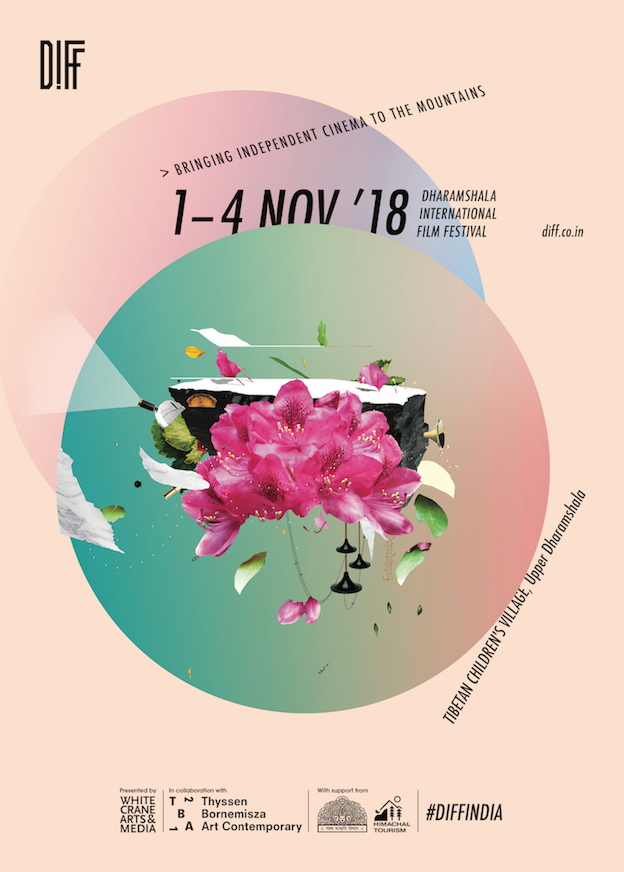
7th Dharamshala International Film Fest To Be Held At Mcleod Ganj From 1st Nov 2018 To 4th Nov 2018

The 7th Dharamshala International Film Fest (DIFF) will take place from 1st Nov, 2018 to 4th Nov 2018 in the beautiful mountain town of McLeod Ganj, Dharamshala, home of His Holiness the Dalai Lama & the meeting point of a rich & cosmopolitan mix of people & cultures.

Dharamshala International Film Fest (DIFF) is presented by White Crane Arts & Media, a trust founded by filmmakers Ritu Sarin & Tenzing Sonam to promote contemporary cinema, art & independent media practices in the Himalayan regions of India.

The 1st ever edition of Dharamshala International Film Fest (DIFF) was held in the year 2012. Since then, it has established itself as one of India’s leading independent film fest’s. The Dharamshala International Film Fest’s cutting-edge & eclectic programming, which includes many India premieres, and its policy of inviting as many directors as possible has made it one of the go-to events in any cinephile’s calendar. Last year, the films & side programmes at Dharamshala International (DIFF) attracted a viewership of around 6000, of which at least 60% were from out of town from places as far away as Kerala, Bangalore, Hyderabad & Mumbai. Some of India’s best-known film critics & journalists from leading media houses were on hand to cover the event.

This year, for the 3rd time in a row, the fest will take place in the peaceful environs of the Tibetan Children’s Village, a short distance from McLeod Ganj. Along with the 2 existing auditoriums at the school, this year DIFF is excited to partner with Delhi based PictureTime to set up a mobile digital theatre with state-of-the-art projection facilities at the festival venue.

Festival Director Ritu Sarin says, “We endeavor to bring a slate of unusual & trailblazing narrative, docu & short films from around the world, as well as showcasing some of the best recent Indian independent cinema, making it a rich experience for our audience.”

Fest directors Ritu Sarin & Tenzing are delighted with the way Dharamshala International Film Fest (DIFF) has evolved over the years and are determined to consolidate & improve upon the standards set by previous editions. Ritu Sarin says, “A fest like Dharamshala International Film Fest (DIFF), taking place in a small town with very few resources & no cinema tradition as such, requires the support & dedication of numerous individuals & organizations, as well as interns & volunteers whose enthusiasm & passion are the engine that drives our fest’s. I am grateful to our long-term collaborators Thyssen-Bornemsiza Art Contemporary, the Himachal Pradesh Government who is supporting us through its Departments of Tourism & Language, Arts & Culture, and our many partners, including the National Film Development Corporation, PictureTime, Wishberry & Royal Stag Barrel Select Large Short Films.

Preliminary highlights from this year’s selection of films include: Boom For Real (Sara Driver, USA, 2018), Sara Driver’s docu drama follows the pre-fame years of celebrated American artist Jean – Michael Basquiat & how New York City, the times, the people & its tectonically shifting arts culture of the late 1970’s & 1980’s shaped his vision, Father To Son (Hsiao Ya-Chuan, Taiwan, 2018), Hsiao Ya-Chuan’s official selection for the 47th International Film Fest Rotterdam (IFFR) takes its viewers through 2 unknown journeys of self-reconciliation, In the Intense Now (João Moreira Salles, Brazil, 2017). A Panorama selection at the 2017 Berlinale Film Festival, In the Intense Now is an immersive retelling of the Paris uprisings, the Soviet invasion of Czechoslovakia & the Cultural Revolution in China using newsreel clips & home movies found through the late 1960’s, Little Forest (YIM Soon-Rye, South Korea, 2018), YIM Soon-Rye of The Whistleblower & Forever The Moment fame, makes her return to the celluloid silver screen with a coming-of-age story based on the 2002 Japanese manga of the same name, by Daisuke Igarashi, A Long Way Home (Luc Schaedler, Switzerland, 2018), A never-before heard or seen glimpse into the lives of 5 significant representatives of contemporary Chinese counterculture, including the famous Gao Brothers, who shed light on the social problems in their country through their own unique perspective, bravery & wit, Namme (Zaza Khalvashi, Georgia/Lithuania, 2017), Zaza Khalvashi’s art fantasy drama is Georgia’s official entry to the Oscars 2019, Inspired by Georgian literature & folklore, Namme narrates the story of 1 family’s mission to take care of a local healing water & treat fellow sick villagers with it, The Red Phallus (Tashi Gyeltshen, Bhutan, 2018), Bhutanese director Tashi Gyemtshen’s stunning debut, The Red Phallus, takes place in the gloomy & remote central Bhutan valley of Phobjika, where 16-year-old life with her widower father, a traditional painter & craftsman specialized in making wooden phalluses. Her dark secret comes back to haunt her.

Ryuichi Sakamoto: Coda (Stephen Nomura Schible, USA/Japan, 2017), An insight into the life & legacy of the legendary Japanese composer, Ryuichi Sakamoto: Coda is an intimate portrait of both the artist & the man & movingly captures the creative process.

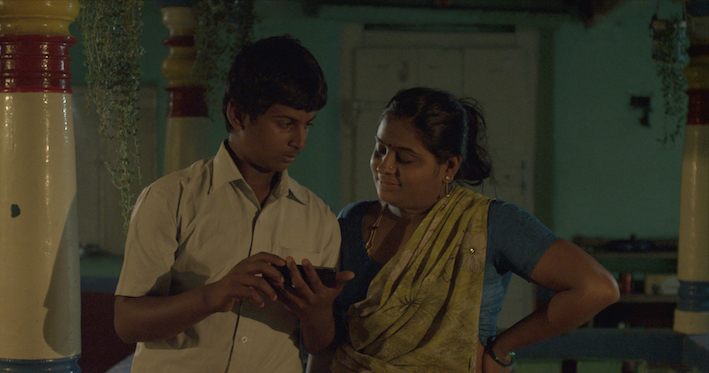
Balekempa (Ere Gowda, India, 2018)
FIPRESCI award winner at the International Film Fest Rotterdam 2018, Balekempa tells the story of unspoken desires & relationships that cluster around the lives of Kempanna, the bangle seller & his wife set in Karnataka’s close-knit patriarchal community.

Ee.Ma.Yau (Lijo Jose Pellissery, India, 2018), Cult Kerala filmmaker Lijo Jose Pellissery of Angamaly Diaries fame returns with a black comedy set in the coastal village of Chellanam, Kochi.

Raghu Rai: An Unframed Portrait (Avani Rai, India/Finland, 2018), This intimate portrait of one of the world’s greatest photographers made its world premiere at the International Documentary Film Fest, Amsterdam, in Nov, 2017. The story of Raghu Rai & his India is told through the eyes of his own rebel daughter during their travels in & around Kashmir.

One of Dharamshala International Film Fest primary goals is to promote & encourage filmmaking in Himachal Pradesh. This year’s Spotlight on Himachal includes the North Indian premiere of Ridham Janve’s The Gold-Laden Sheep & the Sacred Mountain, a Gaddi-language feature film set in the Dhauladhar mountains with a cast of non-professional Gaddi shepherds. The director & his cast will present the film in person. Shimla based filmmaker Siddharth Chauhan will also present his much-lauded short film, Pashi.

Dharamshala International Film Fest (DIFF) is proud to announce that this year, the Dharamshala International Film Fest (DIFF) Film Fellows initiative, which was established in the year 2014, will focus specifically on up & coming filmmakers from Himachal Pradesh. This is supported by HP Government’s Department of Language, Arts & Culture. 5 filmmakers will be selected & mentored by renowned National Award-winning filmmaker Gurvinder Singh & award-winning documentary filmmaker Anupama Srinivasan.

This year, Dharamshala International Film Fest (DIFF) is also thrilled to host the 1st ever Dharamshala-PJLF Editing Workshop. This initiative is supported by NFDC. 2 director-editor teams will be selected from across the country & mentored by internationally renowned editor Jacques Comets who co-headed the editing department at France’s leading film school, La Femis, along with editor & Artistic Director of the Kerala International Film Fest, Bina Paul & producer & script/editing mentor Olivia Stewart.

Dharamshala International Film Fest (DIFF) has always recognized the importance of short films as a category in its own right and this year, for the 5th year in a row, filmmaker Umesh Kulkarni has curated a selection of the best of current Indian shorts. In addition, Dharamshala International Film Fest (DIFF) is partnering with Royal Stag Barrel Select Large Short Films to present a package of short films. The popular Dharamshala International Film Fest (DIFF) Children’s Film Programme is once again curated by Children’s Media Specialist, Monica Wahi.

Filed Under: Film

Kovind, Naidu, Modi pay tributes to Shastri on his birth anniversary

October 2, 2018 by Nasheman


President Ram Nath Kovind, Vice President M. Venkaiah Naidu, Prime Minister Narendra Modi on Tuesday paid tribute to former Prime Minister Lal Bahadur Shastri on his 114th birth anniversary at Vijay Ghat here.

“Remembering our former Prime Minister Lal Bahadur Shastriji on his birth anniversary. His integrity, wartime leadership and role in the shaping of the Green Revolution remains an inspiration for the entire country,” the President tweeted.

“Paying tributes to the former Prime Minster and great son of our soil, Lal Bahadur Shastri on his birth Anniversary at Vijay Ghat in Delhi today,” Naidu tweeted attaching photographs.

Paying tribute to Shastri, Modi said he “epitomised strength and simplicity. He led India at a crucial time and worked hard to make our nation more prosperous”.

Shastri was born in Varanasi in Uttar Pradesh to Sharada Prasad and Ramdulari Devi on October 2, 1904.

On January 11, 1966, he breathed his last in Tashkent, Uzbekistan, a day after signing the Tashkent Declaration, reportedly due to cardiac arrest.

Shastri was the first person to be posthumously awarded the Bharat Ratna, the country’s highest civilian award in 1966.

IANS

Filed Under: Culture & Society

President, PM, Rahul remember Gandhi on his birth anniversary

October 2, 2018 by Nasheman


Launching a two-year-long celebration marking the 150th birth anniversary of Mahatma Gandhi, President Ram Nath Kovind, Prime Minister Narendra Modi and Congress President Rahul Gandhi on Tuesday shared their messages on social media.

“Tribute to Bapu on the occasion of Gandhi Jayanti. Gandhiji’s life was devoted to the ideals of peace, brotherhood and harmony. Today, there is an opportunity to replicate our allegiance and resolve towards these ideals. Mahatma Gandhi’s teachings are relevant to the whole of humanity,” Kovind tweeted early in the day.

Sharing his op-ed to national dailies on the occasion, the Prime Minister said: “From today we are entering Pujya Bapu’s 150th anniversary year. It is a great opportunity for all of us to fulfill their dreams. #Gandhi150.”

In his op-ed he said: “He (the Mahatma) remains a shining beacon of hope for millions of people across the world who seek a life of equality, dignity, inclusion and empowerment. The impact he left on human society has few parallels…

“Let us think about how our actions can contribute to a cleaner and greener environment for the future generations. Almost eight decades ago, when the threats of pollution were not as much, Gandhiji took to cycling…

Modi also tweeted on the “insightful op-ed” by Singapore’s Prime Minister Lee Hsien Loong on “how India and Singapore are united in the pursuit of building a cleaner and better tomorrow for the coming generations”.

Congress President Rahul Gandhi said truth and non-violence — the two beacons of Mahatma Gandhi’s life — that he lived and died for, are India’s foundation and true patriots must protect them.

“Gandhiji, is not an immobile statue, he is a living set of ideas and values flowing through India. Truth and non-violence, which he lived for and was killed for are the foundation of our country. True patriots must protect them,” Rahul Gandhi tweeted.

IANS

Filed Under: Culture & Society

HC dismisses petition against ‘triple talaq’ ordinance

October 1, 2018 by Nasheman

The Bombay High Court Monday dismissed a petition challenging provisions of an ordinance that makes the practice of instant triple talaq a punishable offence.

Former municipal councillor Masood Ansari, city-based NGO ‘Rising Voice Foundation’ and advocate Devendra Mishra had filed the petition last week.

President Ram Nath Kovind had last month signed the ordinance, according to which giving instant triple talaq has been made illegal and void, and will attract a jail term of three years for the husband.

Seeking to allay fears that the law could be misused, the government also included some safeguards in it, such as providing for bail to the accused husband.

A division bench of Justices B R Gavai and A M Dhavale said Monday that it was not inclined to entertain the petition as a similar plea was pending before the Supreme Court.

The petition claimed that the provisions of the ordinance are “illegal, null, void, unreasonable and arbitrary”.

It had sought an interim stay on those sections of the ordinance which criminalise the act of pronouncing talaq by a Muslim husband.

As per the proposed law, it would only be applicable on instant triple talaq or ‘talaq-e-biddat’ and would give power to the victim to approach a magistrate seeking “subsistence allowance” for herself and minor children.

A woman can also seek the custody of her minor children from the magistrate who will take a final call on the issue.

PTI

Filed Under: Culture & Society

Fashion Round Up

October 1, 2018 by Shaheen Raaj

Kartik Aaryan Sets The Ramp On Fire

MUFTI, the largest Indian denim brand, unveiled its exceptional Autumn Winter 2018 Collection at its one-of-its-kind fashion show recently. The evening witnessed eclectic designs & creativity which are sure to storm the world of fashion, style & glamour. Letting his statement outfit do all the talking,
Kartik Aaryan, Bollywood actor & MUFTI brand ambassador, walked the ramp in his stunning ensemble comprising of a stylish black leather jacket, paired with an exquisite pair of white jeans and a trendy white T- Shirt.

With this iconic fashion show, MUFTI, celebrated the massive milestone of completing 2 decades in the fashion industry. It personified sophistication, verve & style. Models strutted the ramp showcasing the spectacular range of ensembles that signified exceptional designs, innovation, high-quality fabrics & above all, comfort of being yourself.

Speaking about the grand success of the fashion show, Kamal Khushlani, Founder & Managing Director, MUFTI said, “We are elated to have commemorated 2 decades of MUFTI with a bang. The marquee fashion show & on-boarding Kartik Aryan as our 1st ever brand ambassador was the perfect way to celebrate this glorious occasion. We strongly believe in providing an alternative dressing solution that doesn’t conform to the norm. Our Autumn Winter 2018 Collection is trendy, comfortable & enables our consumers to stand out in the crowd. It is heartening to see the overwhelming response the collection has received. We are confident that our unparalleled design & creativity will enable us to continue delivering breakthrough fashion trends.”
Sharing his experience of gliding the ramp as the showstopper & MUFTI’s 1st ever brand ambassador, Kartik Aryan said, “I’m thrilled to be associated with MUFTI, a brand that inspires youth to be unique & set their own trends.”

After the extraordinary showcase of creativity & style, the evening witnessed a high-octane after-party, attended by the crème-de-la-crème of the fashion world. The MUFTI Autumn Winter 2018 collection is now available across stores.
MUFTI was launched in 1998 by 1st generation entrepreneur Kamal Khushlani with one driving ambition, to provide an alternative dressing solution that didn’t conform to the “uniform” codes of mainstream fashion.
Since its inception, MUFTI has evolved as a denim casual wear brand & band currently retails through 275 EBO’s (Exclusive Brand Outlets) pan India, 1200 MBO’s (Multi-Brand Outlets), 110 LFS’s (Large Format Stores like Shoppers Stop & Central) and is also present on all major e-commerce portals including its own website offering a product portfolio comprising of Shirts, Jeans, Trousers, T -Shirts, Shorts, Blazers & Winterwear/Outerwear.
Looking to provide a holistic lifestyle dressing solution, MUFTI also launched footwear recently with the same ethos, to provide an alternative choice which is young, casual yet comfortable.
The brand has over 600 employees on its direct payroll and indirectly employs over 2000 people.

Filed Under: Film

Progress of nation more important than debates: Kamal Haasan By Sugandha Rawal

October 1, 2018 by Nasheman

New Delhi Not religion, not culture, progress is what matters, says cine icon Kamal Haasan, who has embarked on a journey in politics. He says people in India are busy debating trivial issues whereas the need of the hour is to rise above them.

Haasan has always been vocal about the need to steer away from the politics of caste and religion. So, how important is it to address the real issues?

“It is very important. We have lost that dialogue. We are talking about everything else… We are trying to prove a point which does not exist. We are debating things that don’t matter at all,” Haasan told IANS in an exclusive interview here while opening up about his decision to enter politics, his aspirations, his vision for the country and about contesting the Lok Sabha elections.

“Yes, keep your religion, keep your culture, but progress as a nation is much more important than these debates. We are giving knee-jerk reactions to things which are not useful in everyday life or for the future generation. We (his party) are making that the focal point and that is what you have to talk about. The younger India is ready to talk about such issues,” he added.

The 63-year-old actor took the political plunge by launching his Makkal Needhi Maiam party on February 21 in Madurai. In just 48 hours, 201,597 people registered to join the Tamil film icon’s party.

Change can only come with unity, feels Haasan.

“Progress can’t be just my vision. It has to be a collective vision. You can take the example of China. Almost 30 years back, China had all the problems that we have, even much worse. And they changed it with will. But then you say it was only dictatorship that responsible for it. I beg to disagree.

“America was not a dictatorship. There were many voices pulling in all directions, and still progress happened.”

The actor, who entered the film industry when he was just three, continued: “(Things change) when people take the onus of building the nation, not just a few contracted people designated by the larger crowd, who are themselves busy going about their everyday chores or trying to reach office on time. They have to spend some time to build the nation.”

Citing an example from India’s long fight for freedom, the actor said: “In the 1940s, people were not ‘bekaar’ (useless). They had their jobs, they had their professions, they had to earn their everyday bread, but they still had time for freedom. Now, the second freedom struggle has started.”

Is he planning to contest the upcoming Lok Sabha elections?

“Well, anything which is good for Tamil Nadu is the way I see (things). Whichever direction it takes me… I will go and seek the opportunity and seize the day,” he said without dismissing the possibility completely.

The charismatic Tamil cine hero has done over 200 films in Tamil, Hindi, Telugu and Malayalam. He is known for projects like “Appu Raja”, “Hey Ram”, “Dashavatar”, “Ek Duuje Ke Liye”, “Sagara Sangamam”, “Sadma”, “Thevar Magan”, “Chachi 420” and “Vishwaroopam” and “Vishwaroop 2”.

The Hindi version of “Vishwaroop 2”, presented by Rohit Shetty and the Anil Ambani-led Reliance Entertainment, released in August.

After spending so many years in the industry, Haasan avers he will be quitting acting for politics. Asked whether he is planning to manage both, he said: “I shouldn’t do both the things.”

“My advice to the actor (in me) is to step aside because there is much more work to do. I loved the actor. I have lived with him for 58 years, but I have to move to people and that is more important.”

(IANS)

Filed Under: Film

  • « Previous Page
  • 1
  • …
  • 29
  • 30
  • 31
  • 32
  • 33
  • …
  • 166
  • Next Page »

Follow Us

  • Facebook
  • Twitter
  • YouTube

KNOW US

  • About Us
  • Corporate News
  • FAQs
  • NewsVoir
  • Newswire
  • Realtor arrested for NRI businessman’s murder in Andhra Pradesh

GET INVOLVED

  • Corporate News
  • Letters to Editor
  • NewsVoir
  • Newswire
  • Realtor arrested for NRI businessman’s murder in Andhra Pradesh
  • Submissions

PROMOTE

  • Advertise
  • Corporate News
  • Events
  • NewsVoir
  • Newswire
  • Realtor arrested for NRI businessman’s murder in Andhra Pradesh

Archives

  • February 2026 (6)
  • January 2026 (12)
  • December 2025 (6)
  • November 2025 (8)
  • October 2025 (12)
  • September 2025 (25)
  • August 2025 (46)
  • July 2025 (110)
  • June 2025 (28)
  • May 2025 (14)
  • April 2025 (50)
  • March 2025 (35)
  • February 2025 (34)
  • January 2025 (43)
  • December 2024 (83)
  • November 2024 (82)
  • October 2024 (156)
  • September 2024 (202)
  • August 2024 (165)
  • July 2024 (169)
  • June 2024 (161)
  • May 2024 (107)
  • April 2024 (104)
  • March 2024 (222)
  • February 2024 (229)
  • January 2024 (102)
  • December 2023 (142)
  • November 2023 (69)
  • October 2023 (74)
  • September 2023 (93)
  • August 2023 (118)
  • July 2023 (139)
  • June 2023 (52)
  • May 2023 (38)
  • April 2023 (48)
  • March 2023 (166)
  • February 2023 (207)
  • January 2023 (183)
  • December 2022 (165)
  • November 2022 (229)
  • October 2022 (224)
  • September 2022 (177)
  • August 2022 (155)
  • July 2022 (123)
  • June 2022 (190)
  • May 2022 (204)
  • April 2022 (310)
  • March 2022 (273)
  • February 2022 (311)
  • January 2022 (329)
  • December 2021 (296)
  • November 2021 (277)
  • October 2021 (237)
  • September 2021 (234)
  • August 2021 (221)
  • July 2021 (237)
  • June 2021 (364)
  • May 2021 (282)
  • April 2021 (278)
  • March 2021 (293)
  • February 2021 (192)
  • January 2021 (222)
  • December 2020 (170)
  • November 2020 (172)
  • October 2020 (187)
  • September 2020 (194)
  • August 2020 (61)
  • July 2020 (58)
  • June 2020 (56)
  • May 2020 (36)
  • March 2020 (48)
  • February 2020 (109)
  • January 2020 (162)
  • December 2019 (174)
  • November 2019 (120)
  • October 2019 (104)
  • September 2019 (88)
  • August 2019 (159)
  • July 2019 (122)
  • June 2019 (66)
  • May 2019 (276)
  • April 2019 (393)
  • March 2019 (477)
  • February 2019 (448)
  • January 2019 (693)
  • December 2018 (736)
  • November 2018 (570)
  • October 2018 (611)
  • September 2018 (692)
  • August 2018 (666)
  • July 2018 (468)
  • June 2018 (440)
  • May 2018 (616)
  • April 2018 (772)
  • March 2018 (338)
  • February 2018 (157)
  • January 2018 (188)
  • December 2017 (142)
  • November 2017 (122)
  • October 2017 (146)
  • September 2017 (176)
  • August 2017 (201)
  • July 2017 (222)
  • June 2017 (155)
  • May 2017 (205)
  • April 2017 (156)
  • March 2017 (178)
  • February 2017 (195)
  • January 2017 (149)
  • December 2016 (143)
  • November 2016 (169)
  • October 2016 (165)
  • September 2016 (137)
  • August 2016 (115)
  • July 2016 (116)
  • June 2016 (124)
  • May 2016 (170)
  • April 2016 (150)
  • March 2016 (199)
  • February 2016 (201)
  • January 2016 (216)
  • December 2015 (210)
  • November 2015 (174)
  • October 2015 (281)
  • September 2015 (241)
  • August 2015 (250)
  • July 2015 (188)
  • June 2015 (216)
  • May 2015 (281)
  • April 2015 (306)
  • March 2015 (296)
  • February 2015 (280)
  • January 2015 (245)
  • December 2014 (286)
  • November 2014 (254)
  • October 2014 (185)
  • September 2014 (98)
  • August 2014 (7)

Copyright © 2026 · News Pro Theme on Genesis Framework · WordPress · Log in